
Executive Summary
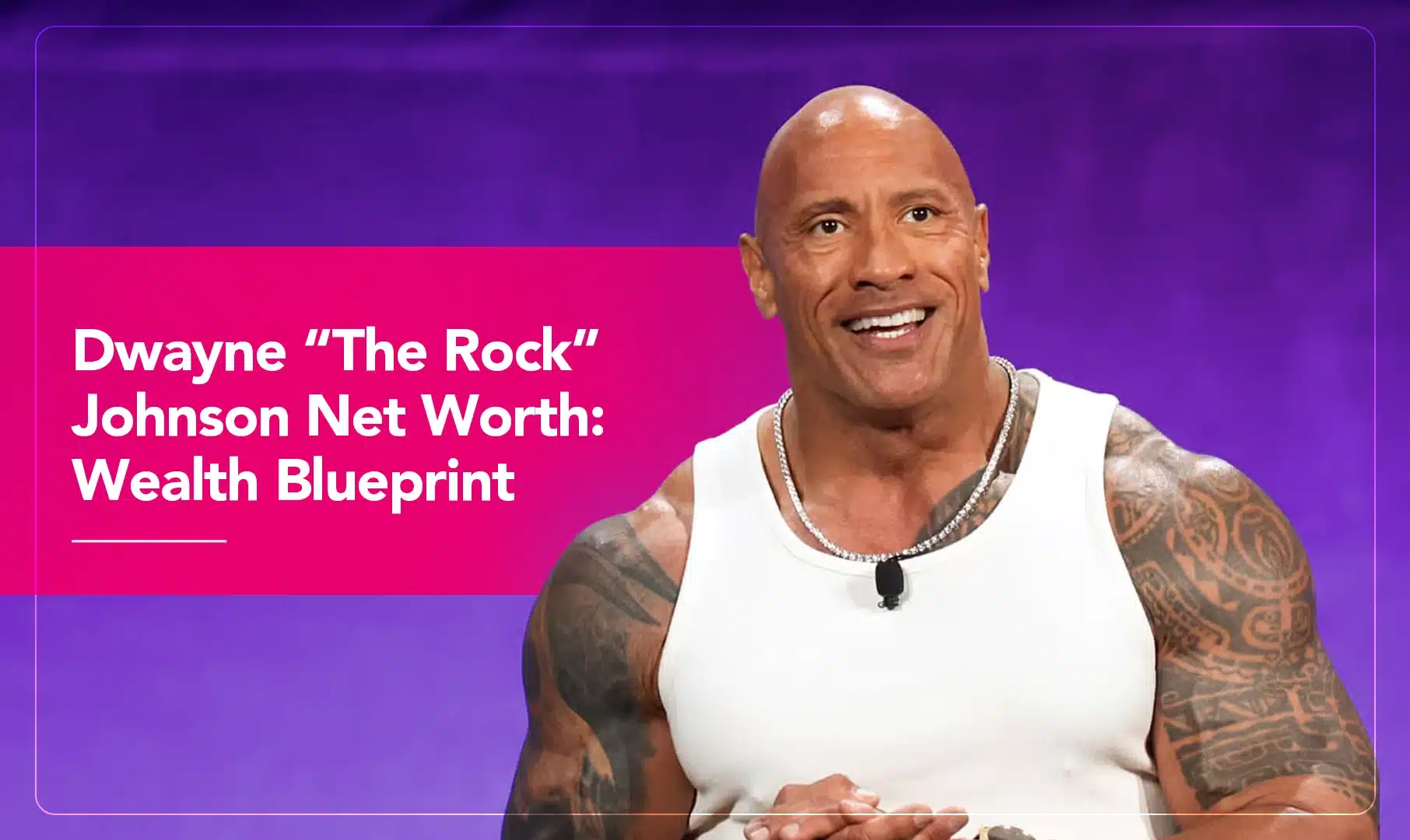
As of March 2026, Dwayne ‘The Rock’ Johnson had an estimated net worth of roughly $800 million. This massive fortune has been built on blockbuster film paychecks, a booming tequila business and a suite of lucrative brand deals. Johnson transitioned from a modest-paying pro wrestling career to become Hollywood’s highest-paid actor, commanding 8-figure salaries per movie and even additional seven-figure fees to promote films on his social media. Beyond the screen, he has multiplied his wealth by launching enterprises like Teremana Tequila, now one of the fastest-growing tequila brands ever, and partnering on high-grossing merchandise lines (e.g. Under Armour’s Project Rock). Ryan Reynolds’ Aviation Gin exit is Teremana’s closest comparison, and it ended in a sale worth up to $610m.
Several financial milestones stand out. He famously secured $5.5 million for his very first movie role in The Scorpion King (2001), a record-breaking debut salary at the time. In 2018, he earned $125 million in a single year, topping Forbes’ list of highest-paid actors. In 2020, Johnson co-founded Teremana Tequila, which has since hit annual sales of 1+ million cases and is valued in the billions, positioning him for billionaire status if an exit occurs. Uniquely, Johnson’s wealth-building strategy centres on turning fame into equity, rather than just cashing paycheques, he often takes ownership stakes and backend profit cuts in his projects. This approach, combined with his relentless output, has seen his net worth leap from early WWE pay and mid-tier acting fees into true mogul territory, first via big franchise paydays, then a transformative jump with his tequila venture and continuous growth through savvy partnerships.
Key Financial Metrics (as of 2026):
| Category | Metric / Description | Value (estimate) | Notes (source / caveats) |
|---|---|---|---|
| Cash & Investments | Post-tax cash, stocks, and investments | ~$100 million | Derived from two decades of film earnings minus taxes/spending. Likely held in liquid assets and diversified funds (no public disclosure). |
| Business Ventures | Equity stakes (Teremana Tequila, XFL, etc.) | ~$500 million | Teremana ~30–40% stake valued ~$600 million; plus smaller stakes (e.g. XFL $15 million buy-in, energy drinks, production company). Largest net worth driver. |
| Real Estate | Properties portfolio (homes & farms) | ~$50 million | Beverly Hills estate bought for $27.8 M; Virginia farm and other properties. Portfolio value ~6% of net worth (values per purchase/market reports). |
| Tours/Film Back-End | Future profit participation from works | Moderate (uncapped) | Has profit-sharing on franchise films (e.g. Jumanji, Fast & Furious). Adds tens of millions over years, but not a fixed asset today. |
| Endorsements | Annual endorsement income | ~$40 million/yr | e.g. Under Armour $25 M/yr + Ford $15 M/yr (estimated). Short-term cash flow, not directly held as assets. |
| High-Value Assets | Personal jet, cars, collectibles | ~$65 million | Owns Gulfstream G650 jet (~$65 M); luxury car collection (Pagani Huayra $2.5 M, etc.). Primarily lifestyle assets. |
Dwayne Johnson’s Primary Income Streams
Johnson’s primary income streams reflect a career that evolved from sports entertainment into Hollywood and beyond. In essence, blockbuster movie salaries form the backbone of his earnings, complemented more recently by producer fees and backend cuts on successful films. While acting made him a multimillionaire, his real wealth accelerator has been moving from just being on camera to owning enterprises, most notably his tequila business. Below, we break down his core career earnings trajectory.
Core Career Earnings
Johnson’s core career earnings come from his roles in films and television, which have scaled dramatically over time. Starting in the early 2000s, he was paid a few million dollars for lead roles; by the 2010s, he was commanding $20 million+ per film and negotiating profit participation on major franchises. The table below highlights some key paydays:
| Year / Project | Role | Performance (Global Box Office) | Est. Earnings | Notes (deal structure / source) |
|---|---|---|---|---|
| 2001 – The Scorpion King | Lead actor (Mathayus) | $165 M (box office) | $5.5 M | Debut lead role; record upfront payday for a first-time actor. |
| 2003 – The Rundown | Lead actor | $80 M (box office) | $12.5 M | Rapid pay rise as emerging action star. |
| 2011 – Fast Five | Co-star (Luke Hobbs) | $626 M (box office) | ~$Fast-tracked to A-list | Joined the Fast & Furious franchise; fee reportedly mid-seven figures, but pivotal for future earnings (franchise success). |
| 2018 – Skyscraper | Lead actor/producer | $304 M (box office) | $20 M | Typical late-2010s salary per film. Part of deal: heavy promotion on his social channels. |
| 2019 – Jumanji: Next Level | Lead actor/producer | $800 M (box office) | $23.5 M | Salary plus back-end; co-produced via Seven Bucks. Major global hit. |
| 2022 – Black Adam | Lead actor/producer | $393 M (box office) | $22.5 M | Paid as DC franchise lead, though film underperformed expectations. |
| 2023 – Red One (upcoming) | Lead actor/producer | N/A (streaming release) | $50 M | Career-high base salary for Amazon holiday film, reflecting Johnson’s negotiation power. |
How earnings scaled: Johnson’s acting income skyrocketed from low-eight-figures in the early 2000s to regular mid-eight-figure paychecks by the late 2010s. His breakthrough was joining blockbuster franchises – notably 2011’s Fast Five, which turbocharged his global box office appeal (the film grossed $626 M and proved Johnson could elevate franchises). This led to bigger roles and the clout to demand profit participation. By 2018, he was not only starring in multiple tent-poles per year but also earning as a producer, which significantly boosted his take. For example, on Netflix’s Red Notice, his co-stars earned ~$20 M each, but Johnson made ‘millions more’ as he was also a producer.
Key inflection points: One major jump came around 2017–2018 when Johnson’s annual haul hit nine figures. He earned an estimated $125 M between June 2017 and June 2018, outpacing every actor on the planet. This was fueled by back-to-back hits (Jumanji, Fast & Furious entries, Moana, etc.) and savvy deal structures (e.g. leveraging his 100M+ social media following to secure extra fees for promoting films). Another inflection was 2023’s record $50 M salary for Red One, showing that streaming giants and studios are willing to pay unprecedented sums for ‘franchise Viagra’ star power like Johnson’s.Tom Cruise’s earnings machine shows the pure box-office version of an A-list fortune.
Outlier deals: Aside from Red One’s massive payday, Johnson’s HBO series Ballers also stood out, where he reportedly earned $650k per episode by the final season, making him one of TV’s highest-paid actors at the time. Moreover, in 2023, he negotiated a unique arrangement with WWE’s new parent company: a $30 M package to rejoin WWE for a special event and sit on the board of TKO Group. This one-off sum (for a part-time return to wrestling entertainment) highlights how Johnson’s crossover appeal commands top dollar even outside Hollywood.
Johnson’s core earnings progressed from early career ‘cash’ (WWE salaries and first film checks) to mid-career ‘cash + cachet’ (big film fees plus producer credits), and set the stage for him to deploy that cash into business ventures. These blockbuster earnings have ultimately funded the equity investments and ventures that now form a huge chunk of his net worth.
Film/TV Production & Other Projects
Beyond acting, Johnson has expanded into producing most of his own projects through his company Seven Bucks Productions (founded 2012). Seven Bucks has produced hits like Jumanji, Jungle Cruise, Hobbs & Shaw and Red Notice, meaning Johnson gets a producer’s share of profits or fees on top of acting salary. Financially, this has been significant, e.g., his production role on Red Notice added to his earnings (as noted above). While exact producer fees aren’t public, this strategy likely adds millions in incremental income per project.
He’s also ventured into TV hosting/creation, e.g. NBC’s The Titan Games (which he created and hosted) and the sitcom Young Rock (based on his life). These projects diversify his portfolio, though their financial impact is modest relative to films. For instance, Young Rock ran for two seasons, a nice creative endeavour, but not a massive moneymaker. The HBO series Ballers was more lucrative for Johnson personally (with that $650k/episode pay), illustrating that high-end TV can approach film-level pay for top stars.
Johnson’s primary income streams have heavily influenced the composition of his net worth. His film salaries and production fees have translated into a substantial cash reserve and investments (funds that he’s later used to invest in new ventures). Meanwhile, the savvy move of taking backend deals and launching his own production company means a portion of his net worth is effectively equity earned from his entertainment career (rather than just one-time fees). Most importantly, the success and cash flow from acting enabled Johnson to take big swings outside Hollywood, which is why an estimated 60%+ of his net worth now sits in business equity (Teremana Tequila and other ventures) rather than in cash. Basically, blockbuster paydays built the foundation, but owning pieces of the action built the castle.
Dwayne Johnson’s Secondary Income Streams
Outside of his core acting and producing work, Johnson has cultivated additional income streams that supplement his wealth. These secondary streams include endorsement and sponsorship deals with major brands, a range of entrepreneurial ventures beyond entertainment, and various licensing or merchandise arrangements. While individually smaller than his movie or tequila earnings, these streams have added significant value (and often synergise with his primary work by expanding his brand).
Endorsements & Sponsorships
Johnson is one of the world’s most marketable celebrities, and he’s inked partnerships with brands that align with his strongman-but-approachable image. The table below outlines some of his major endorsement deals and sponsorships over the years:
| Brand/Partner | Years Active | Deal Type & Role | Est. Earnings | Notes (source) |
|---|---|---|---|---|
| Under Armour | 2016 – present | Global ambassador; Project Rock line co-branded with UA (apparel, shoes, headphones) | ~$25 M per year (est.) | Multi-year partnership. Johnson has a profit-share line; deal expanded to UFC athletes wearing Project Rock gear. Key brand synergy with his fitness persona. |
| Ford Motor Co. | 2015 – 2018 | Spokesman for Ford’s Service division (multi-platform ad campaign) | ~$15 M per year (est.) | Multi-year endorsement as ‘Ford Ambassador of Service.’ Campaigns highlighting his affinity for Ford trucks. Estimated figures via industry sources; not officially disclosed. |
| Voss Water | 2019 – present | Strategic partner & investor (premium bottled water) | N/A (equity stake) | Johnson acquired an ownership stake and became the face of Voss. Serves as a strategic advisor to grow the brand, blending endorsement with investment (financial terms undisclosed). |
| Apple (Siri) | 2017 (campaign) | Commercial spokesman (one-off ad) | One-time fee (7-figures est.) | Starred in Apple’s ‘Dominate the Day’ mini-film promoting Siri. High-profile but short-term promotional gig – demonstrates his broad brand appeal. |
| Others (Misc.) | ~2010s | Various partnerships (e.g. Netflix/Google promotions, Milk campaign) | — | Johnson’s endorsement portfolio has also included smaller deals and appearances, but the above are the most financially significant. |
Brand fit & strategy: Each major brand partnership is carefully aligned with ‘The Rock’ persona. Under Armour is perhaps the signature deal. Johnson’s relentless training ethic and athletic background made Project Rock gear a smash hit (shoes often sell out on release). This partnership effectively turns his personal workout brand into merchandise, yielding an estimated $25 M+ annually for Johnson in royalties and fees. Ford tapped into his everyman charm and love of trucks, a natural match that reportedly earned him eight figures a year while reinforcing his down-to-earth, patriotic image (he even gave away a Ford truck to a veteran in a PR stunt). With Voss Water, Johnson went beyond a typical endorsement by taking equity, leveraging his health-conscious image to boost a premium water brand while becoming an owner in it. This blend of sponsor and stakeholder is a recurring theme in his deals.
Lucrative deals & impact: The Under Armour deal, in particular, has been extremely lucrative. It effectively created a new revenue stream that rivals some of his film salaries in scale. The Ford campaign, while temporary, was also very well-paid by endorsement standards (for context, $15 M/year is enormous for a spokesperson contract, underlining the value of Johnson’s name). However, it’s worth noting that even $40 M a year from sponsorships (Under Armour + Ford combined) was less than half of Johnson’s peak annual earnings when his films and tequila income are counted. So, while these deals add substantial income, they are supporting players to his Hollywood and business earnings.
Endorsements vs core earnings: In Johnson’s case, endorsement money has been the ‘extra gravy’ on top of his core earnings. At times – such as mid-2010s – endorsements likely comprised a significant share of his yearly income (when he wasn’t doing as many movies per year). But as his movie fees and business profits exploded, the balance shifted. For example, in 2022 he made about $270 M in total; even a generous estimate of endorsement income that year (~$40 M) would be less than 15% of that total. Endorsements generally provide high-margin income with little time commitment, which Johnson then channels into larger ventures. In other words, the Ford and Under Armour cheques helped fuel his investments (and lifestyle) but are not large, lasting assets on their own. It’s also notable that Johnson often prefers deals where he can have creative or equity involvement (as with Under Armour and Voss), rather than being just a face-for-hire.
Business Ventures
Outside of entertainment, Dwayne Johnson has steadily built a portfolio of entrepreneurial ventures and equity stakes, effectively parlaying his fame (and capital) into business ownership. Below is a snapshot of his major business ventures:
| Venture / Company | Sector | Role | Ownership / Stake | Outcome / Status | Notes (funding/valuation, source) |
|---|---|---|---|---|---|
| Teremana Tequila | Spirits (Tequila) | Co-founder & stakeholder | ~30–40% stake | Phenomenal growth; >1M cases/year sold. Potential multi-billion-dollar exit looming. | Launched 2020; valued ~$2 B (2023). Johnson’s stake (~⅓) estimated ~$600 M, which could make him a billionaire upon sale. |
| Seven Bucks Productions | Entertainment | Co-founder (with Dany Garcia) | ~50% (privately held) | Ongoing; produces many of Johnson’s films and TV projects. | Founded 2012. Not a publicly valued company, but instrumental in securing Johnson backend profits and creative control. |
| XFL (Football League) | Sports league | Co-owner (with partners) | Unknown % (joint investment) | Relaunched 2023; high risk venture (initial season losses, exploring merger) | Acquired out of bankruptcy in 2020 for $15 M. Partners with RedBird Capital and Dany Garcia. Long-term potential uncertain; passion project rooted in his football past. |
| ZOA Energy Drink | Beverages (Energy drinks) | Co-founder & investor | Significant minority stake | Rapid start in 2021 with distribution in GNC and gyms; competing in crowded market | Capitalises on fitness image. Sales figures not public; positioning as a healthier energy drink with Johnson’s branding. |
| Voss Water | Beverages (Water) | Strategic investor & advisor | Undisclosed minority stake | Ongoing expansion with Johnson as ambassador | Partnership announced 2019. Brought star power to premium water; exemplifies deal where he gains equity for endorsement. |
| Acorns (Investment app) (example) | Fintech (micro-investing) | Advisor/endorser (possible investor) | – | Promotion of financial wellness, fits personal brand of positivity | (Not confirmed equity stake, but he has supported fintech initiatives; included as indicative of breadth of partnerships.) |
| Patapui Skincare | Consumer goods (skincare) | Founder/owner | Majority (founder) | New launch (late 2024); in early growth stage (distributed via Target) | Latest personal brand extension. Aims to leverage his name in men’s skincare. Too early to gauge financial impact. |
Operator vs passive: Johnson’s approach to ventures skews towards active involvement with his name front and centre. With Teremana, he isn’t just a silent investor, he’s the public face and heavily promotes it (even integrating the tequila into his social media content). Similarly, for ZOA Energy and the Under Armour Project Rock line (though not listed in the table as it’s more of a licensing deal), he plays a hands-on role in product development and marketing. Even with XFL, he and his partner Dany Garcia took on executive roles to shape the league. This suggests he behaves more like a serious operator in ventures tied closely to his brand. In contrast, in areas outside his expertise (e.g. if he has any passive investments in tech or stocks, which we don’t see much public evidence of), he’s not actively fronting them, his biggest bets are where his brand equity adds value.
Risk profile: Across his ventures, Johnson tends to invest in what he knows and can influence: fitness, entertainment, consumer products that align with his image. This indicates a moderately conservative strategy. He’s not betting on random biotech startups or volatile crypto; he’s leveraging his comparative advantage (his brand and fanbase) in each business. That said, some ventures do carry significant risk: the XFL is a high-risk, high-reward play (spring football leagues have historically failed, and indeed the XFL’s 2023 season saw low TV ratings and financial losses). Johnson is effectively wagering some of his capital and reputation on reviving a twice-failed league, a bold move that could either create a valuable sports asset or require write-offs. Teremana, while hugely successful so far, is in a competitive industry and its ultimate value will depend on market trends and a potential acquirer’s willingness to pay up. Overall, Johnson’s venture portfolio is concentrated but strategically so: he’s put big chips on a few ventures where success could be enormous (and so far, one – Teremana – is looking like a home run), rather than spreading himself too thin across dozens of unrelated startups.
Licensing, Merchandising & Royalties
Johnson’s ubiquitous brand also generates income through merchandise and licensing, though these streams are relatively small compared to his major ventures. For instance, as a former wrestler, he still benefits from WWE merchandising as the WWE continues to sell ‘The Rock’ T-shirts, toys and video games, and as a legend he would get a negotiated royalty cut. These royalties likely amount to hundreds of thousands per year, not tens of millions (WWE’s top merchandise sellers like John Cena reportedly earn a few million in merch royalties annually at peak, so Johnson’s more sporadic WWE merch is much lower).
His Project Rock line with Under Armour blurs the line between endorsement and merchandise. Essentially, it’s a licensing deal where his slogans (like ‘Blood. Sweat. Respect.’) and logo (the Brahma bull) are used on products. This yields him a royalty on product sales (hence the ~$25 M/year figure noted earlier). It’s arguably one of the most successful celebrity merchandise collaborations, essentially creating a sub-brand under Under Armour.
Additionally, Johnson’s likeness and name have been licensed for various video games and toys. He has appeared in games ranging from WWE wrestling games to movie tie-in games, and even the popular Fortnite game (where a character clearly inspired by him appeared). These deals are one-time fees or small royalty arrangements. For example, if he negotiates a deal with a game company, it might be a few hundred thousand dollars and perhaps a bonus if the game sells well – trivial in the context of his overall earnings.
He also earns residuals from TV and film reruns/streaming (like any actor) but given he’s usually the star commanding huge upfront pay, residuals form a minor portion. One exception: his early films (e.g. Disney’s Moana, where he was a voice actor) could continue to pay modest royalties, especially from music. ‘You’re Welcome,’ the song he performed in Moana, has multi-platinum sales, but as a performer (not writer), his cut is limited. A nice bonus check at best.
Johnson’s licensing and merch earnings are nice add-ons, perhaps totaling a few million per year across all sources in a good year. But, they don’t move the needle next to his eight-figure movie salaries or tequila equity. They do, however, serve a strategic purpose: they keep his brand visible (a kid wearing a ‘Just Bring It!’ T-shirt or an athlete wearing Project Rock shoes is part of maintaining The Rock’s cultural presence). And culturally, having his own sneaker line or action figure collection is part of the legend of The Rock, even if it’s pocket change relative to his other pursuits.
Dwayne Johnson’s Asset Portfolio Analysis
As Johnson’s income exploded, he wisely invested in tangible assets, notably real estate, and, of course, treated himself to some high-end toys. Here we examine his known asset portfolio: from multimillion-dollar mansions to private jets.
Real Estate Holdings
Johnson has traded up through a series of impressive homes over the past two decades, often opting for sprawling estates that offer privacy for his family and space for his fitness hobbies. Below is an overview of some key properties he owns or has owned:
| Property / Nickname | Location (City/Country) | Type | Purchase Year | Purchase Price | Est. Current Value | Notes (size, features, status) |
|---|---|---|---|---|---|---|
| North Beverly Park Estate (current) | Los Angeles, California, USA | Primary home – gated mega-mansion | 2021 | $27.8 M (reportedly cash) | ~$30 M+ | 3.67-acre estate in exclusive gated enclave. 17,630 sq. ft. Mediterranean-style mansion (6 bed, 12 bath) with a guesthouse, gym, tennis court, movie theatre, and pool. Bought from actor Paul Reiser (built by rockstar Alex Van Halen). The Johnsons’ main residence. |
| ‘Mana’ Farm, Virginia | Charlottesville, Virginia, USA | Rural farm estate | ~2011 (est.) | Not public (acquired over a decade ago) | N/A (long-term hold) | 100+ acre farm (nickname ‘Mana Ranch’). Features a historic farmhouse, horse barns, large fishing pond, and Johnson’s custom ‘Iron Paradise’ gym barn. A personal retreat where he ‘resets’; not intended for resale. |
| Southwest Ranches Estate (former) | Southwest Ranches, Florida, USA | Equestrian mansion | 2012 | $3.4 M[40] | – (sold 2013) | 13,153 sq. ft. home on multi-acre land in an upscale equestrian community. Included home theatre, gym, resort pool. Johnson spent ~$1 M on renovations then sold it in 2013 after a year. (He and family later reportedly maintained another home in Southwest Ranches, suggesting he may have re-invested in the area.) |
| Hidden Hills Mansion (former) | Hidden Hills, California, USA | Suburban luxury home | (unknown; pre-2012) | ~$3 M (est.) | – (sold 2012 for $4.9 M)[44] | 9,120 sq. ft. mansion in a gated community in L.A.’s San Fernando Valley. Sold in 2012 as Johnson upgraded to bigger properties. Featured Mediterranean/neoclassical design, six bedrooms, infinity pool with view. Early evidence of him flipping into more upscale assets. |
| Powder Springs Farm (former) | Powder Springs, Georgia, USA | 46-acre equestrian farm | 2019 | $9.5 M[45] (in cash) | $6.1 M (sold 2021) | Rustic 14,000 sq. ft. mansion plus stables, riding arena, etc. Purchased as a country getaway but listed for sale within a year. Ultimately sold at a ~$3.4 M loss, indicating timing and maintenance costs turned it into a money-loser. |
Geographic spread & diversification: Johnson’s real estate holdings span coasts and countryside. In California, he planted roots in the ultra-exclusive North Beverly Park, signalling his arrival in Hollywood’s financial elite (neighbours include Denzel Washington and Sofia Vergara). That estate alone accounts for over half of his real estate portfolio’s value. On the opposite coast, he has long kept a farm in rural Virginia, reflecting his personal connection to that area (and perhaps for tax residency or just love of farmland). He’s also owned property in Florida (a state with no income tax) which could be strategic, though the Southwest Ranches home was sold a while ago. The Georgia farm was an investment in a quieter market, but he exited after a short stint, even taking a loss. This suggests that while he enjoys the idea of land (for his horses, etc.), not every purchase is a financial win. For example, the Georgia flip was poorly timed selling during a soft luxury market.
Trading up & timing: There is a pattern of trading up: smaller homes in early 2010s led to a mega-mansion by 2021 as net worth grew. He’s not shy about spending on personal comfort (nearly $28 M on the Beverly Park estate). Johnson has shown willingness to sell quickly if a property doesn’t fit: e.g., the Florida and Georgia properties were both sold after roughly a year. In Florida he managed to add value (renovations) and exit presumably around breakeven; in Georgia, he cut losses. This indicates he’s pragmatic, not holding on to unused properties for long.
Use vs investment: Most of Johnson’s real estate seems bought for personal use/enjoyment rather than pure investment flips. The Beverly Hills home is clearly a long-term family residence (it’s described that ‘Johnson, his wife, and children currently use this as their main home’). The Virginia farm is a passion property (he allows an Olympic equestrian to train horses there when he’s away, underscoring it’s more about lifestyle than profit). The Florida and Georgia purchases also appear motivated by providing family retreats (Florida for proximity to extended family or training, Georgia perhaps for filming location convenience or just love of farms), but he didn’t hesitate to unload when they no longer made sense.
Financially, his real estate holdings (current) are a healthy but not dominant portion of his net worth (~$50 M, ~6%). They’re likely to appreciate modestly over time, but Johnson seems to view homes as places to live first, investments second. He invests in making them enjoyable (like building state-of-the-art gyms on-site in Virginia and Beverly Hills) knowing these outlays might not fully pay back in resale value, and he’s fine with that as long as his primary income streams are strong.
Vehicles, Jets, Collectibles & Luxury Assets
Like many ultra-wealthy individuals, Dwayne Johnson owns a collection of luxury vehicles and a private jet, alongside other high-ticket personal assets. Here’s a summary of the known big-ticket items:
| Asset Type | Description | Est. Value | Notes (brand, rarity, source) |
|---|---|---|---|
| Private Jet | Gulfstream G650ER business jet | ~$65 M – $70 M | Long-range, top-of-the-line private jet. Johnson uses it for frequent global travel, enabling his busy schedule. Often featured in his social media (nicknamed ‘The Iron Bird’?). A status symbol and time-saver, albeit with high operating costs. |
| Supercar | Pagani Huayra | ~$2.6 M | Ultra-rare Italian hypercar. One of ~100 made. Likely one of the most expensive cars he owns. Reflects his indulgence in speed and engineering excellence. |
| Luxury Cars | Rolls-Royce Wraith, Ferrari LaFerrari, Lamborghini Huracán, etc. | ~$1 M+ (combined) | Owns a Rolls-Royce Wraith (≈$300k) for comfortable cruising, plus exotic sports cars like the LaFerrari (≈$1.5 M) and Huracán (~$200k). Also notable: a custom Ford F-150 pickup (his daily driver, comparatively cheap but emblematic). |
| Watch Collection | High-end watches (Rolex, Panerai, Audemars Piguet, etc.) | ~$1 M+ | Johnson sports an array of luxury timepieces. Likely dozens of watches, including limited editions. While valuable, these are small fractions of his wealth and often gifts or endorsements (he partnered with Vacheron Constantin for a special edition in the past, for example). |
| Gym Equipment (Iron Paradise) | Custom mobile gym apparatus | ~$1 M (est.) | Johnson famously travels with a full mobile gym (‘Iron Paradise’). The equipment itself is top-grade and custom, filling 40+ large cases, costing hundreds of thousands to duplicate. He’s effectively turned a depreciating asset (gym gear) into part of his brand. |
| Misc. Collectibles | Memorabilia, custom vehicles, etc. | < $1 M | Includes things like a personal custom truck he gifted himself, and likely some movie memorabilia (e.g. championship belts, custom costumes). Primarily sentimental or promotional items. |
Asset significance: The Gulfstream G650ER is by far the priciest asset, a $65M private jet is a serious purchase. For context, that’s roughly 8% of his net worth tied up in a single (depreciating) asset. However, for a celebrity-CEO of his calibre, a jet is also a business tool. It allows him to hop between film sets, promotional events and family time efficiently. In essence, the jet’s value is in buying him time (and privacy – commercial travel would be impractical given his fame and schedule). Financially, it’s more of a luxury expense than an investment as its value will drop over time and it costs millions per year to operate. But given his cash flow, it’s an affordable convenience.
The car collection is extensive but, in total, likely under $5 M in value (aside from the Pagani). Johnson’s selection of cars, a mix of muscle (his Ford pickup), supercars and luxury rides, shows he spares no expense on personal enjoyment. Notably, he often gifts cars: he has surprised family members and even fans with vehicles (the generosity is part of his brand). None of these vehicles appreciate in value (except possibly limited-run hypercars like the Pagani or LaFerrari, which can hold or increase in value among collectors). But again, these represent a tiny slice of his wealth (a couple million vs hundreds of millions).
Lifestyle vs investment: It’s clear that Johnson’s high-value assets are largely lifestyle-driven. He’s not hoarding art as an investment or buying gold bars; he’s buying things that either provide utility or joy. The private jet and custom gym enable his work-hard lifestyle. The cars and watches are trophies of success. Financially, one could say these assets are ‘money well spent’ for him, they consume perhaps <10% of his net worth, which is reasonable for someone of his means to allocate to personal luxuries. They don’t generate income (except indirectly, as props for his image), but they don’t jeopardise his wealth either.
Johnson’s approach to luxury assets is balanced: he’ll splurge on big items once his business and investments are taken care of. And unlike some peers, he hasn’t gone overboard (we don’t see a $200M yacht or a collection of 30 supercars). Even his indulgences, like the Iron Paradise gym, tie back to his brand and discipline. It appears he views cash and business equity as the places to grow wealth, and toys as rewards. An important mindset in wealth preservation.
Investments & Financial Instruments
When it comes to traditional investments (stocks, bonds, funds), Dwayne Johnson keeps a low profile. There’s no public information on his stock portfolio or involvement in financial markets. Given his substantial liquidity, it’s safe to assume he employs financial advisors to manage a portfolio of diversified stocks and perhaps bonds, but he hasn’t branded himself as a stock picker or venture capitalist in the way some celebrities have.
His notable investments have been in himself, meaning his own companies or projects (as detailed in Business Ventures). For instance, rather than spreading money across unrelated startups, he doubled down on Teremana and his other brand extensions, where he has control or influence. This indicates he favours concentrated bets he understands well over broad diversification. It’s a strategy that has paid off massively with Teremana, though it inherently carries less liquidity and higher risk than, say, an index fund.
One recent quasi-investment move was joining the board of TKO Group (WWE/UFC) in 2023. In exchange for his participation and an on-screen return, he was reportedly compensated around $30 M. It’s not clear if this was cash or stock (likely a combination or a fee structured as stock units in TKO). If stock, that gives him a stake in a publicly traded sports entertainment company, which could appreciate (or fluctuate) with market conditions. This is a new development that shows him engaging with corporate governance and potentially equity ownership in a major company outside his own ventures.
He has also shown interest in financial wellness for others, e.g., partnering with Acorns (a micro-investing app) in promotional campaigns encouraging people to save/invest spare change. This wasn’t about making money for him per se, but it underlines that he endorses the idea of prudent investing. It’s likely that behind the scenes, his financial team keeps a solid portion of his wealth in stable instruments (trusts for his children, diversified holdings, insurance, etc.) to preserve capital.
Risk appetite: Johnson’s risk appetite in investments appears moderate. He takes big swings in areas he can influence (entrepreneurial ventures) but otherwise seems to avoid speculative frenzies. Notably, there’s no news of him jumping on a cryptocurrency bandwagon or gambling on highly leveraged deals. His persona is one of stability and reliability, which likely extends to how his money is managed. The fact that we don’t hear about wild investments is a good sign that he’s avoiding unnecessary risk with the bulk of his fortune.
In summary, while Dwayne Johnson’s name is synonymous with action and hype in entertainment, his financial moves outside the limelight are relatively conservative and focused. He lets his businesses be the growth engines and keeps the remainder of his wealth quietly invested in conventional ways to ensure long-term security.
Timeline of Major Financial Milestones
To understand the evolution of Johnson’s wealth, here’s a timeline of key career and financial events that significantly impacted his earnings or net worth trajectory:
| Year (Month) | Event / Decision | Financial Impact (approx.) | Why It Mattered (financially) |
|---|---|---|---|
| 1996 (Nov) | Debuts in WWF as ‘Rocky Maivia’ (later The Rock) | +$hundreds of thousands (annual WWE contract) | Marked the start of his earning career. Early wrestling contracts were modest, but gave him national fame – the platform for future multimillion deals. |
| 2001 (Apr) | First Hollywood lead role in The Scorpion King | +$5.5 M upfront (record rookie salary) | A huge one-time jump in income. This deal proved Johnson’s crossover potential and significantly out-earned his wrestling pay, incentivising his pivot to acting. |
| 2011 (Apr) | Joins the Fast & Furious franchise (Fast Five) | +Mid-7-figures upfront, plus sequel opportunities | Inflection point for Hollywood earnings. The film’s success ($626M box office) cemented him as a global box office draw, leading to higher base salaries ($15M-$20M+) in subsequent roles. |
| 2012 (Aug) | Founds Seven Bucks Productions | +Long-term millions (via backend & producer fees) | Shift to ownership in entertainment. By producing his projects, Johnson began securing a share of profits. This move laid groundwork for deals like his extra cut on Jumanji and Red Notice, boosting net worth beyond acting salary alone. |
| 2016 (June) | Signs multi-year Under Armour – Project Rock deal | +$?? (Est. high-8-figures over term) | First major brand partnership with equity-style upside (his own product line). Provided steady millions per year and demonstrated monetising his fitness persona. Also diversified income beyond films. |
| 2018 (July) | Tops Forbes’ Highest-Paid Actors ($124 M in prior year) | Net worth +$50–60 M (rapid one-year gain) | Highlight of his earning power purely from entertainment. This period’s cash accumulation significantly grew his investable assets. It signalled a peak Hollywood valuation of ‘The Rock’ and gave him capital to deploy into new ventures. |
| 2020 (Mar) | Launches Teremana Tequila | +Massive equity upside (stake now worth ~$600 M) | A game-changing entrepreneurial move. Entering the spirits market opened a path to wealth beyond what acting could achieve. By 2023, Teremana’s explosive sales (fastest-growing tequila ever) meant Johnson’s stake appreciated by hundreds of millions, dwarfing most of his previous earnings. |
| 2020 (Aug) | Buys the XFL (spring football league) with partners | –$15 M outlay (speculative investment) | Bold investment rooted in passion for football. It temporarily decreased liquid net worth (cash spent) in exchange for a high-risk asset. If the XFL succeeds long-term, it could pay off; if not, it’s a contained loss relative to his net worth. |
| 2022 (Feb) | Highest-paid entertainer #4 – Johnson earns $270 M in 2022 (Forbes) | Net worth +$100+ M (in one year) | Reflects extraordinary year of income. This likely included huge film salaries (Red Notice, Jungle Cruise), Project Rock’s UFC deal, and Teremana’s growth. It vaulted his net worth closer to the $800M mark. Marked the point where business income (tequila) rivalled on-screen pay. |
| 2023 (Sep) | Joins TKO Group (WWE-UFC) Board with special WWE appearance | +$30 M one-time payment | Monetising his legacy: earned a hefty sum largely for lending his star power back to WWE (now a merged entity). Also potentially gained equity in TKO. This deal showed his ability to extract value from even his old wrestling brand and added a new asset class (public company stake). |
| 2024 (Nov) | Launches Pāpātuí Skincare line | Small investment; future TBD | Latest extension of his brand into consumer products. Minimal immediate financial impact (skincare is a crowded field), but a strategic move to diversify. Success could create a new 8-figure business; failure would be a minor blip given his net worth. |
Inflection points summary: The timeline highlights a few clear wealth inflection points: (1) the early 2000s wrestling-to-film jump (2001) where he started earning millions; (2) the early 2010s franchise era (2011–2012) that catapulted his Hollywood pay scale and introduced producing income; (3) the late 2010s peak earnings (2018) showing maximum monetisation of stardom; and (4) the 2020 pivot to entrepreneurship (Teremana launch) which created exponential net worth growth potential. By 2022, the compounding effect of these moves had taken Johnson from merely a very high earner to one of the richest figures in entertainment. Each major event either pumped a surge of cash into his coffers or set up a new vehicle for wealth creation.
Strategic Pillars Behind His Wealth-Building
Having dissected the what and when of Dwayne Johnson’s wealth journey, we turn to the how. There are key strategic pillars that Johnson consistently employs to build and protect his wealth. These are the themes that emerge from the timeline and his career moves:
- Own the Upside – Don’t just work for pay; work for a piece of the pie.
Johnson’s wealth strategy is rooted in ownership. Early on, he recognised that equity can far outstrip salary. This started in film: by 2012 he founded Seven Bucks Productions so he could negotiate back-end points and producer credits on projects. For example, instead of settling for a flat acting fee on Jumanji, he took a share of profits, a decision that paid dividends when the film grossed $800M. The ultimate expression is Teremana Tequila (2020): rather than endorse someone else’s liquor, he co-created his own, thus owning ~1/3 of a potential billion-dollar company. This pillar showed up in 2012 (when he took charge of production roles) and again in 2020 (launching his own brand), both inflection points where he shifted from being talent-for-hire to being an owner. It directly links to his net worth by converting short-term income into long-term equity value. - Leverage Your Brand Capital – Monetise the fame you’ve built in multiple arenas.
Johnson understands that his audience and image are valuable assets in themselves. He continuously asks: How else can I leverage ‘The Rock’ brand? This led to strategic partnerships like Under Armour’s Project Rock (leveraging his fitness persona) and even the Voss Water stake (leveraging his health & wellness credibility). Instead of simply basking in celebrity, he turns reputation into revenue. This pillar was in play in 2016 when he inked the Project Rock deal, an example of converting personal brand into a product line generating eight-figure yearly revenue. It’s also evident in 2023 with the TKO board deal: his very presence in WWE again had value, which he converted into a $30M payday. By relentlessly exploiting brand capital, be it via social media clout (getting studios to pay him to tweet) or product endorsements, he maximises earnings without needing more hours in the day. - Diversify the Income Streams – Spread earnings across industries to multiply opportunity and reduce risk.
Johnson’s wealth is not the result of a single golden goose but several parallel streams. By the late 2010s, he had income from films, TV, endorsements and businesses concurrently. When one stream slows, another can fill the gap. For instance, during 2020 when film production halted (pandemic), Teremana’s sales were booming. This strategy took shape around 2017–2018 when his team was consciously expanding his ventures (he was filming movies, producing shows like Ballers, closing brand deals, all at once). It shows up in the timeline as overlapping events rather than one moment, e.g. launching multiple projects in different fields around 2019–2020 (energy drinks, tequila, football league) to ensure he’s never reliant on a single source. The payoff is reflected in the 2022 earnings spike: that $270M was a combination of huge film pay AND liquor equity gains, a diversified haul that no single job could have provided. Diversification for Johnson also means he can pivot when needed; if blockbuster roles dry up at age 60, his liquor or other businesses can keep growing. - Build a Strong Team & Partnerships – Collaborate with savvy people to scale up.
Johnson didn’t reach the top alone; he’s very strategic about who he partners with. A core pillar is his partnership with ex-wife Dany Garcia, a shrewd businesswoman who co-founded Seven Bucks and co-architected many deals. By all accounts, having a trusted business partner has been crucial in executing his wealth vision, from negotiating with studios to structuring the XFL purchase. Externally, he aligns with industry experts: for Teremana, he partnered with a reputable distiller/distributor to ensure the product’s success (and quality). For XFL, he teamed with RedBird Capital, which brought sports business expertise and funding. Even with the Under Armour deal, instead of making his own gym apparel startup from scratch, he partnered with an established player to leverage their infrastructure and reach. This ‘don’t go it alone’ ethos showed up explicitly in 2020 (XFL acquisition with partners) and implicitly in all major ventures. By choosing the right allies, he amplified his own strengths and mitigated weaknesses, leading to bigger outcomes (and fewer costly mistakes) than if he had pursued solo ventures. - Relentless Work Ethic & Audience Connection – Out-hustle and out-engage to create more opportunities.
While not a ‘financial strategy’ in a technical sense, this pillar underpins all others: Johnson’s legendary work ethic and genuine connection with fans create a virtuous cycle that boosts every venture. He is known to juggle shooting multiple films in a year, promoting products between takes, and interacting with his 300M+ social followers daily. This relentlessness means more projects, hence more income (e.g., 2018 when he was simultaneously filming Rampage and Skyscraper while producing Ballers, leading to that record $124M year). It also means any brand he touches gets the full Rock treatment, enthusiastic promotion that drives sales (part of why Teremana and Project Rock took off so fast). This pillar differentiates him from many peers: he doesn’t rest on success, he doubles down. In financial terms, the inflection around 2018, when most actors would maybe slow down after achieving so much, saw Johnson instead ramp up output, directly contributing to the huge income jump and giving him capital to invest. Moreover, his authentic rapport with fans translates into trust, when he launches something (whether a movie or a tequila), millions feel personally invested, which boosts revenue and staying power of those ventures. Essentially, his work ethic and charisma are an engine that drives the success of all the other strategic pillars.
Each of these pillars is evident at specific moments in his journey (as noted), and collectively they form a blueprint that propelled Dwayne Johnson from a guy with $7 in his pocket (as his origin story goes) to a mogul nearing billionaire status. It’s not random luck, it’s a repeatable playbook of ownership, leverage, diversification, smart partnerships, and sheer hard work.
Actionable Insights: Lessons from The Rock’s Wealth Blueprint
Translating Johnson’s strategies into lessons for entrepreneurs and professionals:
- Negotiate for Back-End, Not Just Upfront Cash – Don’t be satisfied with a one-time fee if you can secure a piece of future gains. Johnson’s career shows the power of betting on yourself: he took lower upfront pay on projects in exchange for profit shares (e.g. producing Jumanji for backend). This turned hits into multi-paycheck windfalls instead of single cheques.
Takeaway: Always seek a slice of equity or profits – a smaller upfront can become a larger overall payday.
- Turn Fame (or Expertise) into Brand Equity – Leverage your personal brand to create or co-own products. Instead of just endorsing others’ products, Johnson launched his own (tequila, apparel, energy drinks), converting his popularity into business ownership. Even if you’re not a celebrity, your unique expertise or network is ‘brand capital’, use it to start a venture or get equity in one.
Takeaway: Don’t just endorse, create or invest in something where you are part of the value proposition.
- Diversify Your Income Early – Build multiple streams before you need them. Johnson didn’t wait until his acting career waned; he was producing TV shows, making sponsorship deals and investing in businesses while at his peak. This meant that when one project fell through or a film underperformed, other streams cushioned the impact (as in 2020 when films paused but tequila sales soared). Takeaway: Cultivate 2–3 income streams; start them in parallel so they’re mature when it really counts.
- Monetise Your Audience (Authentically) – If you have followers or a customer base, find ways to provide value to them beyond your core product. Johnson’s social media isn’t just for selfies; it’s a revenue engine. Studios pay him to post trailers, and he uses Instagram to drive awareness (and sales) for Teremana, Project Rock, etc. He’s effectively converted attention into income. For others: whether it’s an email list or local reputation, find ethical ways to offer additional goods/services to your ‘audience.’
Takeaway: Your network or fanbase is an asset, engage them and, when appropriate, offer something of value that also generates revenue.
- Partner with People Who Complement You – Great partners can 10x your success. Johnson’s collaboration with business-savvy partners (ex-wife Dany Garcia, investor firms, industry experts) allowed him to tackle ventures he couldn’t alone. E.g., his 2020 XFL purchase was feasible because RedBird brought sports management expertise. In business, two heads (with different strengths) are often better than one.
Takeaway: Identify your skill gaps and bring in partners or mentors who fill them, structure deals so everyone wins as the venture grows.
- Reinvest and Evolve, Don’t Settle – Use early wins as a springboard, not a couch. After his first big movie paydays, Johnson could have coasted; instead he reinvested earnings into new ventures (literally with Seven Bucks and later Teremana) and kept pushing into new domains. This continuous evolution (from wrestling to acting to producing to entrepreneurship) shows the importance of not getting complacent. For individuals and businesses alike, yesterday’s success is capital – financial or reputational – that should be reinvested into tomorrow’s growth.
Takeaway: Deploy your early successes into new opportunities, stay hungry and keep expanding your game, as that’s how compounding works.
- Protect the Downside, Live Within Means (Even as You Grow) – A subtle Rock lesson: he enjoys luxury but within reason. He’s not known for reckless extravagance; his splurges (like a $65M jet) came when he could easily afford them. There were no scandals of The Rock going bankrupt on mansions because he scaled lifestyle after scaling income. For aspiring wealth-builders, the ability to delay excessive gratification until the cash flow truly supports it is crucial.
Takeaway: As your income rises, incrementally improve your lifestyle but prioritise investments and business growth. Don’t let bigger income simply mean bigger spending with nothing to show for it.
Each of these insights maps back to Johnson’s playbook (for instance, negotiating backend deals was key to his 2013–2018 leap in wealth, and partnering with Garcia/RedBird enabled his XFL move). By applying these lessons – whether you’re an entrepreneur negotiating equity or a professional building a personal brand – you emulate the real drivers behind The Rock’s financial climb, not just the headline numbers.
Final Thoughts
Dwayne Johnson’s journey from broke athlete to multimedia mogul offers a masterclass in modern wealth-building. His approach is characterised by an uncommon blend of discipline and daring: he’s extremely disciplined in how he manages and leverages his brand, yet daring in the big bets he’s willing to make on himself. Few Hollywood stars have so successfully transcended their initial niche. Johnson turned his wrestling fame into a Hollywood career, then turned Hollywood money into a business empire. This multi-stage evolution is what sets him apart: where many celebrities stick to one lane, The Rock built an entire highway system.
One unique angle in Johnson’s strategy is how integrated his ventures are with his persona. He monetises authenticity. Whether it’s tequila (tying into his cultural heritage and love of a celebratory drink), energy drinks (fitness and energy) or even his social media philanthropy challenges, everything feels on-brand. This authenticity means his business forays are not seen as cynical cash-grabs by his audience, but as extensions of the entertainment he already provides. Financially, that translates to loyal customer bases from day one (fans who will try ‘The Rock’s tequila’ or buy his Under Armour gear because they believe in him). It’s a virtuous cycle many entrepreneurs envy, essentially a built-in trust factor translating to lower marketing costs and higher customer lifetime value.
In assessing risks or potential cracks: a large portion of Johnson’s net worth is tied to a single asset (Teremana). If tastes change or a liquor giant with deeper pockets outcompetes Teremana, that could shave hundreds of millions off his paper wealth. Similarly, the XFL is a high-risk venture that could consume capital if it struggles. And there is the personal risk of overextending, he is just one man, after all, and his brand is literally his name and face. Burnout or a tarnishing controversy (imagine a scandal that alienates fans) could have outsized impact across all his enterprises simultaneously. So far, Johnson has been almost superhuman in maintaining a clean, inspirational public image, a savvy risk management point in itself, but it’s worth noting that his empire rests in large part on public goodwill.
For entrepreneurs and investors, perhaps the biggest takeaway from The Rock is the importance of thinking long-term and beyond one’s primary field. He exemplifies how wealth can be built by continually expanding one’s playing field: start with your talent (wrestling), leverage that into adjacent opportunities (acting), milk the cash flows but don’t squander them – instead, deploy them into ownership (production, businesses). It’s a formula that can be adapted to many careers: success in one arena can be parlayed into ownership in another if you keep eyes open for the right opportunity.
What’s worth emulating is Johnson’s ‘all-in’ commitment to his ventures. When he does something, he does it fully (witness him carrying Teremana on his back in its early marketing). He’s not a half-measure guy, and that undoubtedly has been crucial to making those ventures succeed. What might not be as replicable is, of course, being him: a singular mix of charisma, physical presence and cross-demographic appeal that allows him to sell everything from tickets to tequila. Not every founder has that star power. But one can emulate the principles like authenticity, fan engagement and strategic boldness, on a smaller scale.
In the end, Dwayne ‘The Rock’ Johnson’s wealth blueprint is less about rock and more about foundation. He built a solid foundation at each step (skill, fame, cash, then equity) and then constructed the next level. It’s a blueprint with surprisingly little magic or secret. Just smart moves, hard work and the willingness to do more than one thing at a time. For those looking to follow in his footsteps: learn from the hustle, the calculated risks and the refusal to be pigeonholed. As The Rock might say, focus on delivering value, own your outcomes and the millions (and in his case, hundreds of millions) will follow.
For more deep dives into celebrity net worth, read the No Bollocks Wealth Reports and listen to No Bollocks Podcast.
Read more of our wealth reports including Taylor Swift, David Beckham, Ryan Giggs, Elon Musk, Tom Cruise, Donald Trump, Justin Bieber , Leonardo DiCaprio and more on our No Bollocks Business HQ. Explore more wealth blueprints from the full series.
If you’re building a business of your own and want experienced support, you can work with Matt directly.