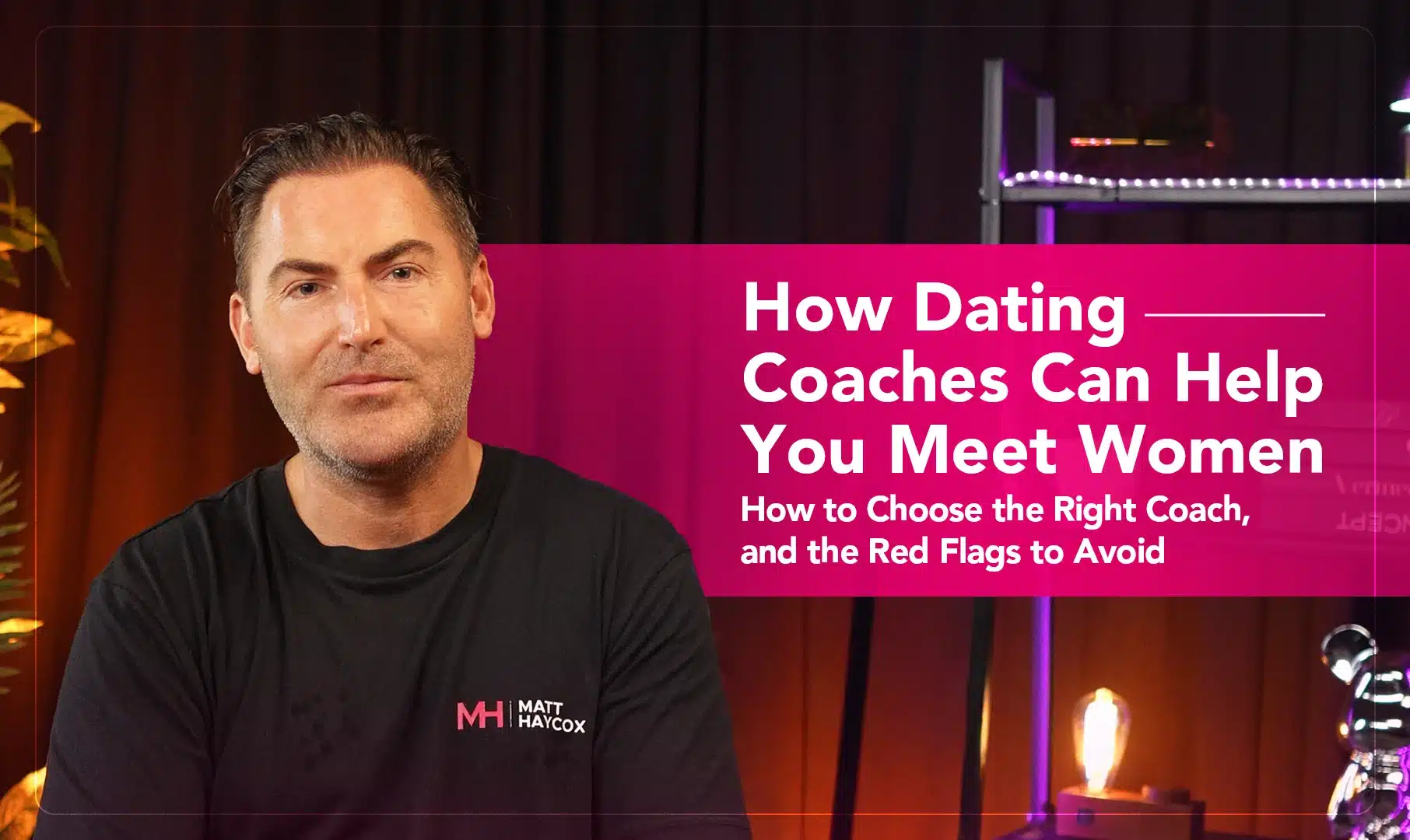

Dating coaching can be genuinely useful, especially if you feel stuck, anxious, or repeatedly getting the same disappointing results. A good coach won’t “teach lines.” They’ll help you build social confidence, communication skills, and a dating process that fits your personality. A bad coach, on the other hand, can push you toward manipulation, shame, or tactics that make your dating life worse.
Below is a practical guide from online dating services experts to what dating coaches can do, how they help online dating specifically, what a strong coach looks like, and how to spot the ones you should avoid.
Dating problems often get treated as something separate from the rest of life. Matt Haycox does not see it that way. The same habits that shape outcomes in business, money and leadership tend to show up in relationships too, especially under pressure.
Haycox has spent years working with founders and high performers who feel stuck despite effort. The pattern is familiar: unclear goals, emotional decisions and chasing tactics instead of building a system that actually fits the individual. Dating coaching, at its best, follows the same corrective path.
That is why this guide belongs here. Not as dating advice, but as a practical breakdown of coaching, accountability and personal responsibility. The principles below are the same ones Haycox talks about elsewhere on this site: drop the gimmicks, understand the process and take ownership of your outcomes.
What a dating coach can realistically help with
A coach can’t guarantee you’ll meet “the perfect woman,” and anyone who promises that is already waving a red flag. What a good coach can do is improve the parts of dating you actually control.
1) Confidence and mindset (without fake bravado)
Many men don’t struggle because they’re “bad,” but because they’re tense, self-critical, or overly outcome-focused. A coach can help you:
- reduce approach anxiety,
- handle rejection without spiraling,
- stop overthinking every message,
- show interest without looking needy.
The goal is calm confidence, not arrogance.
2) Social skills and conversation flow
Good coaches help you become smoother in ways that feel natural:
- how to start a conversation in context (not with canned lines),
- how to listen and respond (instead of interviewing),
- how to flirt lightly,
- how to transition toward asking for a date.
3) Online dating strategy (profile, messaging, and momentum)
Online dating is its own skill. A strong coach can help you:
- choose photos that look like you now,
- write a bio that is specific and attractive,
- improve your first messages,
- move from chat to a real date without becoming pen pals,
- set boundaries and filter out time-wasters.
4) Dating process and self-improvement plan
A coach can help you build a system:
- how often to go on dates,
- where to meet women that fit your lifestyle,
- what kind of first date works for you,
- how to follow up,
- how to build momentum toward a relationship.
Why this mirrors business coaching (and why that matters)
Good dating coaching follows the same principles as good business advice.
In business, entrepreneur and business coach Matt Haycox regularly points out that most failures are not about talent. They come from unclear goals, emotional decision-making and copying strategies that do not fit the person running the company. Dating works the same way.
A solid coach helps you:
- Define what you actually want instead of chasing everything
- Build repeatable processes instead of relying on luck
- Improve communication rather than forcing outcomes
- Measure progress instead of guessing what went wrong
When dating coaching becomes about systems, feedback and self-awareness, it stops feeling awkward and starts feeling grounded. That is where real change happens.
A real-life example of how coaching helps (online)
Imagine this common situation: you match with a woman, the chat is fine, then it dies. You’re not rude—you’re just not creating momentum.
A coach might help you replace vague conversation with a clear, low-pressure step.
Before:
“Hey, how’s your day?”
“Good, you?”
“Good.”
(ends)
After:
“You seem fun to talk to. Want to do a quick 10-minute call this week? If we click, we can grab coffee.”
It’s simple, confident, and easy to say yes or no to. That’s what coaching often does: it turns confusion into clarity.
What a good coach should be like (the traits that matter)
A good dating coach is basically a strong communicator with ethical standards and a practical method.
They should:
- Ask about your goals (casual dating vs relationship, preferences, values)
- Tailor advice to your personality (not force you into a persona)
- Teach skills, not scripts (you should sound like you)
- Focus on consent and respect (non-negotiable)
- Use measurable progress (how many conversations, dates, follow-ups)
- Help you reflect and iterate (what worked, what didn’t, why)
They should also be comfortable saying: “That approach is not you. Let’s find what fits.”
How to find your coach: a practical checklist
Step 1: Look for specificity, not hype
A good coach explains how they work:
- what happens in week 1, week 2, week 3,
- what you’ll practice,
- what results are realistic.
A bad coach sells emotion and fantasy.
Step 2: Ask for their ethical stance
You want to hear things like:
- “No manipulation.”
- “No pressure.”
- “Clear communication wins.”
- “Respect boundaries.”
If they mock women, talk about “dominance,” or teach guilt tactics—walk away.
Step 3: Check if they teach online dating properly
Online coaching should include:
- profile review (photos + bio)
- message practice
- planning dates
- handling flaking and ghosting maturely
- safety and boundaries
If they only talk about “alpha energy” and ignore practical online mechanics, you’re paying for motivational content, not skill.
Step 4: See if they can communicate like an adult
This matters more than their marketing. If they can’t listen, can’t handle nuance, or respond defensively to questions, they won’t coach you well.
What Matt Haycox would say about choosing a coach
Matt Haycox is known for cutting through noise and calling out industries that rely on hype. Dating coaching is no exception.
If this were a business decision, you would never hire a consultant who guaranteed results, refused to explain their method or relied on fear to close you. Dating coaches should be held to the same standard.
A coach is not there to impress you. They are there to improve your judgement, sharpen your communication and help you operate with confidence under uncertainty. If they cannot explain what they actually do week to week, or they sell identity over skill, walk away.
As Haycox often says, if something sounds too polished, it is usually hiding weak fundamentals.
Good coach vs bad coach (quick comparison)
| Category | A good coach | A bad coach |
| Core approach | Skill-building, confidence, communication | Tricks, scripts, “hacks” |
| View of women | Respectful, human, individual | Stereotypes, contempt, “targets” |
| Consent/boundaries | Clear, emphasized, non-negotiable | Minimizes or “pushes through” resistance |
| Advice style | Tailored to your personality | One-size-fits-all persona |
| Online dating help | Photos, bio, messaging, momentum | Only openers and “lines” |
| Promises | Realistic expectations | Guarantees outcomes |
| Teaching method | Practice, feedback, reflection | Hype, shame, fear |
| Metrics | Track progress and behaviors | Focus on ego and “wins” |
| Emotional tone | Supportive and accountable | Aggressive, humiliating, cult-like |
| After a failure | Adjust strategy and learn | Blame you or blame women |
Red flags: markers of a bad trainer
If you see any of these, it’s safer to leave.
- Guarantees (“I will get you a girlfriend in 30 days”)
- Shame-based motivation (“You’re weak if you don’t…”)
- Manipulation tactics (negging, guilt, jealousy games)
- Dehumanising language about women
- Pressure to escalate physically or sexually
- Isolation tactics (“Stop listening to your friends, only trust me”)
- No measurable method—only vibes and slogans
- Upsell trap – constant pressure to buy more packages
A coach should make you more respectful, not more resentful.
Green flags: markers of a strong coach and communicator
Look for these signs.
- They ask thoughtful questions and actually listen
- They help you become clearer, calmer, more authentic
- They encourage real-world practice, not “fantasy texting”
- They teach you to accept “no” gracefully
- They help you filter for compatible women, not chase everyone
- They support healthy self-improvement (style, routines, confidence)
- They talk about dating as mutual choice, not conquest
What to expect from coaching (so you don’t waste money)
A realistic coaching outcome often looks like:
- you approach more comfortably,
- your online conversations have better momentum,
- you go on more dates (with less stress),
- you choose better matches,
- you handle rejection with more stability,
- you show up more confidently and naturally.
That’s real progress. It’s not magic, but it’s meaningful.
Dating, like business, rewards clarity over shortcuts
This is where Matt Haycox’s broader philosophy fits naturally. In business, money and life, he is blunt about one thing. If you rely on shortcuts, borrowed identities or hype, you eventually pay for it.
Good coaching, in any area, is not about outsourcing confidence. It is about building it. The men who get the most value from dating coaching are the ones willing to treat it like any other area of self-improvement: measured, honest and grounded in reality.
If you are interested in that wider conversation, you can explore more straight talking insights on confidence, discipline and decision-making on No Bollocks with Matt Haycox, where these same principles are applied to business, money and personal growth without the fluff.
No gimmicks. No scripts. Just responsibility and progress.