
Executive Summary
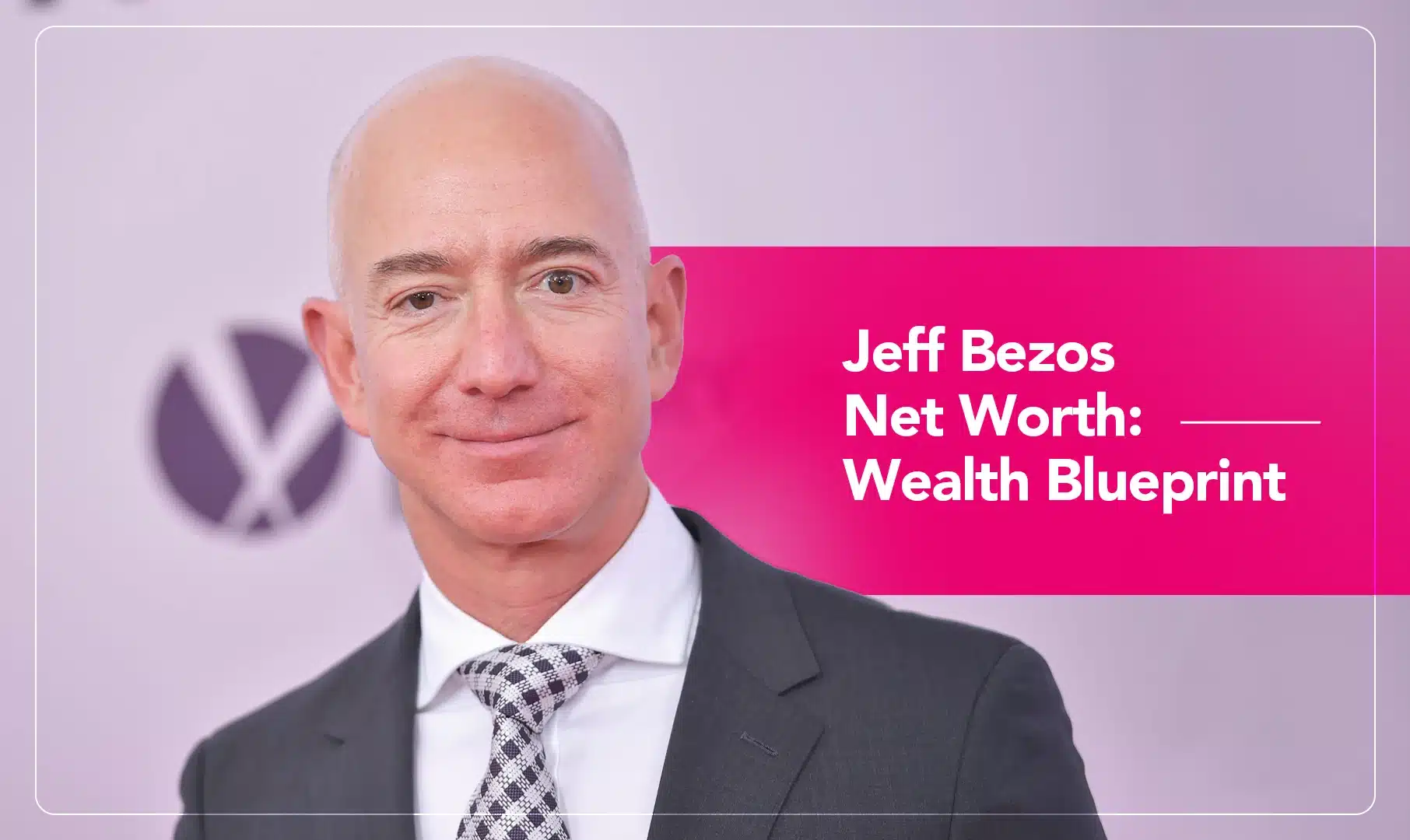
Jeff Bezos’ fortune is one of the cleanest examples of founder-wealth compounding in modern business: one dominant equity engine (Amazon), disciplined share sales via pre-set plans, then redeploying that liquidity into long-horizon bets like Blue Origin and a wide venture portfolio.
This wealth report covers the evolution of Jeff Bezos’s net worth, the mechanics behind his wealth accumulation, key financial milestones, and lessons for entrepreneurs and business owners interested in wealth-building strategies. Whether you’re a business owner, entrepreneur, or general reader curious about how the world’s richest people build and manage their fortunes, you’ll find actionable insights and a detailed breakdown of Bezos’s wealth journey.
As of early April 2026, Bloomberg’s Billionaires Index places Jeff Bezos net worth at roughly $230B to $236B (it moves daily with Amazon’s share price). Bezos has been ranked as the richest person in the world by Forbes at various points, and his net worth is frequently compared to the combined wealth of other billionaires. Notably, Bezos’s wealth increased by $24 billion during the COVID-19 pandemic due to a surge in demand for Amazon’s services. The stark wealth inequality in America is highlighted by the fact that the 400 richest Americans control more wealth than the bottom 60% of the population. The wealth possessed by the richest Americans could, in theory, fund initiatives like eradicating malaria or providing clean water, as the cost of such projects is often only a fraction of their fortunes.
To put Bezos’s net worth in perspective, if his wealth were represented by apples, he would have enough apples to give one to every person in the UK and still have millions left over. Bezos’s wealth has grown significantly during economic downturns, raising questions about the fairness of wealth distribution during crises. The wealth of the super-rich, including Bezos, is often seen as a barrier to social equity, as their financial power can influence political and economic systems.
The big idea for business owners is simple, but it’s not easy: own the engine, protect the engine, then skim profits to build a second engine. Most people do the opposite: they rinse the first engine to buy lifestyle assets and wonder why the compounding stops.
Three key choices define the blueprint:
- Founder ownership held for decades (with inevitable volatility).
- Structured liquidity (10b5-1 plans and periodic sales), mainly to fund new bets.
- Capital allocation into asymmetric outcomes (space, venture, strategic assets like media).
And one uncomfortable truth: even now, Bezos’ net worth still behaves like a levered bet on AMZN. He diversifies, but he does not fully step away from the mother ship.
Early Life and Education
Family Background and Upbringing
Jeff Bezos didn’t just stumble into becoming one of the world’s richest blokes – his journey started with the right foundation: curiosity, grit, and a proper hunger to learn. Born in Albuquerque, New Mexico, Bezos grew up in a family that didn’t mess about when it came to education and hard work. Those early years on his grandfather’s ranch in West Texas weren’t just about mucking out stables – they were about learning to solve problems with your hands, building the work ethic that’d later drive his business empire.
Education was everything for Bezos. After smashing it at school, he got into Princeton University to study electrical engineering and computer science. But here’s the thing – Bezos didn’t just bury his nose in textbooks. He went looking for innovation communities, becoming president of the uni’s Students for the Exploration and Development of Space chapter. That early passion for tech and space exploration? It wasn’t just a hobby – it’d later become Blue Origin, a company that’s trying to change mankind’s future and Earth’s as well.
Bezos’s time at Princeton wasn’t just about getting a fancy bit of paper – it was his launching pad. After graduating summa cum laude, he jumped straight into finance, working on Wall Street and climbing up to senior vice president at D.E. Shaw. This experience gave him a front-row seat to how capital, risk, and scale actually work – skills that’d prove bloody invaluable when he decided to create Amazon, the company that’d completely redefine e-commerce and cloud computing.
The lessons from his early life – problem-solving, focusing on development, and having the balls to tackle big ideas – became the DNA of everything he’d build. As founder and later CEO of Amazon, Bezos built a company that didn’t just deliver unlimited access to goods and services, but set completely new standards for innovation and customer obsession. His decision to step down as CEO and become executive chairman in 2021? That marked a new chapter, letting him focus on other ventures like Blue Origin, The Washington Post, and his philanthropic work.
Jeff Bezos’s net worth, which has made him one of the richest people in history, isn’t down to luck – it’s a direct result of this foundation. His family’s support, his education at Princeton, and his early exposure to both technology and business all contributed to his ability to create and scale companies that’ve changed the world. Through the Bezos Earth Fund and Bezos Expeditions, he’s also shown he’s serious about using his wealth for global development and environmental impact, investing in companies like Google and Facebook, and pledging billions to causes that actually matter.
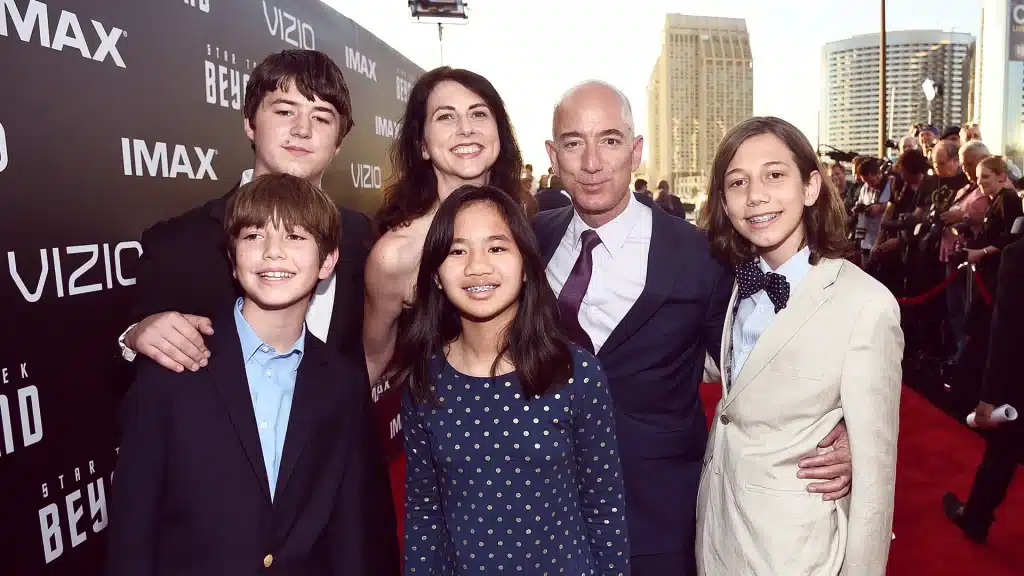
For business owners and entrepreneurs, the blueprint’s crystal clear: invest in your own development, seek out environments that challenge you, and never underestimate the value of a strong foundation. Bezos’s story is a reminder that the seeds of future wealth and impact are often planted long before the world takes notice. No shortcuts, no bullshit – just proper groundwork that pays off years down the line.
Key Financial Metrics
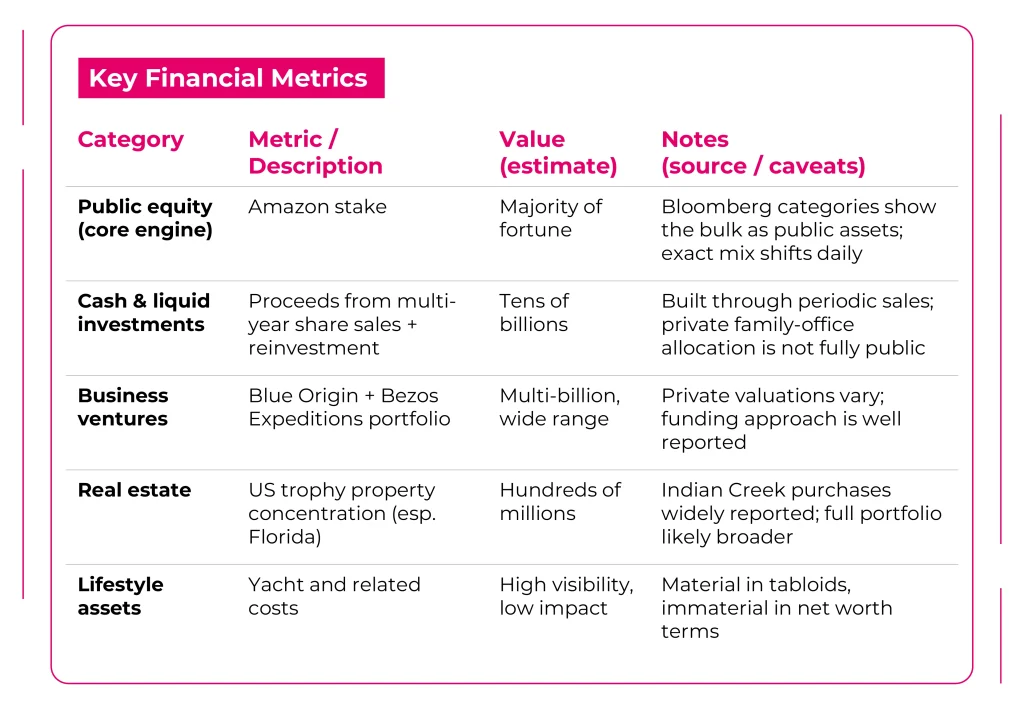
How Bezos’ Net Worth Actually Works (and why it confuses people)
If you’re a founder, think of net worth as two different things:
- Mark-to-market wealth (today’s valuation of your equity).
- Spendable wealth (cash after tax, plus liquid investments).
Bezos is a poster child for this split. His net worth headline is huge, but much of it is still locked in the price of Amazon shares. When he wants liquidity, he does it in a controlled way through planned selling.
News coverage often focuses on headline figures and estimates, which can be misleading without understanding the underlying mechanics. As a comment, it’s important to distinguish between mark-to-market wealth—often cited in news reports using large figures and estimates—and the actual spendable wealth available to billionaires like Bezos. Bezos’s net worth is especially volatile, frequently changing due to Amazon stock price movements, stock sales, and other investments, making it a prime example of how billionaire wealth can fluctuate over time.
This is why a “net worth” number can be technically true and still not tell you much about day-to-day reality.
Jeff Bezos Primary Income Streams
1) Founder Equity Appreciation (Amazon)
This is the main event. Bezos founded Amazon in 1994 and stayed tied to the upside even after stepping back from CEO duties. The wealth curve accelerates when the business becomes a platform and when AWS becomes a major profit driver (market re-rating behaviour).
Founder lesson: salaries pay bills, equity buys freedom.
2) Structured Liquidity via 10b5-1 Plans (Share Sales)
Bezos has repeatedly used 10b5-1 trading plans (A 10b5-1 plan is a pre-arranged schedule that allows insiders to sell shares at predetermined times, reducing the risk of insider trading allegations.) and scheduled disposals rather than ad-hoc selling. That’s a big deal for anyone building wealth off a single concentrated asset: it reduces ‘panic selling’, spreads risk and keeps you honest.
Recent examples reported by Reuters include:
- A plan to sell nearly $5B worth of Amazon shares (reported July 2024).
- Share sales of around $737M in June 2025 under a 10b5-1 plan.
- Reuters also reported a roughly $2B Amazon share sale (Feb 2024), again referencing a pre-adopted plan.
Business owner takeaway: if your wealth is concentrated (and it usually is, early on), build a rules-based exit system. Decide when you’re calm, not when you’re stressed.
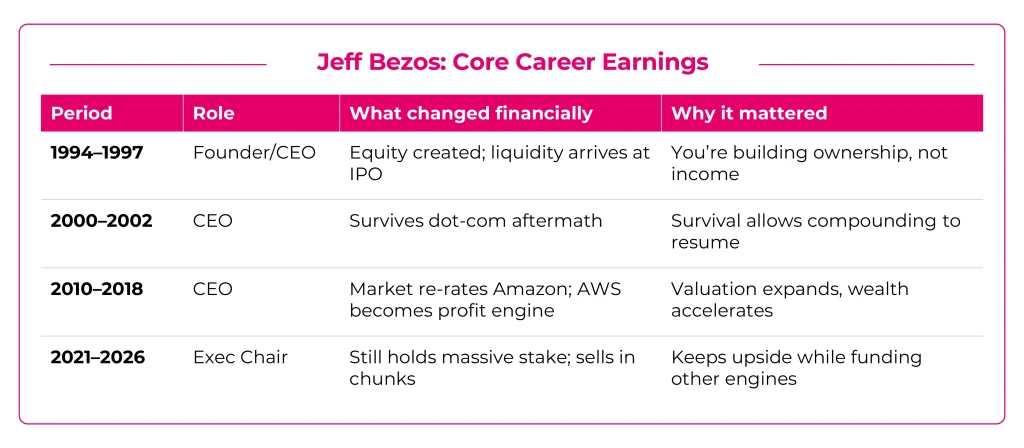
Core career earnings
Jeff Bezos Secondary Income Streams
Blue Origin (Second Engine, Long-Horizon)
Bezos has repeatedly described funding Blue Origin through Amazon share sales. Reuters reported in 2017 that he was selling about $1B of Amazon stock per year to fund the rocket venture.
This is not a side hustle. It’s a capital-intensive moonshot. For founders, it’s a clear play: harvest a mature cash machine to fund a long-term optionality bet.
Bezos Expeditions (Venture Portfolio)
Bezos has invested across sectors through his personal investment vehicle, with bets that offer asymmetry: you can lose 1x on a deal, but win 50x on the right one. The key is portfolio construction and time horizon.
Founder lesson: venture isn’t “diversification” if you don’t have a process. It’s just expensive entertainment.
Media Ownership (Strategic Asset)
Bezos purchased The Washington Post in 2013 for $250 million. Editorial and ownership decisions under his leadership have impacted the newspaper’s subscribers, with some choosing to cancel their subscriptions in response to controversial actions.
Owning a major media property is less about quarterly ROI and more about influence, access and leverage. It’s a strategic asset class, not a passive investment.
Asset Portfolio Analysis
Real Estate Holdings (Florida Concentration + Trophy Assets)
Bezos has built a high-profile property cluster on Indian Creek (Miami’s ‘Billionaire Bunker’ area). Bloomberg reported a $68M purchase in 2023, and reporting has repeatedly noted adjacent high-value buys as part of a compound strategy.
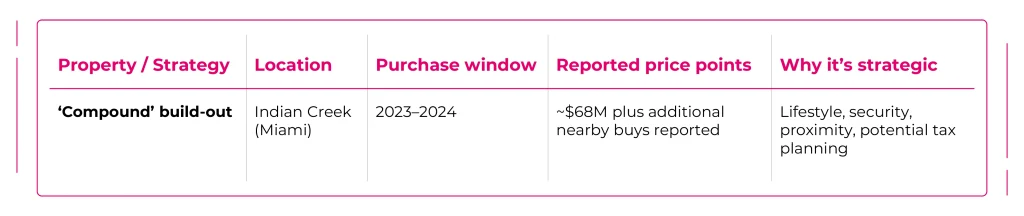
Entrepreneur insight: property is often a lifestyle decision dressed up as an investment. At Bezos scale, it’s still not the main wealth driver. The engine remains equity.
Luxury Assets
Yes, he has a very expensive yacht. No, it doesn’t matter to the wealth blueprint. It’s a rounding error next to Amazon equity.
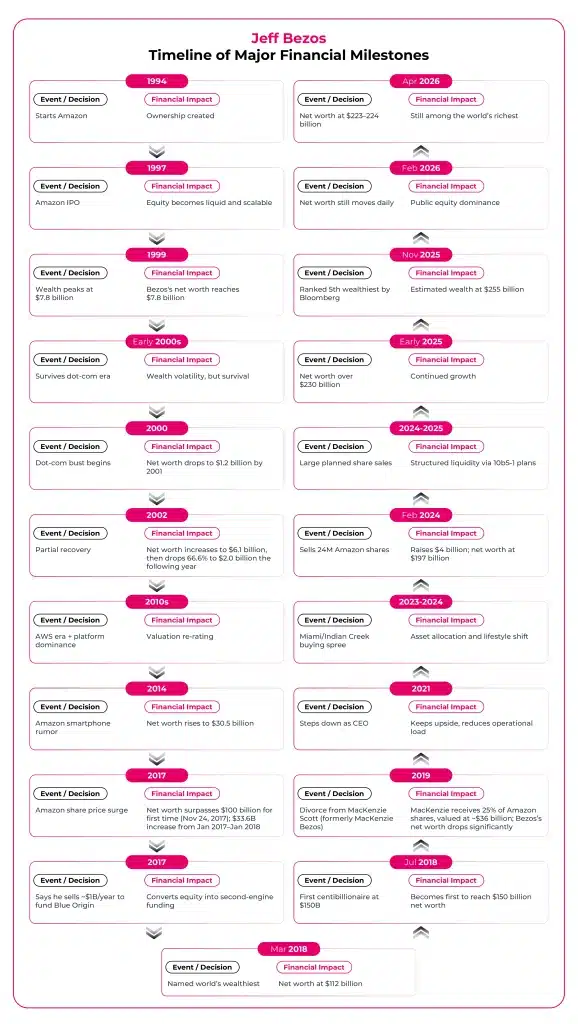
Timeline of Major Financial Milestones
Comparison to Other Billionaires
When you’re looking at the world’s richest people, Jeff Bezos is right there at the top, constantly swapping places with Elon Musk. As of 2025, Bezos is sitting on around $239.4 billion. That’s not just rich, that’s redefine-what-money-means rich. Compare that to Warren Buffett’s roughly $100 billion or Mark Zuckerberg’s $120 billion from his Facebook and Meta empire, and you can see the scale we’re talking about.
Here’s what separates Bezos from the other billionaires: it’s all about the engine driving that wealth. Buffett built his fortune through decades of smart value investing with Berkshire Hathaway. Zuckerberg rode the social media wave with Facebook’s global takeover. But Bezos? His fortune comes straight from owning a massive chunk of Amazon and making strategic bets through Bezos Expeditions. Even Musk, who’s worth around $200 billion from Tesla and SpaceX, knows Amazon’s business model is something else entirely.
Bezos cracked the code on wealth creation in a way that’s genuinely different. Sure, his early investments in Google and Facebook through Bezos Expeditions added billions, but it’s Amazon that really set him apart—e-commerce, cloud computing, digital infrastructure, the lot. In the ultra-wealthy game, it comes down to creating and owning a platform that touches billions of lives. If you’re building a business, the lesson’s crystal clear: getting rich isn’t just about making more money. It’s about building the right wealth engine and hanging onto it for the long haul.
Bezos’s Net Worth and Philanthropy
Jeff Bezos’s massive net worth has put him right in the spotlight when it comes to what billionaires should actually do with their money. In 2018, he put his money where his mouth is and pledged $2 billion for the Day 1 Fund. Here’s what that actually does: it helps homeless families and builds proper preschools where kids need them most. Not bad for a start, but let’s be honest – it’s just the beginning of what he could be doing.
Then there’s the Bezos Earth Fund – $10 billion committed to fighting climate change. That’s serious money backing real projects and organisations that are actually trying to save the planet, not just talking about it. And don’t forget he owns the Washington Post, which means he’s backing independent journalism when everyone’s worried about fake news and media manipulation. At least someone’s putting money behind a free press.
But here’s the thing, plenty of people still think he’s not doing enough. Critics say when you’ve got that much wealth, you should be doing more to fix inequality instead of just picking your favourite causes. Fair point. Some argue his giving could be way more ambitious given the scale of his fortune. Bezos has said he’ll give away most of his wealth whilst he’s alive, and recently he’s definitely stepped up the pace. If you’re a business leader, here’s what you need to know: when you’ve got serious wealth, everyone’s watching how you use it. Your choices don’t just shape your legacy – they can change millions of lives.
Impact on Society as the Richest Person
Amazon’s Societal Impact
Look, Jeff Bezos is the richest bloke on the planet, and that gives him serious clout—not just in business, but everywhere else too. Amazon, the company he built from scratch, completely changed how we shop, find stuff online, and even how we work. It’s created millions of jobs and set the bar for making things fast and easy. But here’s the thing—it’s not all sunshine and rainbows. Amazon gets hammered for how it treats workers, what it’s done to small businesses, and those dodgy tax tricks. People are asking tough questions about what these tech giants owe the rest of us.
Then there’s his ownership of the Washington Post, which threw him right into the political firing line, especially when Trump was having a go at him. It shows you how messy things get when you’ve got that much money and power. People watch every move you make. Despite all the drama, Bezos is still calling the shots in global business. What he decides affects markets, changes policies, and impacts millions of people’s lives.
The man’s worth keeps breaking records, and that means he’s got the cash and the platform to drive real change. His charity work, business moves, and what he says publicly, it all gets scrutinised by everyone. His legacy comes down to how he uses that wealth and influence. For entrepreneurs and business owners, Bezos’s story is a proper reminder that when you make it big, you’ve got massive responsibility. You can make a real difference to society, but it can go either way.
Strategic Pillars Behind Bezos’ Wealth-Building
1) ‘Own the Engine’
This is the core principle. Bezos’ wealth is still largely a function of Amazon’s market cap and his retained stake. Simple, brutal, effective.
2) ‘Build a High-Margin Layer’
AWS (and platform economics more broadly) shows a classic compounding tactic: use a distribution engine to build a margin engine. Business owners should look for their equivalent: subscriptions, infrastructure, marketplaces, licensing or data.
3) ‘Sell With a Purpose’
Share sales are not random. Reuters coverage shows repeated reliance on structured selling and sizeable planned disposals.
That discipline is the difference between ‘taking chips off the table’ and ‘hollowing out the golden goose’. For a UK-scale version of refusing to sell, Peter Jones’s never-sold compounding engine has run since 1998.
4) ‘Second Engine, Longer Horizon’
Blue Origin is the “if this hits, it changes the world” bet, funded by the first engine. Reuters’ reporting on annual stock sales explicitly frames this model.
In addition to Blue Origin, Bezos is also a co-founder of Altos Labs, a biotechnology company launched in September 2021 that focuses on longevity therapeutics.
5) ‘Portfolio Optionality’
The venture portfolio is a series of asymmetric bets. The goal is not to be right every time. It’s to be positioned so a few right calls carry the whole portfolio.
Actionable Insights for Business Owners (No Fluff)
Concentrate to win, diversify to stay won
Early on, concentration is how you get escape velocity. Later, diversify systematically so one market wobble doesn’t wipe you out.
Put liquidity on rails
If you’re founder-rich and cash-light, set rules: quarterly planned sales, thresholds, tax planning, and an investment policy. Bezos’ use of planned selling is the grown-up version of this.
Build a ‘profit layer’ that survives cycles
If your business is only a revenue engine, you’re vulnerable. Bezos scaled into profit engines that changed valuation behaviour.
Fund the moonshot with the money printer
Do not fund a moonshot from a fragile core business. Fund it from a durable engine. That’s the Blue Origin pattern.
Stop confusing status purchases with wealth strategy
Property and lifestyle assets are fine, but they do not replace equity compounding. If you want Bezos outcomes, you need Bezos mechanics.
Critics argue that the immense wealth of individuals like Bezos could be used to address pressing social issues, such as poverty and health care access. Many believe that the wealth controlled by billionaires like Bezos could fund initiatives to eradicate poverty and improve public health on a large scale, especially considering the high costs of health care and medical treatments that many face today.
‘Founder Playbook’ Checklist (Bezos-Inspired)
Here’s the practical “do this on Monday” version:
- Write down what your ‘engine’ is (the asset that can compound for 10+ years).
- Decide your minimum ownership level and defend it aggressively.
- Create a selling rule (time-based or price-based) so you can de-risk without nuking upside.
- Define where liquidity goes: tax reserve, safety buffer, diversified liquid portfolio, then moonshot capital.
- Build a second engine only after the first is durable.
No heroics. Just boring discipline that prints money over time.
Final Thoughts
Lessons for Entrepreneurs
The Bezos blueprint is not about being flashy. It’s about ownership, patience and structured decision-making. The public story is ‘richest guy on Earth’. The real story is a founder who held equity long enough to let compounding do the heavy lifting, then used planned liquidity to fund a second engine with a longer horizon than most people can even stomach. Notably, Bezos stepped down as Amazon’s CEO on July 5, 2021, marking a significant leadership change in his career.
If you’re a business owner reading this thinking ‘must be nice’, fair. But the moves themselves are not magical. They’re just rare because they require discipline, long timeframes and an ability to ignore noise. Experiencing a good year in business or personal finance can have a lasting impact on financial stability, sometimes lifting individuals or families out of poverty for the long term. The ongoing debate about wealthy people and their impact on society often references billionaires like Elon Musk, Mark Zuckerberg, and Warren Buffett, highlighting the vast gap between the super-rich and the general population.
Social Criticism and Philanthropy
Jeff Bezos’s wealth has been criticized for its implications on social issues, particularly regarding the treatment of Amazon workers and the living wage debate. Senator Bernie Sanders has called on Bezos to pay Amazon workers a living wage, suggesting that Bezos could set a precedent for corporate responsibility. In the context of government spending and stimulus measures, the resulting debt is often discussed as a burden on taxpayers, especially when wealth distribution remains unequal. The absence of sufficient action or resources to address pressing social issues, such as poverty and disease, is frequently highlighted by critics. For example, two thirds of malaria deaths occur among children under five, underscoring the devastating impact of such issues on children. In April, statistics often reveal the ongoing toll of diseases and the need for continued efforts. Bezos has committed $2 billion to social issues through his philanthropic efforts and has made significant philanthropic commitments, including a $10 billion pledge to combat climate change, reflecting a growing trend among billionaires to engage in philanthropy.
Copy the structure, not the scale.
Read more of our wealth reports including Taylor Swift, David Beckham, Mark Zuckerberg, Ryan Giggs, Elon Musk, Tom Cruise, Gordon Ramsay and more on our No Bollocks Business HQ.
Browse more celebrity wealth reports across music, sport and business.
If you’re building a business of your own and want experienced support, you can work with Matt directly.