
Most small teams think ‘company culture’ means beanbags, slogans, or a Friday pizza ritual. In truth, it’s far more serious and far more powerful. Culture decides who thrives, who leaves, and how your team behaves when you’re not in the room. You don’t need fancy HR statements to build it. You need clarity, consistency, and leadership that rewards the right things. For the broader framework on people systems, hiring, and cadence, refer to People & Culture: The Business Leadership Playbook.
In this article, we’re going to discuss how to:
- Define company culture in plain English with examples that apply to small teams
- Identify the behaviours and rituals that shape culture every day
- Build a culture playbook that drives performance without corporate fluff
What Company Culture Really Means
Company culture is simply the set of behaviours you reward, tolerate, and repeat. It’s how people make decisions, handle mistakes, and treat each other when no one’s watching. It isn’t about what you say; it’s about what you do, who gets promoted, and what gets ignored.
In a small team, culture forms fast because everyone can see everything. The moment you excuse a bad attitude because ‘they’re good at sales’, you set a precedent. The moment you celebrate someone sharing a win, you show what matters. Culture is built in those micro-decisions, not in meetings or offsites.
A practical test: if someone new joined tomorrow, could you describe what ‘good’ looks like here in under sixty seconds, and would everyone else say roughly the same thing? If not, your culture exists, but it’s uncontrolled.
Why Culture Matters More For Small Teams
In a big company, systems hold people up. In a small team, people are the system. One disengaged or toxic hire can destroy momentum and morale faster than a cashflow issue.
Culture drives execution speed. When people trust each other, they take ownership, make faster calls, and raise flags early. It also drives recruitment and retention. Good people stay where expectations are clear and consistent; they leave when politics creeps in.
For founders, culture is leverage. It scales decisions without your involvement. Done right, it keeps quality and energy high even when you’re not around.
The Core Elements Of Company Culture
Culture is built from five visible layers that feed into each other.
- Values: The principles that guide decisions, such as honesty, ownership, speed, and learning.
- Behaviours: The actions that prove those values are real. Example: ‘Own it’ becomes ‘Flag problems early and post solutions in writing’.
- Rituals: The recurring habits that reinforce behaviour, such as Friday wins, customer call debriefs, or team retros.
- Symbols: What people see, including promotions, recognition, spending, office layout, and founder time. These show what matters.
- Stories: How success and failure are told internally. If every success story stars the founder, culture becomes dependency, not ownership.
You don’t need to brand these layers. Just make them visible and consistent.
Building Culture Intentionally (Not Accidentally)
Most teams accidentally design their culture. A founder’s habits become norms. One vocal employee sets tone. Soon the business acts like them, for better or worse. To build culture intentionally, you need a few structured actions.
Start by writing three to five operating values that describe how you actually win. Avoid generic ones like ‘integrity’ or ‘innovation’. Go practical: ‘Write it down’, ‘Fix it fast’, ‘Don’t hide from problems’. Then translate each into behaviours anyone could observe.
From there, create a handful of rituals that rehearse those behaviours. Example: if ‘learning fast’ is a value, run a twenty-minute Friday ‘What we fixed’ session. If ‘ownership’ matters, end meetings with who’s accountable for what and a public checklist.
Culture doesn’t live in documents. It lives in repetition.
Examples Of Company Culture In Small Teams
Example 1: The Accountable Agency
A ten-person digital agency builds culture around written accountability. Every project has a published owner and a visible Monday plan. Missed deadlines are analysed in a Friday Fix session, blame-free but factual. Behaviours: own mistakes, document fixes, and share learnings. Result: projects finish faster and clients renew.
Example 2: The Learning Startup
A six-person SaaS team rewards experimentation. Every engineer posts a one-page summary after a test explaining what worked, what didn’t, and what’s next. They celebrate ‘failed but useful’ experiments monthly. This normalises risk-taking and reduces fear. Result: faster iteration and fewer hidden mistakes.
Example 3: The Service Crew
A trades business with eight employees defines culture as ‘We turn up, we’re polite, we finish clean’. They rehearse it daily in a ten-minute morning huddle. Jobs that meet that standard are recognised in a weekly text to the whole team. Customers feel it, reviews rise, referrals grow, and turnover falls.
Small teams can shape culture faster than large ones because signals are immediate and feedback loops are tight.
How To Measure Company Culture
Culture feels intangible, but you can track it. Watch these signals.
- Staff Retention: Strong culture reduces voluntary turnover.
- Customer NPS Or Review Trends: If frontline behaviour improves, customer experience follows.
- Manager Load: In healthy cultures, managers coach; in weak ones, they micromanage.
- Peer Feedback: If feedback is given and received without drama, culture is solid.
- Meeting Quality: Shorter meetings with real decisions show maturity.
You don’t need surveys at five staff. You need observation and consistency. Data just validates what you already know.
Operational Guardrails That Keep Culture Healthy
Culture dies when rules drift. Create a few guardrails that keep the system fair and sustainable.
- Promotions and pay rises require evidence of both results and behaviours.
- No one gets rewarded for heroics that break process.
- Managers must run weekly one-to-ones and monthly reviews; these are non-negotiable.
- Every new hire goes through the same onboarding playbook.
- Quarterly, remove one behaviour or ritual that no longer serves.
These aren’t HR rules. They’re operational hygiene for culture.
Culture Risks And How To Hedge Them
Risk 1: The Founder Bubble – Everyone waits for your opinion. Hedge by delegating decisions with written context.
Risk 2: The High Performer Jerk – Results without behaviour. Hedge by firing fast if they poison morale.
Risk 3: The Feel-Good Drift – Meetings about ‘vibe’ instead of delivery. Hedge by tying rituals to business outcomes.
Risk 4: Hiring Too Fast – Adding people faster than culture can absorb. Hedge with strong onboarding and role clarity.
If you correct these early, your company culture becomes self-sustaining.
Validation Path In 14 Days
You can start shaping culture this month.
Days 1–2: Write three practical values and one behaviour under each.
Days 3–4: Announce them in writing, not meetings.
Days 5–7: Create two rituals that rehearse them, one weekly and one monthly.
Days 8–10: Run those rituals once and document what worked.
Days 11–14: Gather informal feedback and adjust.
Repeat quarterly. The best cultures are designed in iterations, not workshops.
Where Culture Fits In Your People System
Culture connects every people process including hiring, onboarding, management cadence, and performance. It’s the thread that ensures you don’t just hire skilled people but the right people. When you design your hiring scorecards or onboarding checklists, include one or two culture-based outcomes. For example: ‘Writes weekly progress update without chasing’.
For deeper alignment and templates you can use directly, cross-reference People & Culture: The Business Leadership Playbook and match your rituals to your cadence.
Start Designing Your Culture Today
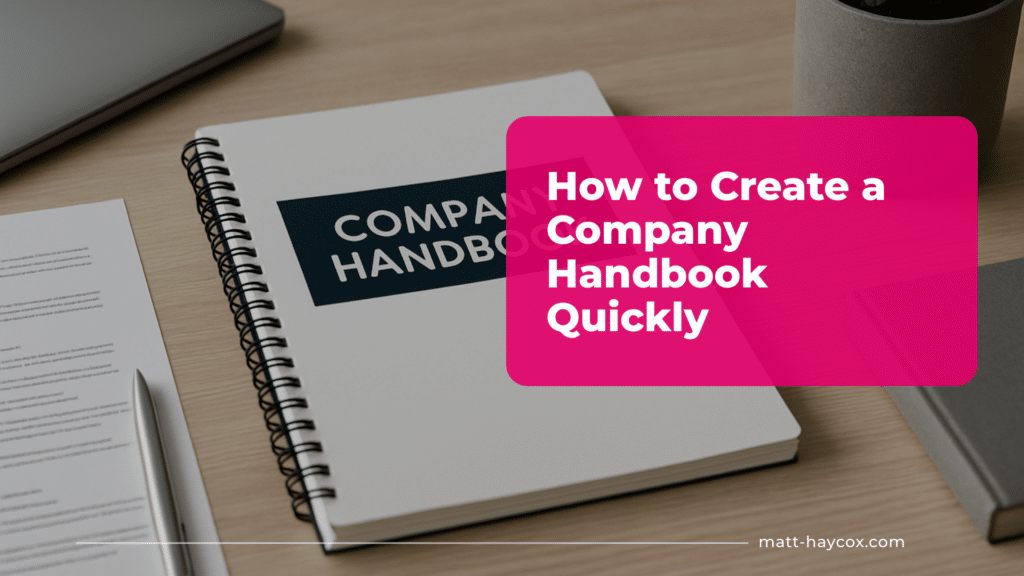
You don’t need consultants or workshops to define culture. You need clarity and a repeatable process. Download the Company Culture Handbook Starter Pack, a ready-to-use template that helps you define values, behaviours, and rituals in plain English. Download the Company Culture Handbook Starter Pack and build a culture your team actually lives, not just talks about.
Key Takeaways
- Company culture is built on behaviours, not slogans; it’s what you reward, tolerate, and repeat.
- Small teams have a cultural advantage because signals travel faster and alignment is visible.
- Write three clear values, define behaviours under each, and rehearse them in small rituals weekly.
FAQ For Company Culture
What is company culture?
It’s the collection of behaviours, decisions, and stories that define how work gets done. In short, how people act when no one’s watching.
Why is company culture important for small teams?
Because small teams feel every behaviour instantly. A single toxic attitude can drag morale down, while clear, shared standards create speed and trust.
How do you create company culture intentionally?
Write three to five core values that reflect how you win, define observable behaviours under each, and build simple rituals that reinforce them like weekly reviews or Friday wins.
Can culture be measured?
Yes. Track retention, customer feedback, and manager load. When these improve alongside delivery, your culture is working.
How does hiring affect company culture?
Every hire either strengthens or weakens your culture. Use scorecards and behaviour-based interviews to filter for alignment before skills.
What if our culture feels inconsistent across teams?
You need shared rituals and communication. Bring everyone back to a single cadence of meetings and decision logs so the same values are rehearsed everywhere.
Can culture change over time?
It should. As your business scales, revisit values and behaviours quarterly. Retire what no longer fits and add new ones that reflect the current reality.
Is company culture the same as employee happiness?
No. Happiness is emotion; culture is behaviour. Healthy cultures often drive satisfaction, but the goal is alignment and performance, not constant comfort.