Executive Summary
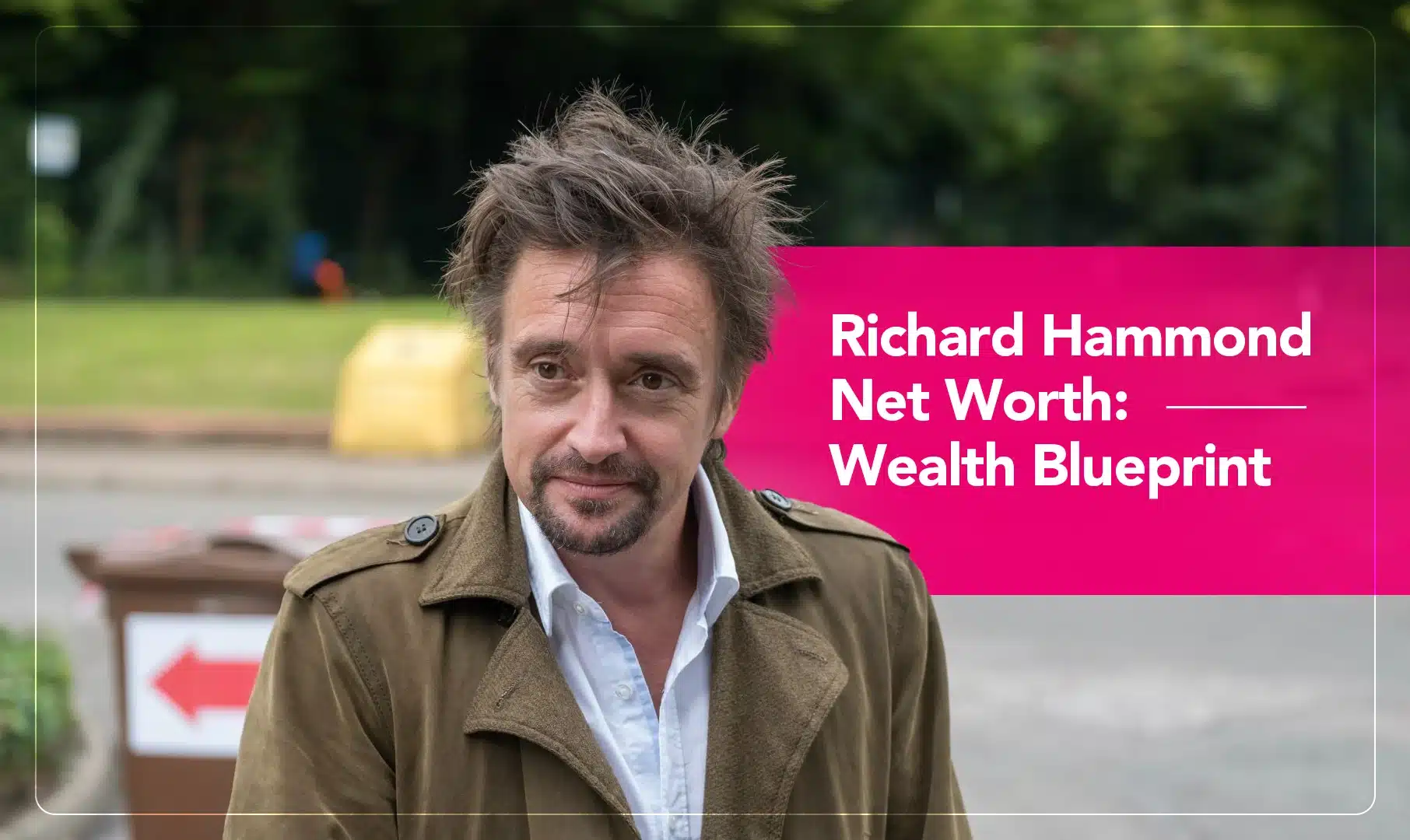
Richard Hammond’s estimated net worth, as of early 2026, is roughly £25 million to £30 million, with public estimates ranging from about £20 million to £45 million. The spread reflects two things: his earnings from The Grand Tour flowed through a private production company whose distributions were only partially visible, and his finances have recently been reshaped by a divorce announced in 2024 whose terms are private. Call it £27 million as a defensible midpoint, clearly marked as an estimate.
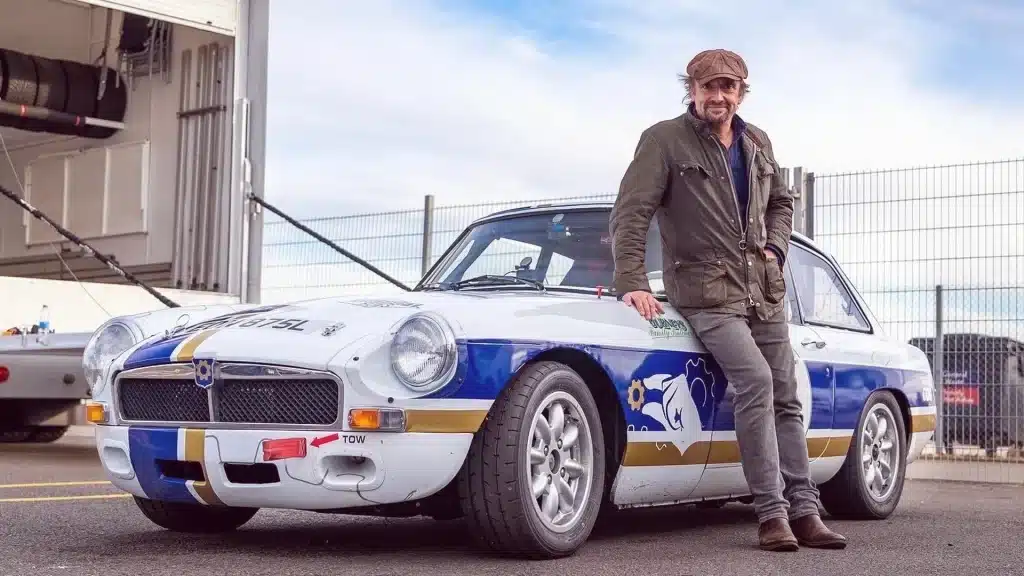
The core wealth drivers are two decades of premium television pay, first a BBC salary as one-third of Top Gear’s golden-era trio from 2002 to 2015, then a far richer stint as a shareholder in W. Chump & Sons, the company that made Amazon’s The Grand Tour from 2016 to 2024. Around that sit a busy parallel presenting career (Brainiac, Total Wipeout and more), books, and his current second act: The Smallest Cog, the classic car restoration business he founded in 2021 and turned into owned television content.
Four achievements matter most financially. First, landing the 2002 Top Gear relaunch seat, the platform everything else stands on. Second, surviving the 288mph jet-car crash of 2006, an event with profound personal cost that paradoxically cemented his national-treasure status. Third, following Clarkson and May to Amazon in 2015 as an equity partner rather than an employee, the single biggest upgrade of his earning life. Fourth, converting his hobby into a business and a show with The Smallest Cog and Richard Hammond’s Workshop from 2021.
What distinguishes Hammond’s money story within the Top Gear trio is that he was the grafter of the three: the one who ran the most parallel shows, took the most bookings, and needed the Amazon equity years most, having never held a stake in the Bedder 6 venture that enriched Clarkson during the BBC era. This report is part of our celebrity net worth analysis series.
The trajectory: local radio wages through the 1990s, a solid BBC salary plus prolific side-presenting from 2002, the Amazon step change from 2016, and since 2021 a pivot from fees towards owned business and content, now complicated by the divorce. The timeline shows the gears.
Key Financial Metrics
| Category | Metric / Description | Value (estimate) | Notes (source / caveats) |
|---|---|---|---|
| Total net worth | Estimated personal net worth, early 2026 | ~£27m (range £20–45m) | Press estimates vary widely; divorce terms private |
| Cash & Investments | Retained BBC, Amazon-era and side-presenting earnings | ~£15–20m | Grand Tour years est. £5m+/yr at peak via W. Chump & Sons |
| Business equity | The Smallest Cog, Chimp Productions interests | ~£1–3m | Early-stage restoration business plus production interests |
| Media income | Ongoing presenting, podcast, licensing | ~£1–2m/yr (est.) | Post-Grand Tour fee level |
| Real Estate | Bollitree Castle estate, Herefordshire | ~£5–7m | Bought ~2008 for a reported ~£2m; subject to divorce settlement |
| Endorsements | Occasional motoring-adjacent campaigns | Low six figures/yr (est.) | Never a heavy endorser |
| High-value assets | Classic car and motorcycle collection | ~£1–2m | Partly sold down in recent years |
| Known setbacks | DriveTribe closure (2022); divorce (2024–) | Seven-figure impacts | Both are material to the range above |
Before we lift the bonnet: if the fee-to-equity arc below feels familiar, talented, well paid, but light on ownership, that’s a gap Matt helps people close: work with Matt or explore consulting.
Richard Hammond’s Primary Income Streams
Hammond earns as a presenter first and an owner second, and the ratio between those two has defined his financial life: salary at the BBC, equity at Amazon, and now a hybrid of fees plus a small owned business he is building in public.
Core Career Earnings
| Year / Period | Project / Contract | Role / Position | Performance Metric | Est. Earnings | Notes (deal structure, source) |
|---|---|---|---|---|---|
| 1989–2001 | BBC local radio, then satellite motoring TV | Presenter | Regional profile | Modest five figures/yr | The decade of graft before the break |
| 2002–2015 | Top Gear, BBC | Co-presenter | ~350m global viewers at peak | ~£500k rising towards £1m/yr (est.) | Salary only; unlike Clarkson, no Bedder 6 equity |
| 2003–2008 | Brainiac: Science Abuse (Sky) | Host | Cult hit | Six figures/yr (est.) | The busiest side-hustler of the trio |
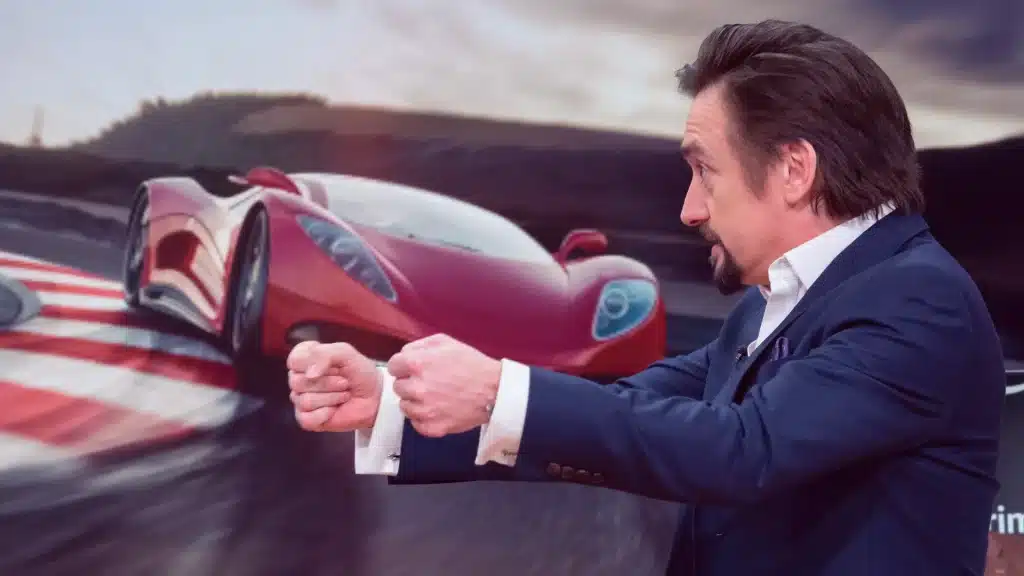
| 2006 | Vampire jet car crash at 288mph | n/a | Near-fatal brain injury | Insurance and recovery; no lasting earnings loss | Public sympathy deepened his brand |
| 2009–2012 | Total Wipeout (BBC), Blast Lab, engineering documentaries | Host | Prime-time family audience | Six-to-seven figures/yr blended (est.) | Peak parallel-career volume |
| 2016–2024 | The Grand Tour, Amazon | Co-presenter and shareholder in W. Chump & Sons | Amazon’s flagship launch commission (~£160m reported budget) | ~£4–7m/yr at peak (est.) | The equity years; dividends plus fees, ending with the 2024 finale |
| 2021–present | Richard Hammond’s Workshop (Discovery+) and The Smallest Cog | Owner-presenter | Returning series | Fees plus business revenue | The pivot to owned content about an owned business |
| 2023–present | Podcasts and one-off presenting | Host | Steady bookings | Six figures/yr (est.) | The post-Tour fee base |
The scaling pattern has one giant step in it. Through the BBC years Hammond was well paid but structurally the junior earner of the trio: Clarkson and producer Andy Wilman held stakes in Bedder 6, the venture monetising Top Gear commercially, while Hammond and May drew salaries and made up ground with relentless side work, in Hammond’s case Brainiac, Total Wipeout and a stream of documentaries that plausibly doubled his BBC income in the busiest years.
The 2015 move to Amazon corrected the structure. As a shareholder in W. Chump & Sons alongside Clarkson, May and Wilman, Hammond finally participated in production margin on a commission reported at around £160 million for the first three seasons. Company accounts coverage during the peak years pointed to seven-figure annual distributions per partner on top of fees, comfortably his best-earning period, and it ran until the format’s 2024 farewell special.
The third act is smaller money but better structure: The Smallest Cog (2021) is a real restoration business he owns outright, and Richard Hammond’s Workshop turns its ups and downs into paid content, the same own-the-subject trick Clarkson runs at Diddly Squat, executed at workshop scale rather than farm scale.
Publishing / Catalogue / IP Ownership
| Year | Asset / Segment | Counterparty | Deal Type | Est. Value / Multiple | Notes |
|---|---|---|---|---|---|
| 2002–2015 | Top Gear brand economics | BBC / Bedder 6 | Salary only; no equity | The structural miss | The gap between him and Clarkson’s BBC-era wealth |
| 2006–2010s | Books (On the Edge, As You Do, children’s titles) | Orion and others | Advances plus royalties | Seven figures cumulative (est.) | On the Edge, the crash memoir, was a major bestseller |
| 2016 | W. Chump & Sons equity | With Clarkson, May, Wilman | Founding shareholder | Seven-figure annual distributions at peak (est.) | The correction of the BBC-era miss |
| 2016–2022 | DriveTribe | Co-founded with the trio and Wilman; VC-backed (~$20m raised) | Founder equity | Shut down 2022; effectively written off | The visible venture failure |
| 2021–present | The Smallest Cog and Chimp Productions interests | Own vehicles | Founder ownership | Early-stage | Owned business plus owned show format |
The ownership timeline tells the story in three beats: a decade of watching others own the upside at the BBC, eight years of finally holding equity at Amazon, and a failed side bet in DriveTribe, the trio’s social platform for petrolheads, which raised roughly $20 million from investors including 21st Century Fox before closing in 2022. His current IP position is modest but clean: he owns the workshop, the restoration brand and a slice of the content built on them. He is far from the only star to learn the ownership lesson mid-career; the fighters who converted fame into equity did it at far greater scale.
Film / TV / Other Creative Projects
The parallel-presenting catalogue is unusually deep, Brainiac, Total Wipeout, Crash Course, The Great Escapists, engineering specials, and functioned for years as a second salary. Individually none rival the main franchises; collectively they plausibly added £5 million-plus across the BBC era and explain how a salary-only Top Gear presenter still built early wealth.
Recap: roughly two-thirds of the estimated net worth is banked fees and Amazon-era distributions in the cash bucket, with the Herefordshire estate the other visible block and the young business equity the growth hope, all of it now subject to the division a divorce brings.
Richard Hammond’s Secondary Income Streams
Endorsements & Sponsorships
| Brand | Product Category | Years Active | Deal Type | Est. Annual Value / Range | Notes |
|---|---|---|---|---|---|
| Motoring and insurance-adjacent campaigns | Various | Sporadic since the 2000s | One-off spots | Low six figures/yr at most (est.) | Never a heavy endorser; brand-safe, occasional |
Endorsement income has always been marginal: the Top Gear trio’s BBC contracts constrained commercial work for years, and post-Amazon his face mostly promotes his own ventures. The pattern matches the series-wide rule: the presenters who built wealth did it through fees and equity, not ambassador cheques.
Business Ventures
| Venture / Company | Sector | Role | Ownership / Stake | Outcome / Current Status | Notes |
|---|---|---|---|---|---|
| W. Chump & Sons | TV production | Founding shareholder | Significant minority | Produced The Grand Tour to 2024; wound down thereafter | His most lucrative venture by far |
| DriveTribe | Digital media | Co-founder | Founder stake | Raised ~$20m; closed 2022 | The write-off |
| The Smallest Cog | Classic car restoration | Founder | Majority/whole | Trading in Hereford since 2021; struggles and wins documented on screen | Real business, modest scale |
| Chimp Productions / podcast ventures | Media | Founder | Control | Ongoing | Post-Tour content vehicles |
The honest read: Hammond is a presenter-turned-small-operator rather than a portfolio investor. W. Chump & Sons was the fortune-maker but was always a vehicle for one show; DriveTribe proved the trio’s fame didn’t automatically transfer to platforms; The Smallest Cog is genuine but young, and its televised struggles show margins in restoration are thin. Risk profile: concentrated in his own screen value, with one painful venture loss absorbed without structural damage.
Licensing, Merchandising & Other Royalties
Book royalties (the crash memoir remains a steady seller), format and clip licensing, and workshop-brand merchandise plausibly blend to low-to-mid six figures annually, marked as estimates.
Richard Hammond’s Asset Portfolio Analysis
Real Estate Holdings
| Property / Nickname | City / Country | Type | Purchase Year | Purchase Price | Est. Current Value | Notes |
|---|---|---|---|---|---|---|
| Bollitree Castle | near Ross-on-Wye, Herefordshire, UK | Principal estate (mock castle, land, outbuildings) | 2008 | Reported ~£2m | ~£5–7m (est.) | The defining asset; likely central to divorce settlement |
| London flat (historic) | London, UK | Pied-à-terre | 2000s | Undisclosed | Sold/uncertain | Working base during peak filming years |
The property story is really one asset: Bollitree, the storybook Herefordshire castle bought at the height of the Top Gear years, extensively restored, and woven into his public identity. It has been a strong investment on paper, but the 2024 divorce makes its future ownership the biggest single variable in his net worth range.
Vehicles, Jets, Collectibles & Luxury Assets
| Asset Type | Description | Est. Value | Notes |
|---|---|---|---|
| Classic cars and motorcycles | A genuine collector’s garage over the years (Ferrari 550, classic Porsches, Land Rovers, many bikes) | ~£1–2m current (est.) | He has publicly sold down pieces in recent years, partly around the workshop and life changes |
| Jets / yachts | None | n/a | Not the profile |
Unusually for this series, the vehicle line is partly a store of value: classics appreciate, and Hammond’s collecting has been knowledgeable rather than trophy-driven. The recent sell-downs blur the line between portfolio management and life-event liquidity.
Investments & Financial Instruments
Nothing material is public beyond the ventures above; the sensible read is conventionally managed savings from the fee years. Risk appetite: conservative by trio standards, one big venture swing (DriveTribe) taken alongside partners, one owned business kept deliberately small, and a fortune that was earned rather than multiplied.
Timeline of Major Financial Milestones
| Year | Event / Decision | Financial Impact | Why It Mattered |
|---|---|---|---|
| 1989–2001 | Local radio and satellite TV graft | Modest wages | Built the craft the 2002 break required |
| 2002 | Cast in the Top Gear relaunch | Salary steps towards £500k+/yr | The platform for everything |
| 2003–2012 | Brainiac, Total Wipeout and the parallel-presenting boom | Est. £5m+ cumulative extra | Closed the gap left by having no Top Gear equity |
| Sep 2006 | 288mph jet-car crash and recovery | No lasting earnings damage; profile deepened | The defining personal event; On the Edge followed |
| 2006–2008 | On the Edge memoir; buys Bollitree Castle (~£2m, 2008) | Bestseller income; the anchor asset acquired | Peak-era money converted into land |
| Mar 2015 | Top Gear era ends with Clarkson’s dismissal | Short-term uncertainty | The forced pivot that led to equity |
| 2015–2016 | Co-founds W. Chump & Sons; The Grand Tour commissioned (£160m reported); DriveTribe founded ($20m raised) | Earnings step up to est. £4–7m/yr | The structural upgrade from salary to ownership |
| 2017 | Rimac electric supercar crash in Switzerland | Injury; filming continued | A reminder of the physical risk pricing his career |
| 2021 | Founds The Smallest Cog; Richard Hammond’s Workshop airs | Small business plus owned content | The Clarkson’s Farm playbook at workshop scale |
| 2022 | DriveTribe shuts down | Founder stake written off | The venture lesson: fame isn’t a platform strategy |
| Sep 2024 | The Grand Tour finale airs | The equity-era income ends | The best-paying chapter closes |
| 2024–2025 | Divorce from Mindy Hammond announced and proceeds | Settlement private; material | The biggest current variable in the net worth range |
| 2026 (early) | Net worth estimated ~£27m | Consolidation phase | Fees plus a young owned business carry the next chapter |
Inflection points: 2002 (the platform), 2015–16 (salary to equity), 2024 (the era, and the marriage, ending together).
Strategic Pillars Behind Their Wealth-Building
- Out-Graft the Structure You’re Stuck In. Denied Top Gear equity in the BBC years, Hammond built a second salary from parallel shows (2003–2012). When the structure won’t pay you ownership, volume is the honest substitute.
- Take the Equity When It’s Finally Offered. The 2016 W. Chump & Sons stake converted him from employee to owner overnight, and the Amazon years (est. £4–7m/yr) out-earned his entire BBC tenure. The lesson of the Bedder 6 miss was learned in full.
- Turn Catastrophe into Connection. The 2006 crash and the memoir that followed bonded the audience to him personally, insulating his bookability for two decades. Vulnerability, honestly told, became commercial durability.
- Own the Subject of Your Show. The Smallest Cog (2021) plus Workshop applies the Diddly Squat structure in miniature: the business is real, the show funds and markets it, and both are his. The full-scale version of that structure is dissected in Jeremy Clarkson’s farm-and-show flywheel, where the businesses being filmed are also the fortune.
- Convert Peak Fees into One Hard Asset. Bollitree, bought in 2008 at the height of the earning years, put volatile TV income into appreciating land and became the family’s anchor, whatever the divorce now decides about it.
- Absorb the Failed Bet, Keep the Day Job. DriveTribe (2016–2022) burned a founder stake without touching his core earnings, because he never bet the presenting career on it. Side bets stayed side-sized.
Actionable Insights: Lessons from Their Wealth Blueprint
- If You Can’t Get Equity, Multiply Your Fees. Hammond’s 2003–2012 parallel career added an estimated £5m+ while colleagues held the equity. Volume and adjacency are the salaried professional’s compounding. Takeaway: When ownership is off the table, own your calendar instead.
- Never Miss the Same Ownership Opportunity Twice. Watching Bedder 6 enrich others made the 2016 W. Chump stake non-negotiable. Study the deal you missed until you can’t miss it again. Takeaway: The most expensive equity is the stake you didn’t take last time.
- Anchor Volatile Income in One Boring Asset Early. The 2008 Bollitree purchase gave two decades of TV volatility a fixed point. Buy the ballast while the fees are peaking. Takeaway: Convert your best year into something that doesn’t care about your worst.
- Make Your Hobby Pay Rent. The Smallest Cog turns a lifelong passion into a business and a broadcast fee simultaneously. The overlap of what you love and what you’re known for is monetisable. Takeaway: If people already associate you with it, it can probably invoice.
- Size Ventures So Failure Is Survivable. DriveTribe’s 2022 closure cost a stake, not a lifestyle, because the presenting income never stopped. Keep the experiments smaller than the engine. Takeaway: Bet spare capacity, never the franchise.
- Price Personal Risk Honestly. Two serious crashes (2006, 2017) are the unpriced cost of the stunts that built the brand. Careers with physical or reputational risk need insurance, reserves and an exit ramp. Takeaway: If danger is the product, resilience is the overhead.
The Hammond Rebuild: Where the Money Goes Next
Hammond’s blueprint is the working presenter’s version of the Top Gear fortune: no early equity, so he compounded fees through sheer volume; then the 2016 Amazon restructuring finally gave him ownership of the machine he’d spent a decade fronting, and eight equity years did what twenty salary years couldn’t. The third act, a small owned workshop with a camera crew, shows the lesson fully absorbed: fees are fine, but the subject of the show should belong to you.
The unique angle is his relationship with risk: the crashes that nearly killed him also deepened the audience bond that kept him employable through every format change, a grim but real asset the memoir monetised honestly.
The fragilities are current and concrete: the Grand Tour income has ended, the divorce will redraw the asset side including Bollitree, the restoration business is young and thin-margined, and at the fee level his earnings now depend on continued bookability rather than any structural income. The range on his net worth is wide because the next two years genuinely will decide where in it he lands.
For entrepreneurs and professionals, the copyable core is the fee-to-equity arc: if you’re the talent, graft for volume, bank an anchor asset, and take the ownership stake the moment your leverage allows, because the difference between Hammond’s BBC decade and his Amazon decade is the whole lesson of this series in one career.
If you’re plotting your own move from fees to ownership, a workshop, an agency, a stake in the thing you front, Matt can help with the funding and structure: get in touch. For what salaries alone can build when fiercely kept, Roy Keane’s pure fee-based fortune reached £40m without a single venture.
Sources
Figures draw on broadcast-industry reporting, W. Chump & Sons company-accounts coverage, property and venture press, and his own published memoirs. Amazon-era distributions and divorce terms are private; related figures are estimates. All figures are estimates unless described as reported.
Earnings & Net Worth
- Press net worth estimates for Richard Hammond (2022–2025), spanning roughly £20–45m.
- Broadcast and Financial Times coverage of W. Chump & Sons accounts and Grand Tour-era partner distributions (2017–2021); Variety coverage of the ~£160m Amazon commission (2015–16).
- BBC-era reporting on Top Gear salaries and the Bedder 6 structure (which excluded Hammond and May).
Ventures & Setbacks
- TechCrunch and trade coverage of DriveTribe’s funding (~$20m, including 21st Century Fox) and 2022 closure.
- Discovery+ and press coverage of Richard Hammond’s Workshop and The Smallest Cog (2021 onwards).
- BBC and national press coverage of the 2006 Vampire crash and 2017 Rimac crash; his memoir On the Edge (2007).
Real Estate & Personal
- Property press on the ~£2m Bollitree Castle purchase (2008) and restoration; national press reporting on the divorce announced in 2024.
Biography
- Wikipedia and IMDb for career chronology and the parallel-presenting catalogue.