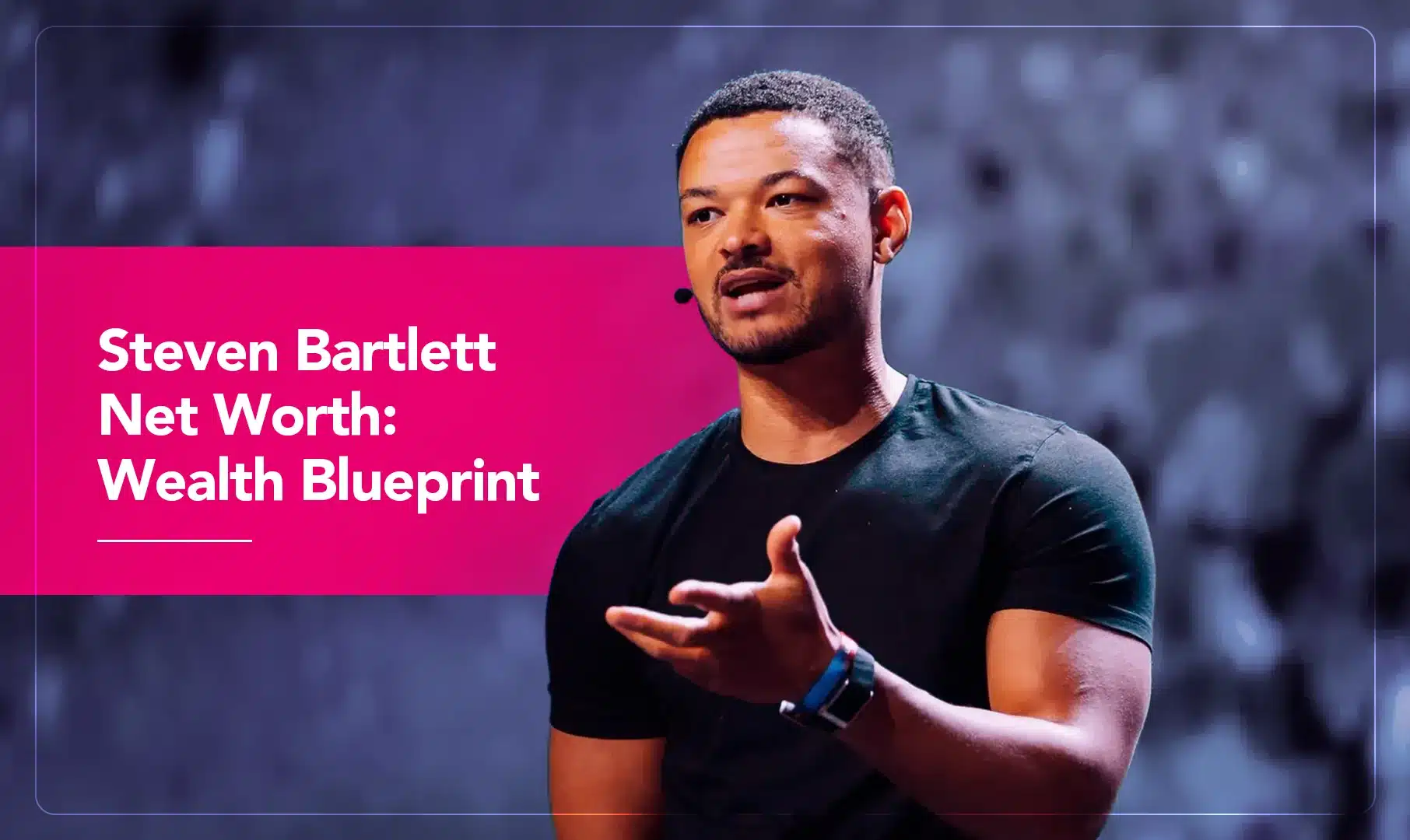
Steven Bartlett’s estimated net worth, as of early 2026, is roughly £75 million, with credible public estimates ranging from about £50 million to £100 million. The wide range reflects a genuine valuation problem: a large share of his wealth sits in private, unlisted assets, chiefly his Flight Group media and investment businesses and a portfolio of start-up stakes, none of which publish a price. Press figures of ‘£100m’ and ‘CelebrityNetWorth-style’ estimates of $100 million circulate freely, but nothing here is audited, so treat £75 million as a defensible midpoint rather than a fact.
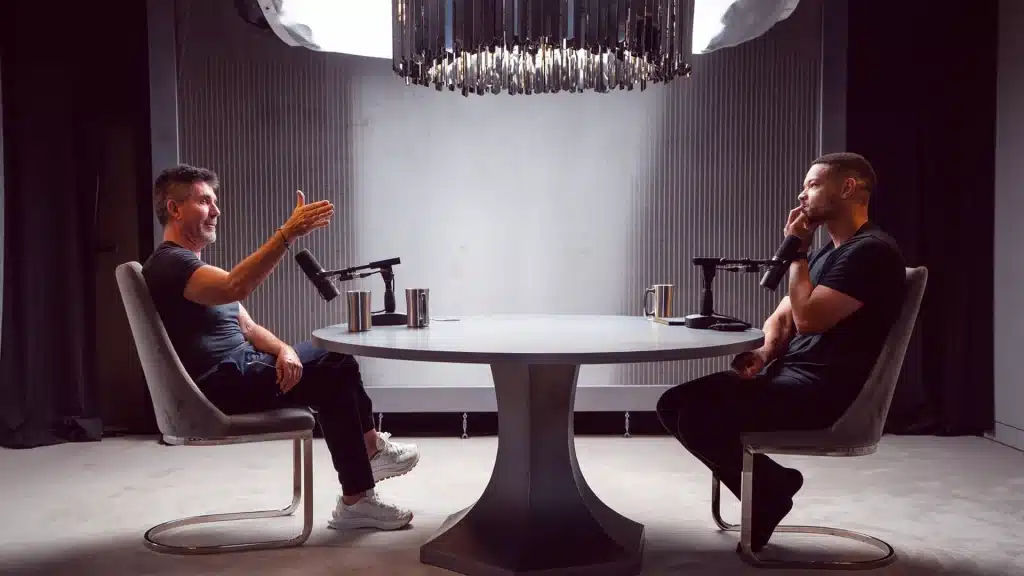
The core wealth drivers break into three: proceeds from Social Chain, the social media marketing group he co-founded at 21 and rode to a German stock market listing before exiting; The Diary of a CEO, which grew from a bedroom podcast in 2017 into one of the world’s most valuable podcast franchises, reportedly generating well over £20 million a year in revenue through his Flight Studio company; and an investment portfolio spanning Huel, Zoe, thirdweb, PerfectTed and dozens of other stakes, accumulated through personal cheques, Dragons’ Den deals and his Flight Fund vehicle.
Four achievements matter most financially. First, co-founding Social Chain in 2014 and taking it to a public listing within five years, the exit that created his first serious capital. Second, building The Diary of a CEO into Europe’s most-downloaded podcast, an owned media asset for which he has reportedly turned down offers around the $100 million mark. Third, becoming the youngest ever Dragon on Dragons’ Den in 2021, which converted podcast fame into mainstream British household status and superior deal flow. Fourth, publishing The 33 Laws of Business and Life in 2023, a global million-copy bestseller that functions as both income and customer acquisition.
What makes Bartlett’s money strategy distinctive is that he treats attention itself as the balance sheet: nearly everything he owns is either an audience, a business that monetises his audience, or an equity stake sourced because of his audience.
His wealth trajectory runs from agency founder’s salary in his early twenties, to an eight-figure step change from Social Chain share sales around the 2019 to 2021 window, to compounding since then as podcast profits, book royalties, speaking fees and appreciating start-up stakes stack on top. The big jumps came in 2019 to 2021 and again from 2023 onwards, and the timeline below shows exactly why.
Key Financial Metrics
| Category | Metric / Description | Value (estimate) | Notes (source / caveats) |
|---|---|---|---|
| Total net worth | Estimated personal net worth, early 2026 | ~£75m (range £50–100m) | No audited figure; heavily dependent on private company valuations |
| Cash & Investments | Retained proceeds from Social Chain exits, podcast profits, books, speaking | ~£25–35m | Est.; his exact Social Chain sale proceeds were never fully disclosed |
| Media IP / Flight Group | The Diary of a CEO franchise, Flight Studio, Flight Story | ~£25–40m (his equity) | DOAC reportedly generates £20m+/yr revenue; reported takeover interest around $100m; he retains control |
| Business Ventures / Portfolio | Stakes in Huel, Zoe, thirdweb, PerfectTed, Flight Fund carry and 40+ other holdings | ~£15–25m | Almost entirely unlisted; valuations are estimates from funding rounds |
| Endorsements / Sponsorships | Brand income beyond podcast ad sales | Low millions/yr (est.) | Blurred with DOAC sponsorship; ASA ruled on undeclared Huel/Zoe ads in 2024 |
| Real Estate | Personal property | ~£3–8m (est., low confidence) | Bartlett has publicly favoured renting and investing in businesses; little verified ownership |
| High-value assets | Cars, watches | <£1m | Deliberately modest by celebrity standards |
Steven Bartlett’s Primary Income Streams
Bartlett’s money engine has changed shape twice. In his twenties it was an agency: selling social media marketing to brands. Since 2020 it is a media and investment flywheel: an enormous owned audience, monetised directly through advertising, books, live events and speaking, and indirectly through equity stakes in companies that want access to that audience and his brand.
Core Career Earnings
| Year / Period | Project / Contract | Role / Position | Performance Metric | Est. Earnings | Notes (deal structure, source) |
|---|---|---|---|---|---|
| 2013 | Wallpark | Founder | Student noticeboard site; modest traction | Negligible | The false start that led to Social Chain |
| 2014–2019 | Social Chain | Co-founder and CEO | Grew to hundreds of staff; huge owned social media reach; agency plus commerce | Founder salary plus paper equity | Co-founded with Dominic McGregor in Manchester |
| 2019 | Social Chain merges with Lumaland to form Social Chain AG | Group CEO; major shareholder | Listed on the German stock market; market value later peaked in the hundreds of millions of euros | Paper wealth in the tens of millions | The merger with Georg Kofler’s Lumaland created the listed vehicle |
| 2020–2021 | Steps down as CEO; sells down shares | Exiting shareholder | Shares sold into a rising market | Est. £20–40m gross proceeds over the period | Never fully disclosed; widely reported as the foundation of his liquid wealth. Social Chain AG later became insolvent in 2023, after his exit |
| 2017–present | The Diary of a CEO | Founder, host, owner (via Flight Studio) | Europe’s most-downloaded podcast; ~50m+ monthly plays across platforms | Business revenue reported at £20m+/yr by 2024–25; his personal take est. seven figures/yr plus retained equity value | Monetised via sponsorship, YouTube, licensing and spin-off shows |
| 2021–present | Dragons’ Den, BBC | Dragon (youngest ever) | Primetime BBC One | Modest BBC fee (est. low six figures/series); invests his own money on screen | The fee is trivial; the deal flow and mainstream fame are the payment |
| 2021 & 2023 | Happy Sexy Millionaire; The Diary of a CEO: The 33 Laws of Business and Life | Author | 33 Laws sold 1m+ copies globally, a Sunday Times and NYT bestseller | ~£3–6m cumulative royalties and advances (est.) | The 2023 book is among the best-selling business titles of the decade |
| 2018–present | Keynote speaking | Speaker | Global corporate circuit | Est. £30–80k per engagement; seven figures cumulatively | High-margin overflow from the podcast brand |
The scaling pattern has three distinct phases. First, the agency years: Social Chain grew fast and loud, but agencies are lumpy, low-margin businesses, and Bartlett’s wealth in this era was overwhelmingly paper equity. The 2019 merger and listing changed that, converting a Manchester agency stake into tradeable shares in a Frankfurt-listed group, and his 2020 to 2021 sell-down converted paper into an estimated eight-figure cash foundation. The timing, in hindsight, was exceptional: Social Chain AG collapsed into insolvency in 2023, well after he had left the register in any meaningful size, and the original agency business was sold to Brave Bison for just £7.7 million. Whatever one thinks of the group’s fate, exiting near the top rather than riding it down is the single most financially consequential decision he has made.
Second, the podcast repricing. The Diary of a CEO cost almost nothing to start in 2017 and compounded quietly for four years before exploding after 2021, when Dragons’ Den made him a mainstream name. By 2024 the show and its spin-offs were reportedly generating over £20 million a year in revenue with premium sponsorship rates, and Bartlett has said he rejected acquisition and licensing approaches reportedly around the $100 million mark. Because he owns the franchise through Flight Studio rather than licensing himself to a network, that enterprise value accrues to him.
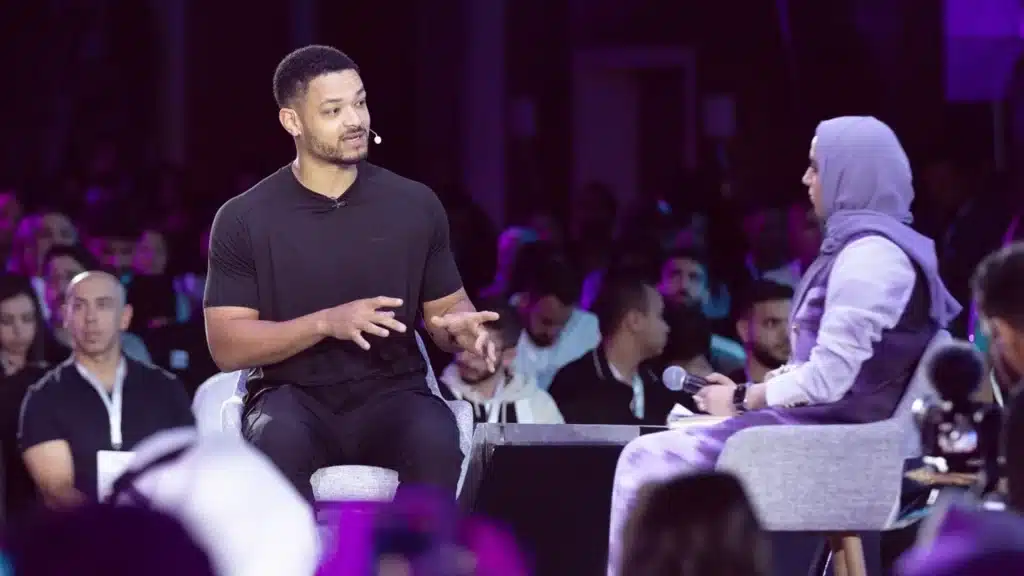
Third, the leverage phase: books, speaking and television, each individually mid-sized, each priced off the audience the podcast built.

Live income is real but supporting-cast money.
| Tour / Event Series | Years | # Shows | Gross Revenue | Est. Net to Bartlett | Notes |
|---|---|---|---|---|---|
| The Diary of a CEO Live and business speaking tours | 2022–2025 | Dozens of dates incl. major arena and theatre events in the UK, Europe, Australia | Several million cumulatively (est.) | Seven figures cumulative (est.) | Premium ticket pricing; doubles as content for the show |
| Corporate keynotes | 2018–present | Ongoing | n/a | £30–80k per talk (est.) | The highest-margin hour in his portfolio |
The live business matters less for the money than for what it demonstrates: the podcast audience will pay to be in a room with him, which supports sponsorship pricing and book sales. Demand has scaled from theatres to arena-sized events since 2023.
Publishing / Catalogue / IP Ownership
Bartlett’s IP position is unusually clean for a media figure: he owns his catalogue almost entirely.
| Year | Asset / Segment | Counterparty | Deal Type | Est. Value / Multiple | Notes |
|---|---|---|---|---|---|
| 2017 | The Diary of a CEO launched | Self-funded | Owned outright | Started at ~zero cost | No network, no label, no rights given away |
| 2021–2022 | Flight Story and Flight Studio created | Co-founded (Flight Story with Oliver Yonchev) | Holding structure for media and marketing | Not publicly valued | Centralises DOAC, spin-off shows and the agency business |
| 2023 | The 33 Laws of Business and Life published | Penguin Random House | Traditional publishing deal | 1m+ copies sold | Standard author economics on an outlier bestseller |
| 2023–2025 | DOAC spin-offs and format expansion (new shows, international clips channels, YouTube) | Flight Studio | Owned formats | Revenue reported £20m+/yr across the studio | Building a studio around the flagship rather than selling it |
| 2024 | Reported ~$100m acquisition/licensing interest declined | Undisclosed suitors | No deal | Implied franchise valuation ~£75m+ | The clearest public marker of what the IP might be worth |
The strategic through-line: where Social Chain taught him that building on other people’s platforms and other people’s cap tables dilutes you, the Flight era is constructed so that the most valuable asset, the show and its audience relationship, sits in a company he controls. The declined offers around $100 million are the best available evidence for the franchise’s value, though an offer refused is not cash banked, and podcast valuations are cyclical.
Film / TV / Other Creative Projects
Television is strategically vital and financially minor. Dragons’ Den, which he joined in 2021 as the youngest Dragon in the show’s history, pays a standard BBC talent fee, likely low six figures a series, while requiring him to invest his own money in the pitches he backs. The real compensation is distribution: the show introduced him to an older, mainstream British audience that podcasting alone would never reach, and it turbocharged everything else, from book sales to sponsorship rates to deal flow. Secondary appearances, documentaries and guest slots add profile rather than material income.
Taken together, the primary streams explain the shape of the net worth: perhaps 40 per cent of his estimated £75 million is financial assets built from the Social Chain exit and subsequent media profits, and another substantial slice is the retained value of the DOAC/Flight media IP itself, with the remainder sitting in the investment portfolio those media assets made possible.
Steven Bartlett’s Secondary Income Streams
Endorsements & Sponsorships
Bartlett’s endorsement economics are inverted compared with a typical celebrity: brands mostly buy his audience through his shows rather than his face through ambassador deals, which keeps the money inside companies he owns.
| Brand | Product Category | Years Active | Deal Type | Est. Annual Value / Range | Notes |
|---|---|---|---|---|---|
| DOAC sponsors (Huel, Shopify, Whoop, Zoe, Fiverr, NetSuite and others over time) | Various | 2020–present | Show sponsorship via Flight Studio | Bulk of the £20m+/yr studio revenue | Sponsorship revenue is business income, not a personal endorsement fee |
| Huel | Nutrition | 2019–present | Investor and non-executive director, plus promotion | Equity upside rather than fees | ASA ruled in 2024 that ads he fronted should have declared his director role |
| Zoe | Health science | 2021–present | Investor/board involvement, plus promotion | Equity upside | Subject to the same 2024 ASA ruling |
| Personal social media partnerships | Various | Ongoing | Sponsored content | Low millions/yr (est.) | Marginal next to show revenue |
Two things stand out. First, the structure: by owning the media company that sells the ads, he captures sponsorship revenue at enterprise level and builds asset value, rather than collecting fees that die with each campaign. Second, the friction: the 2024 Advertising Standards Authority ruling that ads for Huel and Zoe fronted by Bartlett failed to disclose his financial interests, and broader 2024 to 2025 press scrutiny of health claims made by some podcast guests, are reputational taxes on a model where the person, the platform and the portfolio are deliberately intertwined.

Business Ventures
The portfolio is where podcast fame is converted into compounding equity.
| Venture / Company | Sector | Role | Ownership / Stake | Outcome / Current Status | Notes |
|---|---|---|---|---|---|
| Social Chain / Social Chain AG | Social media marketing and commerce | Co-founder, CEO to 2020 | Exited ~2020–21 | Group later insolvent (2023); agency sold to Brave Bison for £7.7m | His exit proceeds, est. £20–40m, are the foundation capital |
| Flight Story | Marketing and communications agency | Co-founder (2022) | Major shareholder | Trading | Serves scale-ups and listed companies |
| Flight Studio | Media / podcasts | Founder | Control | DOAC and spin-offs; revenue reported £20m+/yr | The crown jewel |
| Flight Fund | Venture capital | Founder / GP | Fund economics (carry) | Announced 2023 targeting ~$100m | Invests in and around his ‘audience advantage’ thesis |
| thirdweb | Web3 developer platform | Co-founder (with Furqan Rydhan) | Co-founder stake | Raised at a reported $160m valuation in 2022 | Value highly uncertain given the web3 cycle |
| Huel | Nutrition | Investor and director | Minority | One of the UK’s biggest DTC nutrition brands; valued around £440m in its 2022 round | Likely his single most valuable minority stake |
| Zoe | Health science | Investor | Minority | High-growth, later rounds reported | Equity plus promotional entanglement |
| PerfectTed | Matcha energy drinks | Dragons’ Den investor (2023) | Small minority | Explosive retail growth into major supermarkets | His most visible Den success |
| ~40+ other angel/Den positions | Various | Investor | Small minorities | Mixed, as angel portfolios are | Includes numerous Dragons’ Den deals of varying size |
The honest characterisation is a hybrid: on his own companies (Flight Group) he is a genuine operator; on the portfolio he is closer to a strategic angel whose real contribution is distribution, putting a founder in front of tens of millions of listeners. That is a legitimate edge, and PerfectTed’s supermarket sweep since his 2023 investment is the proof of concept. The risk profile is high: nearly everything is unlisted, early-stage or tied to his personal brand, and the one prior listed vehicle he built, Social Chain AG, went to zero after his departure, a reminder of how quickly paper valuations in his world can evaporate.
Licensing, Merchandising & Other Royalties
This is a modest stream. Book royalties are the main recurring item, with The 33 Laws still selling strongly into 2026 and translation rights adding international income; cumulative author earnings plausibly sit in the low millions. Beyond that there are conversation card decks and companion products sold off the DOAC brand, licensing of clips and formats internationally, and YouTube advertising revenue on a channel with millions of subscribers, the last of which is better thought of as part of studio revenue. Estimated combined value outside the studio: six to low seven figures annually, marked as an estimate.
Steven Bartlett’s Asset Portfolio Analysis
Real Estate Holdings
| Property / Nickname | City / Country | Type | Purchase Year | Purchase Price | Est. Current Value | Notes |
|---|---|---|---|---|---|---|
| Principal residence(s) | London (previously Manchester penthouse living; periods in New York) | Homes | n/a | Largely undisclosed | ~£3–8m total (low-confidence est.) | Bartlett has repeatedly said he prefers renting and deploying capital into businesses; verified ownership records are scarce |
This section is short because the public record is short, and that is itself the finding. Unlike most people on a rich list, Bartlett has been openly sceptical of tying up capital in personal property, arguing his returns are better in businesses he can influence. Whatever he does own is not the story of his net worth, and any figure here deserves the widest error bars in this article. There is no evidence of a trading pattern, a portfolio strategy, or trophy-asset accumulation.
Vehicles, Jets, Collectibles & Luxury Assets
| Asset Type | Description | Est. Value | Notes |
|---|---|---|---|
| Cars | A small number of premium vehicles (Range Rover class) | <£500k | Deliberately understated for a public millionaire |
| Watches / other | Modest by peer standards | <£500k | No publicised collection |
| Jets / yachts | None owned | n/a | Flies commercially/charters; brand is built on relatability |
This bucket is negligible, and consciously so: frugality relative to wealth is part of the Bartlett brand (‘Happy Sexy Millionaire’ argues status spending is a trap). Financially, the low burn rate matters more than it looks, because it is one reason exit capital from 2020 to 2021 has compounded rather than leaked.
Investments & Financial Instruments
Bartlett’s visible portfolio is overwhelmingly private equity in the literal sense: direct minority stakes in unlisted companies (Huel, Zoe, thirdweb, PerfectTed and dozens more) plus fund economics through Flight Fund, launched in 2023 with a reported target around $100 million. There is little public evidence of significant listed-market holdings, and his early-2020s enthusiasm for crypto and web3, including co-founding thirdweb, has been tempered by that sector’s cycle. The revealed risk appetite is concentrated, illiquid and thesis-driven: back consumer and health brands where his audience is the distribution advantage. It has clear upside, but it means his net worth is unusually sensitive to private-market sentiment, and genuinely hard to price, which is exactly why estimates of his wealth span a factor of two.
Timeline of Major Financial Milestones
| Year | Event / Decision | Financial Impact | Why It Mattered |
|---|---|---|---|
| 2013 | Drops out of university after one lecture; runs Wallpark | Years of near-zero income | The all-in decision that made the agency possible |
| 2014 | Co-founds Social Chain with Dominic McGregor | Founder equity created | The asset his first fortune was built on |
| 2017 | Launches The Diary of a CEO from a bedroom | ~£0 cost; long-term value enormous | The most valuable free thing he ever did |
| 2019 | Social Chain merges with Lumaland; Social Chain AG lists in Germany | Paper wealth in the tens of millions | Converted private agency equity into listed, sellable shares |
| 2020 | Steps down as Social Chain CEO | Begins the exit window | Freed him, and his capital, for the media flywheel |
| 2020–2021 | Sells down Social Chain AG shares into a strong market | Est. £20–40m gross proceeds | The foundation of his liquid net worth; timing proved exceptional |
| 2021 | Announced as the youngest ever Dragon; publishes Happy Sexy Millionaire | BBC fee modest; fame dividend huge | Mainstream household status repriced everything he sells |
| 2022 | Co-founds thirdweb (raised at a reported $160m valuation); launches Flight Story | Paper equity added | Diversification into venture and agency income |
| 2023 | Social Chain AG becomes insolvent; agency sold to Brave Bison for £7.7m | No direct hit; reputational questions | Validated his exit timing while inviting scrutiny of the story |
| 2023 | Publishes The 33 Laws (1m+ copies); launches Flight Fund (~$100m target); invests in PerfectTed on Dragons’ Den | Multi-million royalties; fund economics; his best Den deal | The compounding phase begins in earnest |
| 2024 | DOAC revenue reported £20m+/yr; reported ~$100m offers declined; ASA rules on undeclared Huel/Zoe interests | Enterprise value confirmed; first material reputational tax | The year the podcast was revealed as his biggest asset, and his model’s conflicts drew regulatory attention |
| 2024–2025 | BBC and press scrutiny of health claims on DOAC; studio expands with new shows and live arena events | No measurable revenue hit reported; risk elevated | Tested whether the asset’s value survives criticism of its content |
| 2026 (early) | Net worth estimated ~£75m; Flight Studio and portfolio continue compounding | Steady growth | The blueprint now rests on private valuations holding up |
The clear inflection points are 2019 to 2021 (the listing, exit and Dragons’ Den fame arriving in sequence) and 2023 to 2024 (the book, the fund and the podcast’s revelation as a ~$100 million-class asset).
Strategic Pillars Behind Their Wealth-Building
- Build the Audience Before You Need It. The Diary of a CEO launched in 2017, years before it made money, and compounded quietly until the 2021 fame spike found a mature asset waiting. Nearly every pound he earns today, from sponsorship to speaking to deal flow, is priced off that audience.
- Sell Paper While It Is Paper. His 2020 to 2021 Social Chain sell-down, followed by the group’s 2023 insolvency, is a masterclass in the difference between valuation and money. The estimated £20 to 40 million he extracted is the foundation everything since is built on.
- Own the Channel, Rent the Fame. He takes a modest BBC fee for Dragons’ Den (2021 onwards) because the show markets assets he owns outright, the podcast, the books, the fund. Compare the Flight Studio structure, which keeps the reported £20m+ of annual DOAC revenue inside his own company, with peers who license themselves to networks. For the broadcast-era version of the same structure, see how Jeremy Clarkson built a flywheel around assets he owns.
- Turn Distribution into Deal Flow. From Huel (2019) to PerfectTed (2023), his equity stakes are earned partly with cheques and largely with reach. Founders accept him on the cap table because he is a distribution channel, which systematically gets him into rounds others cannot access.
- Stack Small Monetisations on One Asset. Books (2021, 2023), arena tours (2023 to 2025), speaking, card decks, spin-off shows: each is a separate till ringing off the same audience, at near-zero marginal audience-acquisition cost.
- Keep the Burn Rate Boring. No jets, no yacht, little property: the lifestyle bucket is under 2 per cent of his estimated net worth. The 2020 to 2021 exit capital was compounded, not consumed, which is rarer among young multimillionaires than it should be.
- Accept Entanglement as a Cost of the Model, Then Manage It. His person, platform and portfolio are deliberately fused, which multiplies returns and concentrated risk alike. The 2024 ASA ruling and the 2024 to 2025 scrutiny of podcast health content are the visible price; how he manages that determines whether pillar 1 keeps its value.

Actionable Insights: Lessons from Their Wealth Blueprint
- Start Your Audience Asset Now, Monetise Later. DOAC ran for years before it earned. The compounding started at launch in 2017, not at profitability. Takeaway: The best time to build an audience is years before you need to sell it anything.
- Take Real Money Off the Table. Bartlett converted tens of millions of paper wealth to cash in 2020 to 2021; the vehicle he left was worthless by 2023. Diversify out of your own success while buyers are enthusiastic. Takeaway: Nobody ever went broke turning paper gains into actual money.
- Price Your Fame in Equity, Not Fees. His Huel, Zoe and PerfectTed positions convert promotion he would do anyway into ownership. A fee is spent; a stake compounds. Takeaway: If your attention moves a company’s revenue, charge in shares.The combat-sports rendering of the same play is converting fame into equity the McGregor way, executed at brutal speed.
- Use Big Platforms as Free Marketing for Owned Assets. Dragons’ Den since 2021 pays little and is worth a fortune, because every episode advertises businesses he owns 100 per cent of. Takeaway: Work for exposure only when you own what the exposure sells. Across the Den, Peter Jones’s twenty years of Den deal flow show what the investor seat is really worth when you arrive already rich.
- Refuse the Exit That Caps You. Declining reported ~$100m approaches for DOAC in 2024 was a bet that an owned, growing franchise beats a one-off cheque. Whether right or wrong, know what your asset’s trajectory makes it worth before selling. Takeaway: Sell when growth is slowing, not while it is accelerating.
- Make One Asset Feed Ten Tills. Books, tours, speaking, spin-offs and the fund all monetise the same podcast audience. Multiple income streams need not mean multiple audiences. Takeaway: Build once, charge many times.
- Spend Like the Money Is Still at Risk. A sub-2 per cent lifestyle bucket meant his exit capital could compound through his thirties. Lifestyle inflation is the silent tax on young wealth. Takeaway: Let the assets get rich before the lifestyle does.
- Disclose Before the Regulator Does It for You. The 2024 ASA ruling on undeclared Huel and Zoe interests shows how an audience-plus-portfolio model creates conflicts that must be managed in the open. Takeaway: When you are the platform and the shareholder, transparency is a business asset, not a courtesy.
- Remember That Private Valuations Are Opinions. A large slice of his ~£75m is unlisted stakes marked to their last funding round; Social Chain AG proved how fast such numbers can vanish. Hold your own net worth estimates loosely too. Takeaway: A valuation is what someone once paid, not what you can spend.

Final Thoughts
Bartlett’s wealth-building strategy is best understood as two businesses run in sequence with one lesson carried between them. Social Chain taught him that building enterprise value is good, but that liquidity, timing and control of the narrative matter more; he extracted his capital before the structure failed. The Flight era applies the correction: this time the crown-jewel asset, the audience, sits in a company he controls, the fame that markets it is rented cheaply from the BBC, and the profits are recycled into equity stakes where that same audience is the competitive edge.
The unique angle is the deliberate fusion of media and investing. Most podcasters sell ads; most angels write cheques. Bartlett arbitrages between the two, paying for stakes partly in distribution and then covering the portfolio’s themes on the very platform that gives it value. At its best, as with PerfectTed’s rise since 2023, the loop is genuinely self-reinforcing.
The fragilities follow directly from the design. This is a concentrated bet on one man’s credibility: the 2024 ASA ruling and the ongoing scrutiny of health claims aired on his show attack precisely the trust that prices his sponsorship, his books and his deal flow. Much of the net worth is illiquid and marked to private rounds that a colder funding climate could cut sharply. And the declined ~$100 million for DOAC is only a triumph if podcasting’s golden era persists; media formats age faster than their owners expect.
For entrepreneurs and investors, what is worth copying is the sequencing: build an audience early, convert your first success to cash rather than riding paper, own the vehicle that monetises your profile, and charge for your influence in equity. What is not worth copying is the assumption that entanglement manages itself. Bartlett’s blueprint works because trust is the underlying asset, and as his own story shows from both sides, trust is the one line on this balance sheet that can reprice overnight.
Sources
The figures above draw on the public record: business press coverage of Social Chain and its listing and insolvency, trade and financial press reporting on The Diary of a CEO’s revenue and takeover interest, funding-round coverage for his portfolio companies, and regulatory and broadcaster reporting on the 2024 to 2025 scrutiny. No private information is used; where sources conflict, ranges are shown and estimates are marked. All net worth figures are estimates; none are audited.
Earnings & Net Worth
- Press net worth estimates for Steven Bartlett (various UK outlets, 2023–2025), spanning roughly £50m to £100m.
- Financial Times, The Times and Business Insider coverage of Social Chain, the 2019 Lumaland merger, the Social Chain AG listing, Bartlett’s 2020 departure and share sales, and the 2023 insolvency and £7.7m Brave Bison sale.
The Diary of a CEO & Flight Group
- Bloomberg, The Times, Financial Times and trade press (Press Gazette, Podnews) reporting on DOAC’s download figures, Flight Studio revenue of £20m+ a year, and reported acquisition/licensing interest around $100m (2024).
- Coverage of Flight Story’s launch (2022) and Flight Fund’s launch and ~$100m target (2023).
- Penguin Random House announcements and bestseller-list coverage of The 33 Laws of Business and Life (2023–2024).
Investments & Ventures
- TechCrunch and trade coverage of thirdweb’s 2022 funding round at a reported $160m valuation.
- Business press coverage of Huel’s growth and 2022 funding round valuation of around £440m, and of Zoe’s funding rounds.
- Retail trade press (The Grocer and others) on PerfectTed’s growth following his 2023 Dragons’ Den investment.
- BBC announcements on Bartlett joining Dragons’ Den as the youngest ever Dragon (2021).
Regulatory & Scrutiny
- Advertising Standards Authority ruling (2024) on Huel and Zoe advertisements fronted by Bartlett without declared interests, and associated press coverage.
- BBC News and broadsheet reporting (2024–2025) examining health claims made by some Diary of a CEO guests.
Biography
- Wikipedia and major profile interviews (The Times, The Guardian, Financial Times) for career chronology and his stated preference for investing over property ownership.
View more of our Wealth Network reports from Gordon Ramsey, Taylor Swift, Tom Cruise, Donald Trump, Mark Zuckerberg, Elon Musk, Ryan Giggs, Jeff Bezos and more wealth reports on our No Bollocks Business HQ.