
Executive Summary
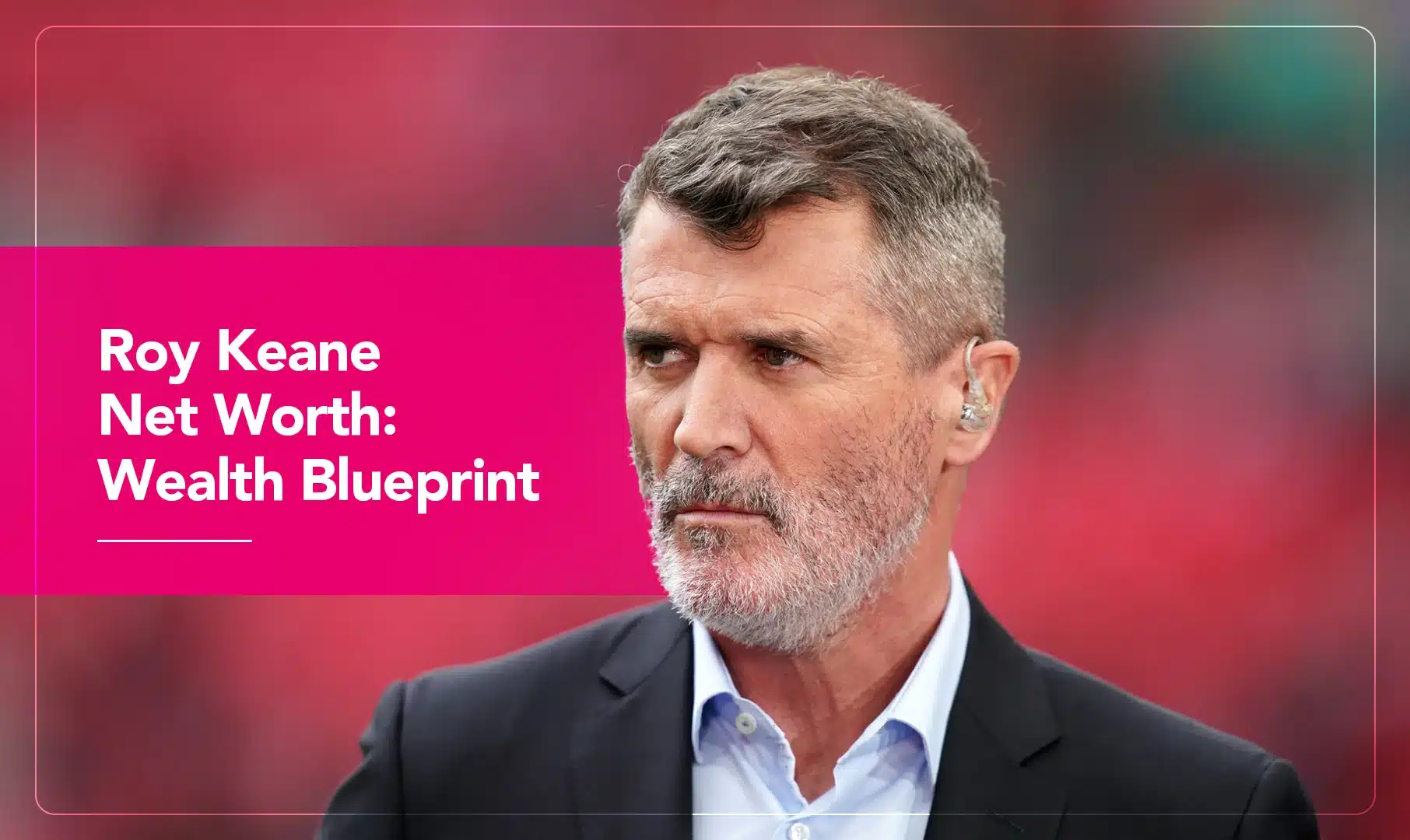
Roy Keane’s estimated net worth, as of early 2026, is roughly £40 million, with credible public estimates ranging from about £30 million to £50 million. No audited figure exists, and Keane is famously private about money, so the £40 million midpoint is built from three decades of traceable income: elite playing contracts, management salaries, and one of the most lucrative punditry careers in British football.
The core wealth drivers split into three eras. First, fifteen years of top-flight playing wages, capped by the deal that made him the highest-paid player in the Premier League in 1999. Second, management and coaching money from Sunderland, Ipswich and a string of assistant roles. Third, and increasingly the engine, the media years: Sky Sports, ITV tournament work, the Stick to Football podcast, bestselling books and sell-out live theatre tours, all monetising a persona that needs no scriptwriter.
Four achievements matter most financially. First, the 1993 move to Manchester United for a then-British record £3.75 million, which put him on elite wages for twelve years. Second, the 1999 contract stand-off he won, securing a reported £52,000 a week when the club’s ceiling had been barely half that, resetting pay for himself and every star who followed. Third, the 2002 autobiography Keane, one of the fastest-selling sports books ever published in Britain. Fourth, the post-2019 punditry boom, where his blunt television persona became a seven-figure annual franchise.
What makes Keane’s money story unusual is that his most bankable asset was never his feet or his coaching: it is his unfiltered voice, and he has monetised it for longer, and better, than he monetised either. This report is part of our celebrity net worth analysis series.
The trajectory runs: modest League of Ireland money, solid Nottingham Forest wages from 1990, a step change at United from 1993 and again in 1999, management salaries through the late 2000s, then a second, media-driven earnings peak from 2019 that continues today. The timeline below shows each gear change.
Key Financial Metrics
| Category | Metric / Description | Value (estimate) | Notes (source / caveats) |
|---|---|---|---|
| Total net worth | Estimated personal net worth, early 2026 | ~£40m (range £30–50m) | Press estimates; no audited figure |
| Cash & Investments | Retained playing, management and media earnings | ~£25–30m | Est. £25m+ gross playing wages, £8m+ management, £10m+ media to date, net of tax and lifestyle |
| Media / IP | Punditry contracts, podcast, books, live tours | ~£1.5–2.5m/yr current income | Sky, ITV, Stick to Football, theatre shows; his most durable stream |
| Business Ventures | Minimal | Negligible | Keane has never built a business portfolio |
| Real Estate | Cheshire family home plus Irish property | ~£4–7m | Long-term Hale/Cheshire base; details largely private |
| Endorsements | Occasional campaigns only | Low six figures/yr at most | Adverts are rare and character-led; he has no ambassador portfolio |
| High-value assets | Cars, personal effects | <£1m | Famously unflashy; the dog-walking millionaire |
Before the tackle count starts: if the negotiation and earnings lessons below apply to your own business or career, Matt works with people on precisely this, work with Matt or explore one-to-one consulting.
Roy Keane’s Primary Income Streams
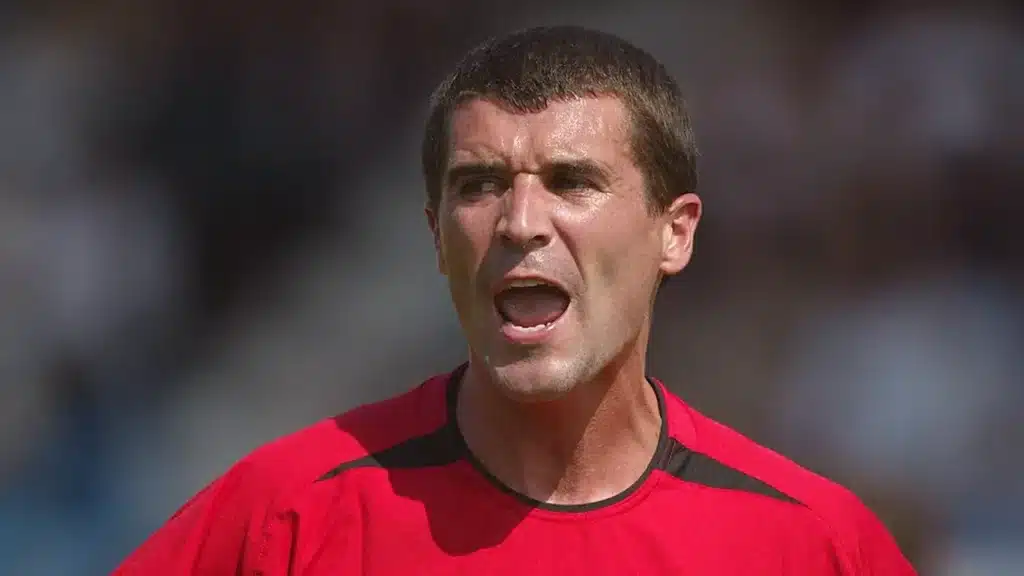
Keane has earned in three distinct careers: playing (1989 to 2006), managing (2006 to 2018 including assistant roles), and broadcasting (2009 to present, full-time from 2019). Unusually, the third may end up the most profitable per hour worked.
Core Career Earnings
| Year / Period | Project / Contract | Role / Position | Performance Metric | Est. Earnings | Notes (deal structure, source) |
|---|---|---|---|---|---|
| 1989–1990 | Cobh Ramblers | Semi-professional player | League of Ireland | Pocket money | Signed for Forest in 1990 for a reported £47,000 fee |
| 1990–1993 | Nottingham Forest | Midfielder | First Division/Premier League regular | ~£100–400k/yr rising | Brian Clough’s bargain; wages modest by later standards |
| 1993 | Transfer to Manchester United | British record £3.75m fee | n/a | Signing-on plus wage step change | The move that put him on elite money |
| 1993–1999 | Manchester United | Midfielder, captain from 1997 | 4 league titles in the period; 1999 Treble (suspended for the final) | ~£10–15k/wk rising | Solid but not spectacular by emerging Premier League standards |
| Dec 1999 | New United contract after a public stand-off | Captain | n/a | Reported ~£52,000/wk (~£2.7m/yr), then the league’s highest | The defining negotiation of his playing career |
| 2000–2005 | Manchester United | Captain | 3 more league titles; 2000 FAI/PFA Player of the Year era | ~£3m+/yr at peak | Total United earnings est. £20m+ gross |
| 2005–2006 | Celtic | Midfielder | League and cup double | ~£40k/wk for ~6 months (est.) | Short farewell; retired June 2006 |
| 2006–2008 | Sunderland | Manager | Championship title 2007; kept up 2007–08 | ~£1.5–2m/yr (est.) plus settlement on exit | His most lucrative football employment per year |
| 2009–2011 | Ipswich Town | Manager | Mid-table Championship; sacked Jan 2011 | ~£1m/yr (est.) plus pay-off | Second and last No.1 job |
| 2013–2018 | Republic of Ireland | Assistant manager (with Martin O’Neill) | Euro 2016 qualification | ~€500k–1m/yr (reported range) | Plus short assistant spells at Aston Villa and Nottingham Forest |
| 2009–present | Sky Sports, ITV | Pundit | Fixture of Super Sunday and tournament coverage; full-time from 2019 | ~£500k–1m+/yr current (est.) | Among the best-paid pundits in Britain |
| 2023–present | Stick to Football / The Overlap | Podcast regular | One of the UK’s biggest football podcasts, Sky Bet-backed | Six figures/yr (est.) | With Neville, Carragher, Wright and Shearer |
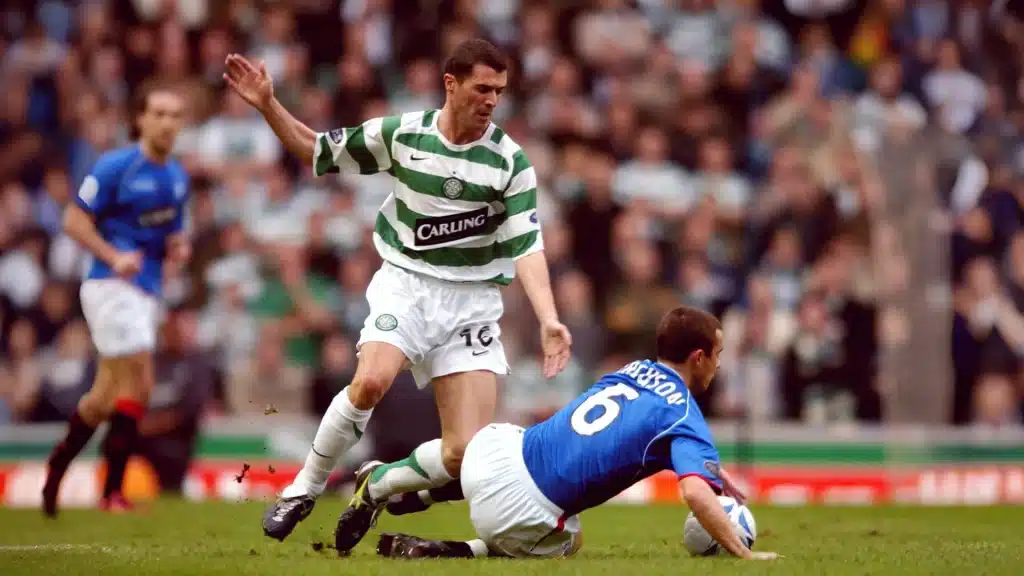
Three observations on scaling. First, Keane’s playing wealth was made in one negotiation as much as in fifteen seasons: the 1999 stand-off, where he let his contract run down and publicly refused to re-sign below market rate, roughly doubled his pay overnight and compounded over his remaining six United years. It was leverage applied at the perfect moment, with United desperate and his value at its peak. That era also produced some of football’s biggest financial success stories, as explored in Ryan Giggs’s post-playing money story from the famous Class of ’92.
Second, management paid well but briefly. Sunderland’s Drumaville consortium made him one of the Championship’s best-paid managers, and promotion in 2007 justified it, but his managerial earnings window lasted barely five years as a No.1. The assistant decade that followed was steady rather than transformative.
Third, the media era inverted the usual retirement decline. From full-time punditry in 2019 onwards, Keane’s annual income has plausibly matched or exceeded his early United playing years, with none of the physical depreciation. The product is simply Roy Keane reacting to football, and demand for it keeps rising. For how differently a teammate played the same hand, Ryan Giggs’s post-playing money story swapped the microphone for Manchester property.
Touring / Live Revenue
An unexpected line for a midfielder: Keane sells theatre tickets.
| Tour / Event Series | Years | # Shows | Gross Revenue | Est. Net to Keane | Notes |
|---|---|---|---|---|---|
| An Evening with Roy Keane (and joint shows with Gary Neville) | 2023–2025 | Dozens of UK and Ireland theatre dates | Low millions gross (est.) | Seven figures cumulative (est.) | Premium pricing; routinely sold out |
The live shows matter because they prove the punditry persona is a standalone product people pay for directly, not just a broadcast salary. Demand escalated from one-off events to repeat tours within two years.
Publishing / Catalogue / IP Ownership
| Year | Asset / Segment | Counterparty | Deal Type | Est. Value / Multiple | Notes |
|---|---|---|---|---|---|
| 2002 | Keane: The Autobiography (with Eamon Dunphy) | Michael Joseph/Penguin | Advance plus royalties | Seven figures lifetime (est.) | One of the fastest-selling sports books in UK history; also triggered an FA fine over the Haaland passage |
| 2014 | The Second Half (with Roddy Doyle) | W&N | Advance plus royalties | High six to seven figures (est.) | Bestseller; cemented the second-act persona |
| 2019–present | Punditry clips, podcast IP | Sky, ITV, The Overlap | Salary/fee based | n/a | Keane does not own the platforms; his leverage is scarcity of the persona |
The books are the closest Keane has come to owning IP, and both were exceptional performers for their category. Otherwise he has been a fee-taker rather than an owner throughout, the one structural weakness in an otherwise excellent earnings record.
Film / TV / Other Creative Projects
Beyond punditry, screen work is thin by design: documentaries about him (including the acclaimed Keane and Vieira: Best of Enemies in 2013) and occasional advertising cameos trading on the persona. None of it moves the needle; the recap is simple. Roughly three-quarters of Keane’s estimated £40 million traces to salaries, playing, managing and broadcasting, converted into the cash and investments bucket, with books, live shows and property making up the rest.
Roy Keane’s Secondary Income Streams
Endorsements & Sponsorships
| Brand | Product Category | Years Active | Deal Type | Est. Annual Value / Range | Notes |
|---|---|---|---|---|---|
| Diadora | Boots/kit | Playing era | Kit deal | Six figures/yr at peak (est.) | One of few playing-era deals |
| Occasional campaigns (bookmaker, broadcast and brand spots) | Various | 2019–present | One-off character-led adverts | Low-to-mid six figures per campaign (est.) | Rare, and always playing ‘Roy Keane’ |
Keane’s endorsement record is deliberately sparse. As a player he regarded commercial work with open disdain, and the scarcity now works in his favour: because he endorses almost nothing, the occasional campaign commands a premium and lands harder. The comparison with peers is stark, and intentional.
Business Ventures
| Venture / Company | Sector | Role | Ownership / Stake | Outcome / Current Status | Notes |
|---|---|---|---|---|---|
| None of substance | n/a | n/a | n/a | n/a | Keane has never launched brands, bought pubs or fronted funds |
This is the emptiest ventures table in this series, and it is a legitimate strategy. Keane’s wealth is a salary-and-fees fortune, conservatively kept. There are no failed restaurants or vanity brands on the ledger, and no venture losses either. The trade-off is the absence of any equity compounding: nothing he earns grows while he sleeps.
Licensing, Merchandising & Other Royalties
Book royalties remain the recurring item, refreshed whenever a punditry clip goes viral. Beyond that, appearance fees, after-dinner speaking and image licensing plausibly add low-to-mid six figures a year, marked as an estimate.
Roy Keane’s Asset Portfolio Analysis
Real Estate Holdings
| Property / Nickname | City / Country | Type | Purchase Year | Purchase Price | Est. Current Value | Notes |
|---|---|---|---|---|---|---|
| Family home | Hale/Bowdon area, Cheshire, UK | Principal residence | 1990s–2000s | Undisclosed | ~£3–5m (est.) | Long-term base since the United years |
| Irish property | Cork region, Ireland | Family/secondary | Various | Undisclosed | ~£1–2m (est.) | Ties to home; details private |
Geographically concentrated and entirely personal-use: there is no evidence of a property trading strategy. Keane bought where he worked and where he is from, and stayed. For a footballer of his generation, the absence of buy-to-let empires or overseas speculation is itself notable discipline.
Vehicles, Jets, Collectibles & Luxury Assets
| Asset Type | Description | Est. Value | Notes |
|---|---|---|---|
| Cars | Understated premium vehicles | <£500k | No supercar history of note |
| Jets / yachts / collections | None | n/a | The famous indulgence is dogs, not assets |

Lifestyle burn is minimal, which is why three decades of good-but-not-galactic earnings have compounded into an eight-figure net worth. Keane is the counter-example to the footballer-broke-by-40 statistic.
Investments & Financial Instruments
Nothing meaningful is public: no disclosed stakes, funds or crypto. The reasonable inference from his profile is conservative, professionally managed savings and pensions from a long PFA-era career. Risk appetite: minimal, with the one concentrated asset being his own reputation for saying exactly what he thinks, which he has protected fiercely and monetised late.
Timeline of Major Financial Milestones
| Year | Event / Decision | Financial Impact | Why It Mattered |
|---|---|---|---|
| 1990 | Signs for Nottingham Forest from Cobh Ramblers (£47k fee) | From semi-pro to professional wages | The entry point; Clough’s punt created everything after |
| 1993 | British record £3.75m transfer to Manchester United | Wages step up several-fold | Elite pay begins; twelve years of it follow |
| 1997 | Made United captain | Pay and status rise | Leadership premium locked in |
| Dec 1999 | Wins contract stand-off; ~£52k/wk, league’s highest | Pay roughly doubles; +£10m range over remaining tenure | The single most valuable negotiation of his life; reset the market |
| 2002 | Keane autobiography published | Seven-figure book earnings; FA fine as a footnote | Proved the persona had standalone commercial value |
| 2005–2006 | Leaves United; short Celtic spell; retires | Final playing cheques | End of era one with an estimated £25m+ gross earned |
| 2006–2008 | Sunderland manager; 2007 Championship title | ~£1.5–2m/yr plus exit settlement | Peak football-employment income |
| 2009–2011 | Ipswich manager; sacked | ~£1m/yr plus pay-off; managerial market value falls | The end of the No.1 track |
| 2013–2018 | Ireland assistant (plus Villa, Forest spells) | Steady six-to-seven-figure years | Bridged the decade between dugout and desk |
| 2014 | The Second Half published | High six to seven figures | Second bestseller; persona franchise confirmed |
| 2019 | Becomes a full-time Sky Sports fixture | Media income climbs towards seven figures/yr | The second earnings peak begins, age 48 |
| 2023 | Stick to Football launches; live theatre tours begin | Additional six-to-seven-figure annual layer | Persona monetised across podcast and ticketed live formats |
| 2026 (early) | Net worth estimated ~£40m | Steady accumulation | A salary fortune, conservatively kept, still growing |
The inflection points: 1993 (elite wages), December 1999 (the negotiation), and 2019 (the media repricing).
Strategic Pillars Behind Their Wealth-Building
- Negotiate from Scarcity, Once, Properly. The December 1999 stand-off is the pillar everything rests on: Keane understood he was irreplaceable at that moment, refused below-market terms in public, and roughly doubled his pay for six compounding years. One negotiation likely added eight figures to his lifetime earnings.
- The Persona Is the Product. From the 2002 book through the 2019 punditry boom to the 2023 tours, Keane’s honesty, an asset most employers tried to manage out of him, became the thing broadcasters, publishers and theatres pay for. He never softened it, so it never devalued.
- Earn in Every Era, Spend in None. Playing (to 2006), managing (to 2011), assisting (to 2018), broadcasting (2019 on): four consecutive income phases with no gap years and famously low burn. The Cheshire house and the dogs are the entire visible lifestyle.
- Scarcity in Endorsements. By rejecting commercial work as a player and rationing it since, Keane made his occasional campaigns premium-priced events rather than wallpaper. The absence built the value.
- Fee-Taker Discipline Over Equity Adventures. No brands, no pubs, no funds, and therefore no venture write-offs. It capped his upside versus the owners in this series, but a clean £40 million beats a messy maybe. By contrast, how Gary Neville turned punditry into a business empire shows the upside that comes from combining media success with business ownership and long-term investments.
- Let Others Build the Platform. Sky, ITV, The Overlap and publishers carry thproduction risk; Keane supplies the scarce ingredient and collects fees. Low risk, high margin, though it means he owns none of the pipes, the one fragility in the model. The sharpest contrast sits one desk along on Monday nights: how Gary Neville turned punditry into a business empire is the ownership version of the same career.

Actionable Insights: Lessons from Their Wealth Blueprint
- Time Your Big Negotiation for Maximum Leverage. Keane’s 1999 deal came with his contract expiring and his employer desperate. Know the moment your replacement cost peaks, and negotiate then, not annually. Takeaway: One perfectly timed negotiation can outearn a decade of polite pay rises.
- Never Sand Down Your Differentiator. The bluntness that got Keane fined and feuding is exactly what earns seven figures a year on television now. The trait that makes you difficult may be the trait that makes you valuable. Takeaway: Your edge only pays if you refuse to blunt it.
- Build Your Next Career Before the Current One Ends. The 2002 book, written at his playing peak, seeded the media persona he cashed in from 2019. Plant the second act early. Takeaway: Your next income stream should exist before your current one expires.
- Ration Your Brand. Keane’s near-total endorsement abstinence made his rare appearances premium. Ubiquity is the enemy of pricing power. Takeaway: Say no often enough and your yes becomes expensive.
- A Low Burn Rate Is a Strategy, Not a Personality Quirk. Thirty-five years of earnings minus almost no lifestyle leakage equals £40m without a single equity win. Compounding needs surplus, and surplus is a choice. Takeaway: What you keep matters more than what you make.
- Know Whether You’re a Fee-Taker or an Owner, and Optimise Accordingly. Keane chose fees and optimised them ruthlessly. If you won’t take equity risk, maximise scarcity, leverage and longevity instead. Takeaway: There are two ways to get rich; pick one deliberately and play it hard.
The Keane Verdict: A Fee Fortune, Fiercely Kept
Keane’s wealth blueprint is the purest fee-based fortune in this series: no exits, no brands, no cap tables, just four consecutive careers of being extremely well paid for being extremely good, and extremely himself. The strategy, if it can be called one, was leverage and longevity: win the one negotiation that mattered in 1999, keep the persona undiluted, and let a second earnings peak arrive in his fifties through media that never existed when he started.
The unique edge is that his most valuable asset appreciated with age. Legs depreciate; the Keane persona, honest to the point of confrontation, has compounded, and the market for it (punditry, podcasts, theatres) keeps expanding.
The fragilities are real but modest: he owns none of his platforms, so his media income lives on contracts others control; the persona-driven model carries the standard risk of a comment too far; and with no equity anywhere, the fortune stops growing the day he stops working. Against that, there is no leverage, no illiquidity and no venture risk on the books at all.
For entrepreneurs and investors, the copyable core is the 1999 lesson: identify the moment of maximum leverage and use it completely, then protect the differentiator that created it. What is not worth copying blindly is the total absence of ownership; Keane’s blueprint proves fees alone can build £40 million, but every other subject in this series shows what equity does on top. For the extreme version of the same question, Conor McGregor’s fee-versus-equity playbook shows what happens when a fighter takes the other fork.
If your own balance sheet is all fees and no equity and you suspect it’s time that changed, that’s a strategy conversation Matt has every week: get in touch about working together.
Sources
Figures draw on the public record: transfer and contract reporting from the playing era, club and press coverage of managerial appointments, media industry reporting on punditry pay, and publishing trade coverage. All net worth and salary figures are estimates unless described as reported; where sources conflict, ranges are shown.
Earnings & Net Worth
- Press net worth estimates for Roy Keane (various UK/Irish outlets, 2022–2025), spanning roughly £30–50m.
- BBC, The Guardian and Irish press reporting on the 1993 record transfer and the December 1999 contract negotiation and its reported ~£52,000/week terms.
- Coverage of Sunderland and Ipswich managerial appointments, salaries and departures (2006–2011), and FAI reporting on Ireland assistant terms (2013–2018).
- Broadcast industry reporting (Broadcast, press profiles) on Sky Sports and ITV punditry pay and the Sky Bet-backed Stick to Football podcast (2019–2025).
Books & Live
- Publishing trade and press coverage of Keane (2002) and The Second Half (2014) sales performance.
- Ticketing and press coverage of An Evening with Roy Keane theatre tours (2023–2025).
Career & Biography
- Wikipedia, Premier League and club records for career chronology, titles and transfer fees.