
Most restaurants don’t fail because the food is bad. They failed because the owner bought the wrong kit in the wrong order and ran out of cash before the second month’s rent was due. Equipment is where opening budgets quietly bleed out. Get the list right, and you protect your margin from day one. Get it wrong, and you’re financing a stainless-steel museum nobody asked for.
Treat The Money Side As Equipment, Not An Afterthought
Owners obsess over the chef’s pass and forget the till. That is backwards. The entire point of the operation is to take money cleanly, count it accurately, and know your numbers at the end of every shift. Before you spend a penny on payment hardware, get your costs modelled properly. The guide to business budgeting for small business owners walks through the contribution-margin math that tells you what each cover actually has to earn before any of this kit pays for itself.
Then build the money stack:
- POS system: Your point-of-sale ties orders, payments, and reporting together. Pick one that exports clean sales data, because you will live in those reports when you are working out what sells and what to cut.
- Card terminals: At least one per service point. Card is the default now, but cash has not disappeared, and assuming it has is how venues end up with no float on a Friday night.
- Cash handling: Tips, floats, takings, and change still move through most venues every single day, and someone has to reconcile all of it.
That last point is where a lot of new operators quietly leak time and money. Counting a busy night’s takings by hand is slow and error-prone, and every miscount is either cash you have lost or a discrepancy you cannot explain to your accountant. A Kolibri money counter runs through notes and coins in seconds, so closing down becomes a two-minute job instead of a twenty-minute one, and your float reconciles to the penny. For a venue handling cash across multiple shifts, that means saved labour every night and significantly fewer till disputes.
Don’t let the hardware lull you into sloppy habits. The machine speeds up the count. You still set the float, log every variance, and bank on a fixed schedule so the money never sits around becoming a temptation or a target.
Sort The Compliance Kit
You can have the best menu in the city and still get refused a licence because your refrigeration won’t hold temperature or your handwashing station is in the wrong place. The kit that keeps you legal is the kit you buy first, because an inspector can close you before you’ve served a single cover.
These are the non-negotiables most local authorities will check:
- Commercial refrigeration: Separate cold storage that holds safe temperatures reliably, with the capacity to keep raw and ready-to-eat stock apart. A domestic fridge will not pass and will not cope.
- Handwashing stations: Dedicated sinks for hands, not the ones you wash pans or food in. Placement matters as much as having them, so check the layout against the code before you plumb anything in.
- Ventilation and extraction: A compliant hood and extraction system over any cooking line that produces grease, heat, or smoke. This is one of the most expensive single items in a fit-out, so price it early.
- Warewashing: A commercial dishwasher or a multi-compartment sink setup that meets your local requirements for washing, rinsing, and sanitising.
Commercial kitchen compliance is based on formal food safety regulations. The detail behind every one of these sits in the FDA Food Code, the model that most US food-safety rules are built on. It is worth reading even if you trade elsewhere, because the underlying principles travel, and the equipment chapter spells out exactly what “durable, cleanable, and safe” means in practice.
When you actually buy, look for the NSF mark. NSF certification is the benchmark recognised for sanitary equipment design, and in many regions, it is effectively impossible to fit out a new kitchen without it.
Buy this category new or from a reputable refurbisher who can hand you service history and paperwork. A second-hand fridge with no records is a failed inspection waiting to happen, and you will pay more putting it right than you saved buying it.
The Cooking Line: Buy For The Menu, Not The Ego
Here is where ego does the most damage. Founders buy the six-burner range, the combi oven, and the flat-top because it looks like a proper kitchen, then use three of those appliances on a normal service. Every piece of cooking kit costs you twice: once to buy and again in the floor space, power, and cleaning labour it demands forever.
Work backwards from the menu instead:
- List every dish, then every cooking method it needs. Grill, fry, roast, hold, steam, chill.
- Count how many appliances each method genuinely requires at your expected covers, not your fantasy ones.
- Cut anything a dish doesn’t earn its keep on. A tight menu running four well-used appliances beats a sprawling one with twelve half-idle machines.
For most small openings, the core line is a range or hob, an oven, and perhaps a fryer or griddle if the menu demands it, plus enough prep refrigeration to keep the line stocked through a full service. Add specialist equipment only when a signature dish truly justifies the footprint and the cost.
A quick worked example: a 35-cover neighbourhood bistro with a menu of eight mains can usually open on a six-burner range, a single-deck oven, an undercounter fryer, and two prep fridges. The owner who insists on a combi oven and a salamander “to be safe” has just added several thousand pounds of kit, plus the power draw and cleaning time, for dishes that are not on the menu. Buy the second oven when the covers prove you need it, not before.
Prep, Storage And The Bits That Quietly Run The Place
The unglamorous kit is what actually keeps a kitchen moving. Stainless prep tables, shelving, sealed food storage containers, a decent set of knives and boards, and accurate probe thermometers. None of it photographs well. All of it decides whether your team can produce food at a pace without tripping over each other.
Colour-coded boards and labelled storage are not bureaucracy. They are how you stop cross-contamination and pass your next inspection without breaking a sweat. Treat allergen handling like aviation with checklists, not memory. The cost here is small relative to the cooking line, so do not cheap out on the items your team touches a hundred times a shift.
Front Of House Sets The Tone People Pay For
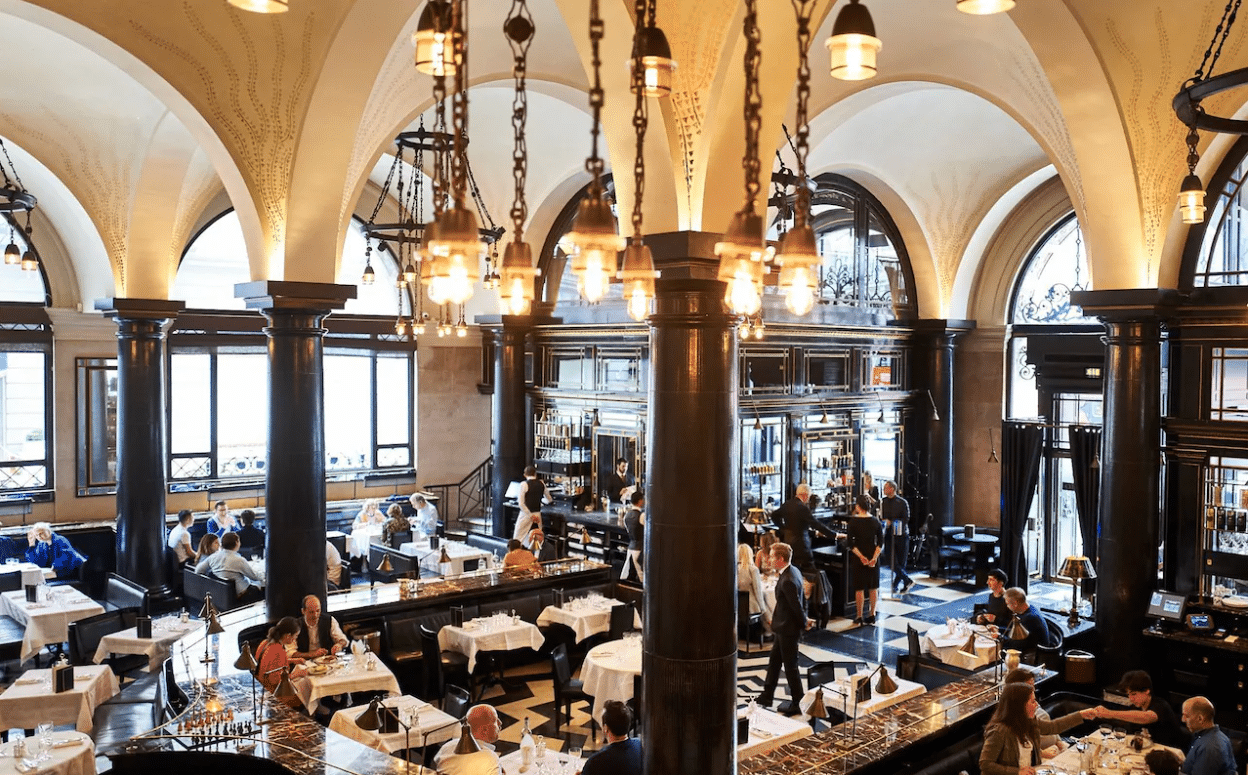
The dining room is where your price point gets justified. Wobbly tables and mismatched chairs quietly tell a customer to spend less. You do not need expensive things. You need something consistent, durable, and fit for the turnover you are planning.
- Tables and seating: Sized to your covers and your planned turnover. Stackable or modular, if you flex the layout for events or quieter days.
- Service stations: Somewhere staff can grab water, cutlery, and condiments without crossing the entire floor mid-service.
- Lighting and ambience: Cheap to change, and it has an outsized effect on how long people linger and how much they order.
- Menus and signage: Clear, clean, and easy to reprint when your costs move, and your prices follow them.
Spend where the customer’s hand or eye actually lands, such as chairs, glassware, and lighting, and save on the things they never notice.
Don’t Buy It All At Once
The fastest way to run out of runway is to fit out the entire venue before you have taken a single booking. Equipment is a capital cost, and capital you have sunk into a walk-in freezer is capital you cannot use to survive a slow opening month.
Phase it:
- Phase one: The compliance kit plus the minimum cooking and money setup you need to open and trade legally. Nothing else.
- Phase two: Capacity upgrades once you know your real covers – more refrigeration, a second card terminal, and extra prep space.
- Phase three: The nice-to-haves that a proven, profitable service can fund out of cash flow rather than borrowed money.
Build a proper number before you commit to any of it. The SBA’s startup-cost framework is a clean way to separate one-off purchases from the running costs that hit you every month, and it stops you from mistaking a big equipment bill for your whole budget.
The same discipline you would apply to choosing a concept applies to the kit list. If you have not pressure-tested demand the way you would with any food business idea, you are buying equipment for a restaurant whose market has not confirmed it wants it yet. Keep in mind that early assumptions about demand are often wrong.
Final Thoughts
The equipment list that opens a restaurant well is not the longest one. It is the one bought in the right order, sized to a real menu, and matched to a budget that survives the first quiet month. Get the compliance kit signed off, take money cleanly, cook only what the menu needs, and let profit pay for the rest. A kitchen that looks impressive on opening day counts for nothing if the numbers behind it do not add up by day ninety.