
A MATT HAYCOX NO BOLLOCKS BREAKDOWN
I have run businesses through downturns that nearly finished me, and spent years on the other side of the desk as a lender, watching directors make this same call under pressure.
Cutting costs isn’t hard. Freeze a subscription, delay a purchase, cancel a contract. Any director can do that before lunch. Keeping your best people while you do it is the actual job, and most directors get the order backwards: they cut in a panic, then wonder six months later why the good ones left first.
The businesses that keep their team through a cost-cutting period don’t cut the least. They cut in the right order, and they say so out loud.
THE SELF-CHECK
BEFORE YOU CUT ANYTHING
Run through this before you touch a single cost.
- You’ve looked at your own pay, perks, and expenses before looking at anyone else’s
- You’ve frozen hiring and cut discretionary spend before even considering a headcount cut
- You’ve told your team that costs are under review, before they had to ask
- You’re being straight with your team about what’s being cut and why
- You’ve drawn a hard line between costs that protect revenue and costs that just feel safe to keep
If you can honestly tick two or fewer of these, stop and read the next section before you cut anything.
THE ORDER THAT PROTECTS MORALE
A list of what to cut: energy, subscriptions, suppliers, staff, only tells you where the money goes. The sequence you work through it in is what decides whether your team still trusts you at the end. Cut in the right order, and a team will forgive far bigger cuts than you would expect.
| ORDER | WHAT YOU CUT | WHY THIS ORDER |
|---|---|---|
| 1 | Your own pay, perks, and discretionary spend | Nothing loses a team faster than a director asking for sacrifice while protecting their own comfort |
| 2 | Vanity spend and unused subscriptions | Costs nobody notices are gone are the cheapest wins available and cost you no trust |
| 3 | Supplier terms and contracts | Renegotiation is invisible to your team and can free up meaningful cash before anyone else is affected |
| 4 | Hours, overtime, and hiring | Reducing hours or freezing hiring protects existing jobs while still lowering cost |
| 5 | Headcount | The last resort, not the first instinct, and never without the conversation below |
WHAT TO CUT FIRST: YOUR OWN COMFORT
Before you touch anything else, look at your own pay, your car, your expenses, and anything the business funds that’s about your comfort rather than its survival. Not because it’ll save the most money. Usually it won’t. Because it earns you the right to ask anyone else to sacrifice anything at all.
A director who protects their own position first has already lost the argument with everyone who works for them, whether that conversation ever happens out loud or not. I have built and rebuilt businesses more than once, including from the bottom, and the pattern holds every time: the team notices who sacrifices first, long before they notice how much. This mindset also creates room to explore low-cost business ideas with high profit potential before resorting to deeper cost-cutting measures.
Nobody expects you to work for free or drive a worse car for its own sake. The value here is sequence. If a headcount cut is ever genuinely necessary later, you want to be the director whose own position was already reduced first, rather than the one asking others to take a hit you’ve not taken yourself.
WHAT TO CUT LAST: YOUR PEOPLE
Headcount is the most expensive line on your P&L and the most tempting place to start. It should be the last place you look, and only once the following have already happened.
- Hiring has been frozen for roles that aren’t essential
- Overtime and discretionary hours have been reduced first
- You’ve looked honestly at whether the role is needed, not just whether the person is liked
- You’ve got a genuine plan for what happens after the cut, not just a smaller number on a spreadsheet
Reducing hours across a team before reducing headcount protects more jobs and more trust than most directors expect. Employees who are engaged with their work and their leadership are measurably more productive. Research from Gallup has linked high employee engagement to a 23 percent difference in profitability compared to low-engagement teams, which is a reason to protect your people, not just a reason to feel guilty about cutting them.
THE CUTS THAT LOOK SMALL BUT COST YOU MOST
Some cuts save little money and destroy a disproportionate amount of trust. Recognise these before you make them.
| CUT | WHAT IT SAVES | WHAT IT ACTUALLY COSTS |
|---|---|---|
| Cancelling small team events or lunches | A few hundred pounds a month | Signals that people, not just spend, are being deprioritised |
| Cutting training and development budgets | Modest short-term saving | Your best people, who are the ones most likely to leave for a role that still invests in them |
| Removing small perks nobody asked to lose | Marginal | Resentment far larger than the sum saved, because it reads as carelessness, not necessity |
| Freezing all comms about the cost review | Nothing saved | Speculation fills the silence, usually worse than the truth |
None of these are large numbers on a spreadsheet. All of them are disproportionately expensive in trust. Weigh every cut against what it actually saves, not just against how easy it is to action.
THE CONVERSATION MOST DIRECTORS AVOID
The mistake isn’t usually the cut itself. It’s making the cut quietly and hoping nobody notices the pattern. Your team will notice. They will notice faster than you think, and they will fill the silence with a worse story than the truth.
Tell your team what is being reviewed, in what order, and why, before you make a single cut that affects them. A team that hears the truth early stays. A team that finds out sideways starts looking for the exit regardless of whether their own job was ever at risk.
This doesn’t mean sharing every number on your P&L. It means telling people plainly: costs are under review, here’s the order we’re working through, here’s what we’re protecting and why, and here’s what happens if it isn’t enough.
WHEN TO GET PROFESSIONAL ADVICE
Any cut that touches contracts, hours, or headcount has employment law implications that vary by situation. The best cost reduction strategies are those that don’t hurt quality or put your business at unnecessary legal risk. Nothing here replaces a conversation with an employment solicitor or HR adviser before you act on staffing changes. Get that advice before you’ve had the conversation above, not after.
FAQs
WHAT IS THE RIGHT ORDER TO CUT BUSINESS COSTS?
Start with your own pay and discretionary spend, then vanity subscriptions and unused services, then supplier contracts, then hours and hiring, and only then headcount as a last resort.
HOW DO YOU CUT COSTS WITHOUT LOSING STAFF?
Protect headcount for as long as genuinely possible by cutting owner comfort, discretionary spend, and hours first. When a headcount cut becomes unavoidable, tell the team honestly and early rather than making the decision quietly.
DOES CUTTING COSTS ALWAYS DAMAGE MORALE?
No. Cuts made in the wrong order, or made silently, damage morale. Cuts made in a clear order, explained honestly, are far more often understood and even respected by a team.
SHOULD I CUT MY OWN PAY BEFORE CUTTING STAFF COSTS?
Yes. It isn’t usually the largest saving available, but it establishes the credibility needed to ask anyone else in the business to sacrifice anything at all.
WHEN SHOULD HEADCOUNT BE ON THE TABLE?
Only after hiring has been frozen, discretionary hours have been reduced, and supplier and overhead costs have already been addressed, and only with proper legal and HR advice before you act.
THE FULL PLAYBOOK
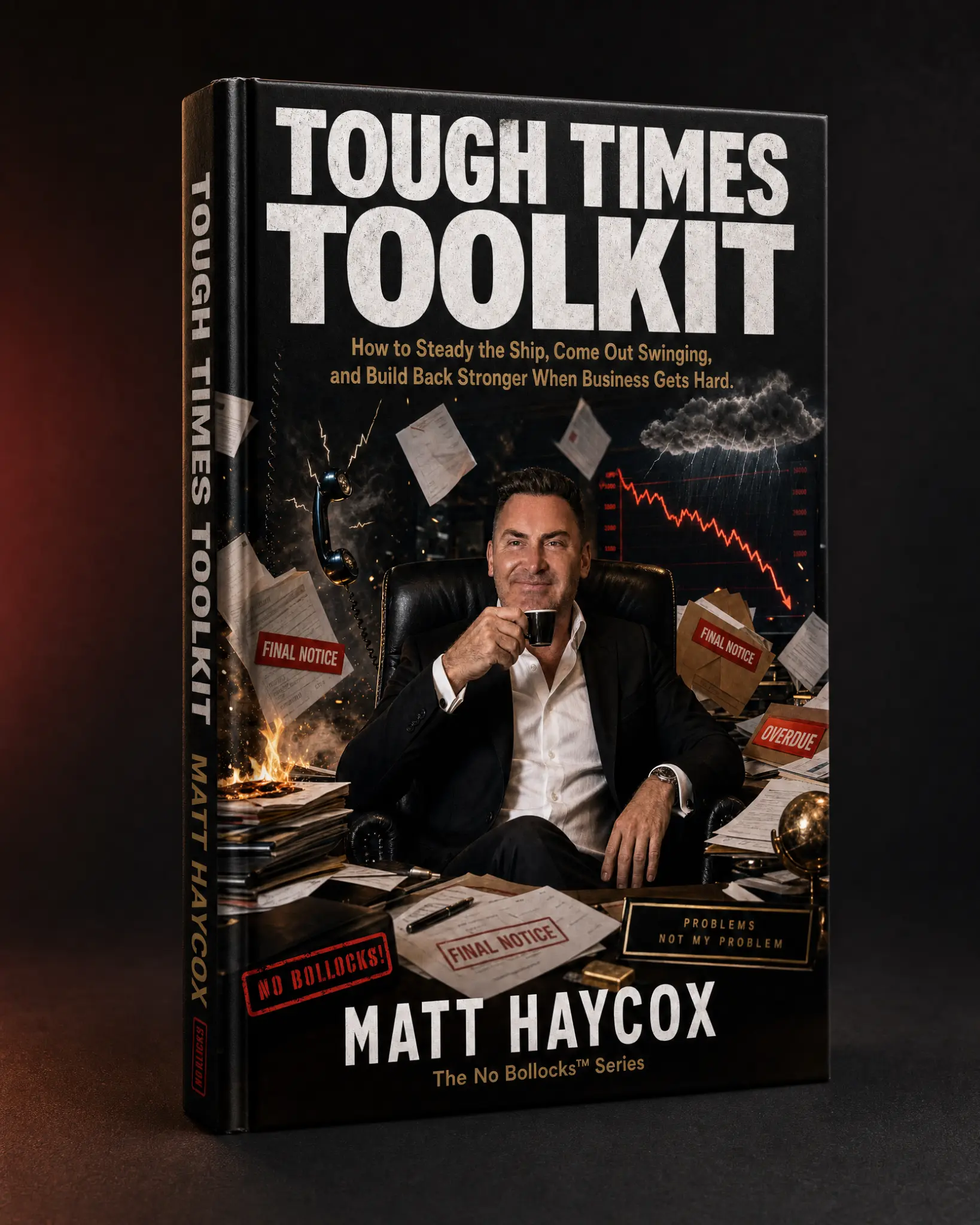
The order above is the starting point. The complete cost-cutting decision framework, including the exact triage sequence and how to run the team conversation itself, is built out in full in the Tough Times Toolkit book. If you recognised more than one of the signs in the self-check, that is the next step.