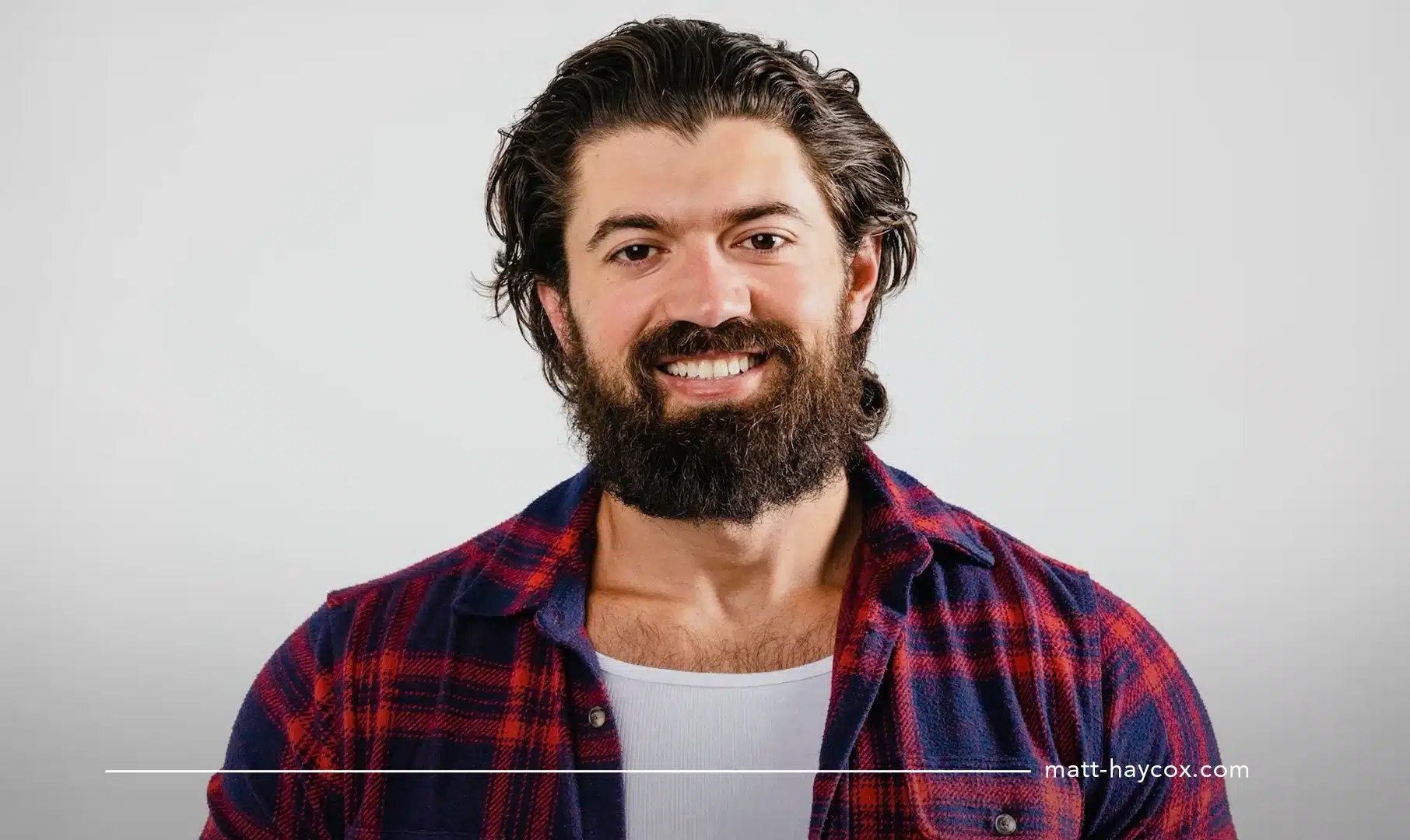
Who is Alex Hormozi?
Alex Hormozi is an American entrepreneur, investor and author who made his money turning a chain of gyms into a business-education empire. He started in a corporate consulting job, quit to open gyms, and nearly went broke doing it before one idea turned it around. He made his name with Gym Launch, a company that licensed his gym-turnaround system to other gym owners, then sold it and his supplement brand Prestige Labs in 2021.
Since then he and his wife Leila have run Acquisition.com, a private holding company that takes equity in other people’s businesses and scales them.
To most people he’s the big-bearded bloke from the business videos. He’s built one of the largest business-education followings online, tens of millions across YouTube, Instagram and TikTok, and he gives his frameworks away for free, including a series of books, $100M Offers and $100M Leads, that he sells at cost or hands out for nothing.
He’s done something rare: he turned an audience into an ownership machine. Most people with his following sell courses. He used his to build a portfolio of businesses he owns pieces of. That’s the difference between a famous coach and a wealthy investor.
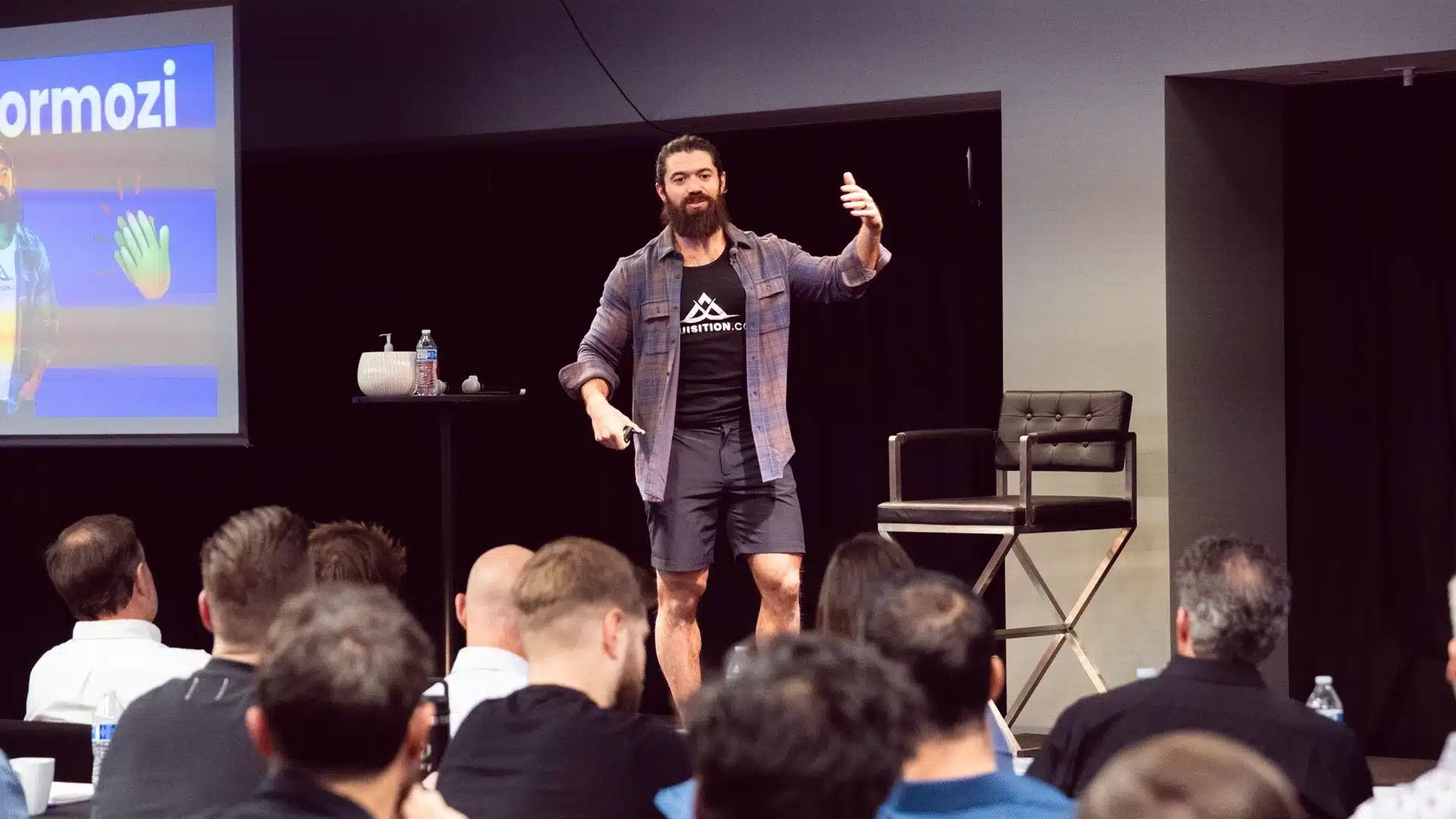
The number
Alex Hormozi is worth around $350 million as of mid-2026. Nearly all of it is equity he owns: his stakes in Acquisition.com’s portfolio of businesses and in the software platform Skool. He’s an owner, not a fee-earner, and the ownership is where the money is.
The money came in three phases. He built cash-generating businesses and sold them in 2021 for tens of millions. He turned that cash and his growing audience into Acquisition.com, a firm that takes ownership stakes in other companies. And he made one large bet on Skool, the platform his own world runs on. Add the pieces up properly and you get to roughly $350 million.
The engine underneath all of it is the thing to copy. He gives enormous value away for free, that builds an audience, and the audience gets converted into equity. Attention in at the top, ownership out at the bottom. He’s an operator who worked out that owning slices of businesses beats being paid by them, and who uses his own fame to source the deals for it. This report is part of our celebrity net worth analysis series.
Alex Hormozi’s net worth: the numbers
| Bucket | Value (est.) | Notes |
|---|---|---|
| Total net worth | ~$350m | Our valuation, mid-2026 |
| Cash & liquid investments | ~$55m | Index funds and cash |
| Real estate | ~$25m | Vegas home and holdings |
| Acquisition.com (excl. Skool) | ~$120m | Operating equity stakes + the books and education engine |
| Skool stake | ~$150m | His largest single position |
How the number is built
His wealth sits in four buckets.
Cash and investments, about $55 million. Hormozi has said he keeps roughly $40 million in index funds plus cash. Boring, safe, and deliberately so.
Real estate, about $25 million. A Las Vegas home reported at around $9 million and other holdings. Modest for the money.
Acquisition.com, about $120 million. This is the biggest part of his wealth. Acquisition.com is the Hormozis’ holding company, and they own it outright. It takes equity in businesses doing $3 to $100 million in revenue and scales them, and the firm says its portfolio turns over more than $250 million a year.
Here’s the working. Strip out Skool to avoid double-counting and the rest of the portfolio still does well over $150 million in revenue. Take a conservative share of that for their stakes and put a modest multiple on it, because these are cash-flow service and digital businesses, not high-multiple software. That lands the operating equity in the tens of millions.
On top of it sits the education engine: the book series, the paid scaling workshops and the monetisation of a following in the tens of millions, which is a real business in its own right. Add the two together and it’s worth somewhere around $120 million. Call it the machine.
Skool, about $150 million. His single biggest position. In late 2023 he took a large stake in Skool, the community and course platform, reportedly around half the company before later investors came in. Skool then took growth investment from Andreessen Horowitz, one of the biggest venture firms in the world, which marked the company up sharply. We value his stake at about $150 million, crediting that venture round without swallowing the wilder billion-dollar claims.
The logic: Skool turns over tens of millions a year and is growing fast, the profile that earns a high revenue multiple, and Andreessen Horowitz backing it is a strong signal on its own. Apply a sensible multiple, take his reported share, discount for the fact that later investors dilute him, and $150 million is where we land.
Add the four buckets up and you get roughly $350 million.
Two caveats on the working. The softest number is Skool, whose valuation is thinly reported, so we’ve credited the venture round without inflating it. And the Acquisition.com figure rests on a stake we’ve estimated rather than one that’s published. Neither moves the headline enough to change the story, and the total comes out around $350 million.

When you work out what someone like this is worth, value the businesses they own, not just the cash in their account. Most of a real operator's wealth is locked inside companies that don't have a share price, so it's invisible unless you sit down and put a number on it. That's the whole job, and it's the part everyone gets lazy about.
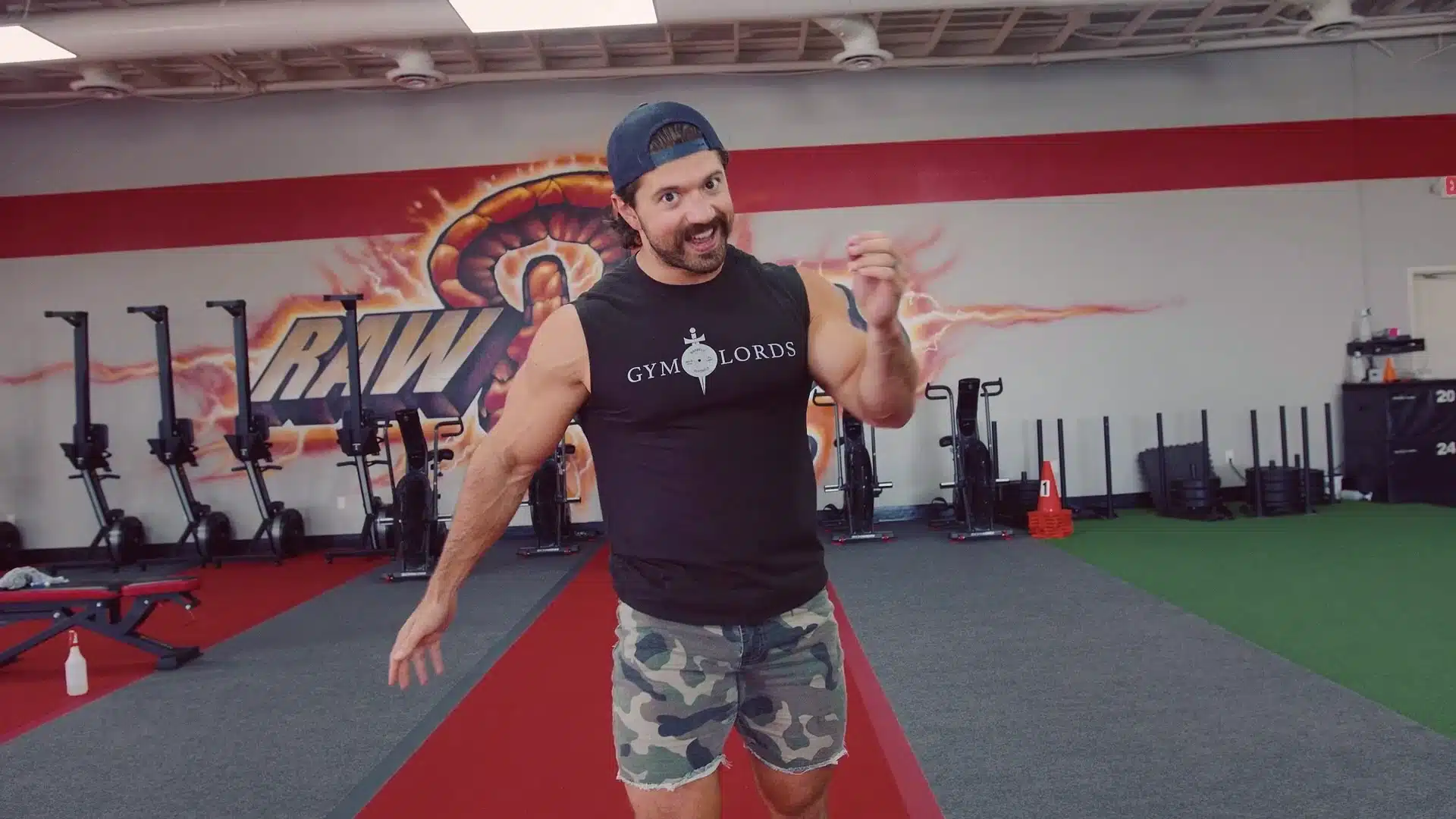
He's an operator who worked out that owning slices of businesses beats being paid by them.
How Alex Hormozi makes money
The money came in three waves: a licensing business, an exit, and a holding company fed by an audience.
The operating years: Gym Launch
It nearly didn’t happen. By late 2016 Hormozi had run his bank balance down to about a thousand dollars, sleeping on the floor of a gym he was trying to save. That’s the starting point, because what came next was a deliberate change to the business model, not a lucky break.
He’d been running gyms. In 2016 he turned the thing he was good at into a product instead. Rather than own gyms and carry the rent, staff and risk, he licensed his turnaround system to other gym owners: a high-intensity six-week launch that filled a gym with members fast, plus the pricing and retention playbook to keep them.
Owners paid to run it themselves. He got a slice of the upside from thousands of gyms without the cost of opening one, which is why it scaled where a chain never could.
A single six-week launch could add tens of thousands of pounds of new membership to one gym, so owners happily paid a fee and a share for the system that produced it. Multiply that across thousands of gyms running it at the same time and the numbers got big fast, without Hormozi ever signing a lease or hiring a trainer.
By his own account the licensing business did $6 to $8 million in its first year at about $3 million profit, then $25.9 million at $15.9 million profit in year two. He stacked two more businesses on the same customers: Prestige Labs, a supplement line gym owners could sell on, in 2018, and ALAN, a lead-nurture software tool, in 2020. By the time he sold, Gym Launch had served over 4,500 gyms across 13 countries. Same customer, three products, none of them requiring him to open a single gym.
The move here isn't the gyms, it's what he did with one good system. He stopped selling his time and started selling the instructions. Then he sold the same audience a supplement and a software tool, so every customer was worth three products instead of one. That's the whole game for a service business: build it once, sell it many times, and sell your existing customers the next thing before you chase a new one. Most people go and find new customers. He went deeper into the ones he had.
The 2021 exit
In late 2021 he sold a majority stake in Gym Launch and Prestige Labs to a private equity firm, American Pacific Group. The headline number is $46.2 million, but that’s the gross deal for two-thirds of both companies. He kept a third and took about $31 million in cash, on top of the $42 million he’d already drawn out in distributions over the previous years. The businesses had done around $30 million of profit in the prior two years, so he was selling a machine throwing off serious cash.
He’s since called the exit a mistake, and his reasoning is worth understanding. A business making $15 million a year in profit can be borrowed against: you can pull a large chunk of its value out as debt, keep the company, and let its profits pay the loan back. Sell instead and you get one lump, taxed once, and you no longer own the thing that made the money. He took the lump.
The maths is stark. A business throwing off tens of millions a year in profit will usually support a large loan at a low rate, so he could have pulled most of the money out as debt and still owned a company producing eight figures a year, tax-deferred. Instead he sold two-thirds of it, paid tax on the proceeds, and gave up every future year of profit. That’s the trade he regrets, and it’s the one most owners get wrong. It’s the same regret Peter Jones describes over selling Wireless Logic just before its value exploded under new owners.
When you work out what someone like this is worth, value the businesses they own, not just the cash in their account. Most of a real operator's wealth is locked inside companies that don't have a share price, so it's invisible unless you sit down and put a number on it. That's the whole job, and it's the part everyone gets lazy about. If you're building that kind of equity-first business yourself, work with Matt or book one-to-one consulting.

Acquisition.com and the audience engine
With the cash from the exit, the Hormozis founded Acquisition.com in 2020. It takes equity stakes in businesses doing roughly $3 to $100 million in revenue and scales them using his playbook, and the portfolio reportedly turns over more than $250 million a year. This is where most of his wealth actually lives, because he doesn’t charge these companies a fee, he owns a piece of them.
The clever part is how he fills the top of the funnel. He writes books, $100M Offers, $100M Leads, $100M Money Models, and gives them away at cost or for free. His 2025 launch sold nearly three million copies in a single day, a world record, and he made almost nothing per book on purpose.
The books build an audience: over 3.8 million on YouTube, more than 7.5 million across platforms, over a million on his newsletter. That audience is the deal flow. Business owners who read the books and watch the videos bring their companies to Acquisition.com.
It runs as a flywheel, and each turn makes the next one easier. Free content builds the audience. The audience sends inbound deals. Acquisition.com takes equity and scales the best ones with the same playbook from the books. Those wins become case studies and more content, which grows the audience again. Most investment firms pay dearly to source deals and win them in auctions against other money.
Hormozi has business owners queuing to hand him equity because they already trust the playbook, which is the hardest thing in the investing business to buy. Acquisition.com is run with Leila, who handles operations while he drives the brand, so the fortune is one they’ve built together.
This is the bit people miss because it looks like generosity. Giving a book away at cost isn't charity, it's customer acquisition. He spends the margin he could make on the book to buy attention instead, and that attention is worth far more to him than the book profit, because it feeds a business that takes equity in companies. Work out what a customer is ultimately worth to you, then be willing to lose money at the front to own the relationship. The person who can spend the most to acquire a customer wins.
He turned an audience into an ownership machine. Most people with his following sell courses. He used his to build a portfolio of businesses he owns pieces of.
Alex Hormozi’s assets: the portfolio
Most of his wealth is equity in businesses, not cash or property.
Cash and investments
Roughly $40 million in index funds, mostly boring broad-market holdings, plus cash. He’s said he sold nearly everything he owned in 2021 to live minimally and stay flexible, and that he spends about $100,000 a month against a nine-figure fortune. That burn is a rounding error, which is the point: low fixed costs let him make big, patient bets.
The index-fund choice tells you how he thinks. The same man who takes a huge swing on Skool keeps the rest of his money in the dullest instruments there are, so he can afford to be aggressive where it counts.
Acquisition.com equity
The holding company is the engine, and the Hormozis’ stake in it is the largest chunk of his wealth after Skool. They own it outright, it holds equity across a portfolio doing more than $250 million a year in revenue, and it carries the book and education business on top.
It doesn’t throw off a headline number the way a salary does, but a stake in a portfolio of profitable businesses is real wealth, and a large slice of his.
The Skool stake
His biggest single position. In late 2023 he made what he’s called the biggest investment of his life, taking a large stake in Skool, the platform creators and coaches use to run paid communities and courses. It’s the rare asset he can personally move: he uses it, he sells it to millions, and he helps steer it, so his own effort grows the value of his own stake.
Andreessen Horowitz then backed the company, marking it up. The exact valuation has never been published and the numbers that circulate are shaky, so we’ve valued his share at about $150 million: above his own “$100 million-plus” line, credited for the venture round, but short of the billion-dollar claims that have no real source behind them.
Real estate
The Hormozis reportedly bought a Las Vegas home for around $9 million and sold an earlier Austin property for about $4 million. Around $25 million in property in total, modest for the wealth level and held, like the index funds, as ballast rather than a growth play.
The audience
The audience doesn’t show up on the balance sheet, but it may be the most valuable thing he owns. Millions of followers and a million-plus newsletter subscribers, built with years of free content and given-away books. He treats it like a business, not a hobby: a high volume of genuinely useful material across YouTube, podcasts and short-form, all pointing at the same offers.
A rival can copy a book or a course, but not a decade of trust with millions of business owners. That trust is why deals come to him instead of him chasing them, and why he can charge nothing for a book and still come out miles ahead.
The aim of every video and book is the same: give away something so useful that a fraction of the people who consume it want to work with him or bring him a business. At his scale, even a tiny conversion on tens of millions of people is a flow of qualified deals and customers no advertising budget could buy. That’s the real asset, and it’s the one that feeds all the others.
Alex Hormozi net worth breakdown
Where the money sits:
| Asset class | Value (est.) | Share | What drives it |
|---|---|---|---|
| Acquisition.com (excl. Skool) | ~$120m | ~34% | Portfolio equity + books and education |
| Skool stake | ~$150m | ~43% | His largest single position |
| Cash & investments | ~$55m | ~16% | Index funds and cash |
| Real estate | ~$25m | ~7% | Vegas home and holdings |

Around three-quarters of his wealth is equity in businesses, split between the Acquisition.com machine and the Skool stake. He’s built his fortune by owning pieces of companies, and the value compounds inside them rather than paying out as income.
Timeline of major financial milestones
| Year | Event | Financial impact | Why it mattered |
|---|---|---|---|
| 2013 to 2016 | Opens gyms, nearly goes broke | Down to about $1,000 in the bank | The before picture |
| 2016 to 2017 | Founds Gym Launch, pivots to licensing | ~$6 to 8m revenue in year one | Stopped selling his time |
| 2018 to 2020 | Adds Prestige Labs and ALAN | $120m+ cumulative sales, 4,500+ gyms | Sold one audience three products |
| 2020 | Founds Acquisition.com | Pivot from operator to owner | Started taking equity, not fees |
| 2021 | Sells two-thirds of Gym Launch + Prestige | ~$31m cash to him | The liquidity base for everything after |
| 2021 to 2025 | Publishes the $100M books at cost | 5m+ copies, huge audience | Built the deal-flow engine |
| 2023 to 2024 | Takes a major stake in Skool | Now his biggest position | Venture-backed markup drives the upside |
| 2025 | Record book launch, ~3m copies in a day | Audience and deal flow compound | The engine keeps feeding itself |
The gear-changes: the licensing pivot in 2016, the product stack from 2018, the 2021 exit that turned him from operator to owner, and Acquisition.com, which converted his audience into equity. He built cash machines, sold them, and put the proceeds and his fame to work owning pieces of other businesses.
The pattern behind the wealth
Strip away the gyms, the books and the software and Hormozi did one thing over and over: he industrialised turning attention into ownership. Gym Launch, from 2016, proved he could sell a system instead of his time. The 2021 exit handed him a cash base. Acquisition.com, founded in 2020, turned that cash and an audience he’d built by giving everything away into equity in other people’s companies.
Every stage fed the next, and the through-line never changed: get attention as cheaply as possible, then convert it into something you own. The books lose money so the audience grows; the audience brings deals so Acquisition.com can take equity; the equity and the exits fund the next bet. He isn’t a coach who got rich. He’s an investor who worked out that a following is the cheapest deal-sourcing machine ever built, and pointed it at businesses he could buy into on his own terms.
Get attention as cheaply as possible, then convert it into something you own.
Actionable insights: what to copy from the Hormozi blueprint
Each lesson has the move he made, the principle, why it works, your version at different sizes, the thing to do now, and the trap.
Turn attention into equity
The move. He gives his books away at cost or free and pours the profit he skips into building an audience of millions, then converts that audience into ownership stakes through Acquisition.com.
The mechanism. Spend the front-end margin to own the relationship, then take your return in equity, not sales.
Why it works. The non-obvious bit: he isn't in the book business or the content business, he's in the deal-sourcing business, and content is the cheapest deal-sourcing there is. A private equity firm pays banker fees and wins competitive auctions to buy into good companies. Hormozi has owners bringing their businesses to him, already sold on his playbook because they've consumed hundreds of hours of his free material.
Nearly three million copies of one book in a day at roughly zero profit per copy isn't a loss-leader gone wrong, it's the cheapest acquisition campaign in business, aimed squarely at people who will one day hand him equity. He swapped a few dollars of book margin for proprietary deal flow that money can't buy. Steven Bartlett runs the same play from the media side, turning The Diary of a CEO's audience into equity stakes rather than just selling ads against it.
Just you, no audience: build the asset from zero, one channel and one type of buyer, publishing what you actually know every week until a real list exists.
A team and customers: you have an audience but only sell it your core service, so add a higher-margin back-end offer they can graduate into.
Cash-rich and scaled: stop only selling to it and start taking equity in the businesses it brings you.
Do this now. Work out what one good customer is worth to you over a lifetime, then find the cheapest way to put your best thinking in front of a thousand of them for free. That's your book.
The trap. It only works if there's a high-value back end for the attention to flow into. Give the front away with nothing behind it and you've built an expensive hobby.
Takeaway: Content isn't marketing, it's the cheapest way to buy the deals everyone else pays a premium for.
Sell the system, not your time
The move. He licensed his gym-turnaround system to other owners instead of running gyms, then sold those same gym owners supplements through Prestige Labs and software through ALAN.
The mechanism. Package what you know into a product that sells without you, then sell your existing customers the next thing before you chase new ones.
Why it works. The real leverage is what happens after the first sale. Once you've paid to win a customer, every extra product you sell them is almost pure profit. Gym Launch hit $25.9 million in revenue in its second year because adding a customer didn't cost him a day of his life.
Then Prestige Labs and ALAN rode the same gym-owner base to over $120 million in cumulative sales across the three, most of it from people he'd only had to win once. The expensive part of any business is acquiring the customer. He did that once and sold into it three times.
Delivering everything by hand: document your one repeatable process and sell it as a fixed-scope product, so revenue stops equalling your hours.
A product and a customer base: build the second and third product those same customers already need, so each one is worth two or three times as much.
Established: license the system to others or own the platform they run it on, so you are out of the delivery entirely.
Do this now. Write down the process you repeat most often for clients: that's product one. Then write down the next thing those same clients need: that's product two.
The trap. The system only sells if it produces a result people can see, and each extra product has to genuinely serve the same customer, not just pad the average.
Takeaway: Win the customer once, then sell them the system and everything that goes with it.
Get paid in ownership, not fees
The move. He went from running Gym Launch for profit to founding Acquisition.com, which takes equity stakes in businesses instead of charging them fees.
The mechanism. When your input drives the growth, own a slice of the growth rather than billing for the advice.
Why it works. The maths of a fee versus a stake isn't close, and it's about tax and time as much as size. His $31 million exit was a single lump, taxed once, and then done.
His equity in the Acquisition.com portfolio and in Skool keeps compounding, untaxed until he sells, and can multiply many times over. Acquisition.com could charge the companies it works with a fat advisory fee, but a few points of a business it helps double is worth far more, and it defers the tax for years while the stake grows.
That's the jump from a good income to real wealth: an operator's money stops the day he stops, an owner's stake keeps working without him.
Billing for time or projects: on your best client work, swap part of the fee for a small profit-share or equity, so you start getting paid in upside.
A profitable business with spare cash: buy into or acquire one business next to yours instead of only reinvesting in your own.
Real scale: build a structure that systematically takes equity across several businesses, the same model at your own level.
Do this now. On your next big piece of client work, propose a smaller fee plus a share of the upside you create. If you back yourself, take the equity, even a few points.
The trap. Only take equity where you genuinely move the numbers, and only in businesses that make money. A stake in a bad business is worth nothing, and a fee you can influence beats equity you can't.
Takeaway: A fee pays once. Ownership pays for as long as the business lives.
Keep your burn low so you can bet big
The move. He spends about $100,000 a month against a nine-figure fortune and sold nearly everything in 2021 to stay flexible.
The mechanism. Low fixed costs mean you're never a forced seller and can hold risky, illiquid stakes for years.
Why it works. The low burn isn't frugality for its own sake, it's what makes the concentration possible. Most of his wealth is locked in Acquisition.com and Skool, and those only pay off if he can leave the money there through the ups and downs. $100,000 a month is $1.2 million a year against a $350 million fortune, so he could stop working tomorrow and never feel it.
That gap is what lets him sit through a bad quarter in Skool and hold for the upside. Someone with the same portfolio and a high burn would be a forced seller at the worst possible moment, crystallising a loss and capping the gain. Your fixed costs decide whether you get to be patient.
Founder-led and tight: keep your personal drawings low and bank six months of runway, so your own cash-flow never forces you into a bad deal.
Staff and fixed costs: hold those costs well under gross profit, so a bad quarter can't force layoffs or a fire-sale.
Cash-generative and scaled: keep a war-chest so you can be the buyer when everyone else is a forced seller.
Do this now. Add up your fixed monthly costs, personal and business. The lower that number relative to your income, the more freedom you have to bet. Cut one fixed cost this week.
The trap. Low burn isn't the same as being cheap on the things that make money. Cut lifestyle bloat, not the spending that grows the business.
Takeaway: A low burn buys you the freedom to make big bets and wait.
Don't sell the cash machine, borrow against it
The move. He sold Gym Launch in 2021 and later called it a mistake, because a profitable business he controlled was worth more kept than sold.
The mechanism. A cash-generating business can be borrowed against. You pull money out as debt, keep ownership, and let the profits repay the loan.
Why it works. Selling gives you one lump, taxed once, and then you're out. Borrowing lets you take cash out for years and still own the asset that produces it. On a business making $15 million a year, that difference compounds into far more than the sale price ever did. Compare that with founders who never sell any of it: Ben Francis's opposite bet, keeping roughly 70 per cent of Gymshark for over a decade, shows what the same discipline looks like taken to its logical extreme.
A small but profitable side-business: don't dump it for a one-off lump, keep the cash flow.
An established company: refinance or borrow against its profits to fund the next thing rather than selling equity.
A portfolio and real assets: borrow against them to acquire more, compounding without ever cashing out.
Do this now. If you're tempted to sell something that makes money, work out what it would cost to borrow against it and keep it instead. Only sell if you've got a clearly better home for the cash.
The trap. Debt against a business only works if the profits are stable. Borrow against a shaky income and one bad year forces the exact sale you were trying to avoid.
Takeaway: Don't kill the goose. Borrow against it.
Final thoughts
Alex Hormozi is worth around $350 million, and how he built it is the lesson. He built businesses, sold them, and used the proceeds and his own fame to own pieces of other companies instead of collecting fees from them.
The engine is what to copy. Give real value away for free, build an audience with it, and convert that audience into ownership. That’s how a man who was down to his last thousand dollars in 2016 ended up owning a slice of a portfolio doing a quarter of a billion in revenue. He didn’t get there by saving harder. He got there by turning attention into equity.
There are real risks, and he’d admit them. A chunk of his wealth is his Skool stake, valued off thin numbers, so if that company stumbles the figure comes down. And the whole machine runs on his personal brand: the audience feeds the deal flow, and the audience exists because of him. A founder whose engine is his own attention has to keep showing up, and that’s harder to hand over than a factory or a shop.
It’s also a reminder of where real wealth lives for an operator like Hormozi: in the businesses he owns. They made the money, and they hold it.
For a business owner the lessons travel further than the number. Turn your attention into something you own. Sell the system, then sell your customers everything else they need. Get paid in ownership, not fees. Keep your burn low enough to be patient. And think hard before selling a cash machine you could borrow against instead.
You don’t need $350 million to run that playbook. You need to start converting attention into ownership now, at whatever size you’re at. Build the audience first, take the equity second, and the number takes care of itself.
You don't need $350 million to run that playbook. You need to start converting attention into ownership now, at whatever size you're at.
Alex Hormozi net worth: frequently asked questions
How much is Alex Hormozi worth?
Around $350 million as of mid-2026. Nearly all of it is equity he owns: his stake in Skool, worth roughly $150 million, and his ownership of Acquisition.com and its portfolio, worth around $120 million. The rest is cash and property.
How did Alex Hormozi make his money?
He licensed his gym-turnaround system to thousands of gym owners through Gym Launch, then sold that business and his supplement brand Prestige Labs in 2021. He put the cash and his large online audience into Acquisition.com, which takes equity stakes in other companies instead of charging them fees.
What is Acquisition.com and how much is it worth?
Acquisition.com is the Hormozis’ private holding company. It takes equity in businesses doing $3 to $100 million in revenue and scales them, and the portfolio reportedly turns over more than $250 million a year. We value the company, its stakes and its education arm at around $120 million.
How much is Alex Hormozi’s Skool stake worth?
Around $150 million, his single biggest position. He took a large stake in the community platform Skool in late 2023, and Andreessen Horowitz later backed the company and marked it up. The valuation has never been made public, so this figure is our own estimate drawn from that venture round.
Is Alex Hormozi a billionaire?
No. He’s worth around $350 million on our valuation, well short of a billion. The billion-dollar figures that get repeated online usually come from inflating his Skool stake. He could get there if Skool and his portfolio keep growing, but he isn’t there yet.
How much does Alex Hormozi make from his books?
Almost nothing per copy, and that’s the point. He sells the $100M series at cost or gives it away. The books are there to build the audience that brings deals and paying customers to Acquisition.com, which is worth far more to him than any book royalty.
Sources
This piece is built from primary and company sources where they exist, and clearly flagged estimates where they don’t. The 2021 exit and the companies involved are on the public record. Hormozi’s cash position and the deal mechanics come from his own detailed account. The valuations of Acquisition.com and Skool are our own, because neither is a published figure, and the numbers that circulate for Skool in particular rest on limited and inconsistent reporting.
The 2021 exit and the companies:
- Business Wire: American Pacific Group’s completed investment in Gym Launch and Prestige Labs (January 2022), covering the transaction, the companies and the 4,500-plus gyms served.
- Jones Day: legal counsel on the deal (December 2021), confirming it was structured as a recapitalisation.
- Capstone Partners: sell-side advisor to Gym Launch and Prestige Labs, confirming the recapitalisation.
- SGB Online: trade-press coverage of the same transaction.
Hormozi’s own disclosures:
- The Moneywise podcast (Hampton), 2025: his itemised cash position (roughly $40 million in index funds plus cash), his ~$100,000 monthly spend, and the exit mechanics, a $46.2 million gross deal for two-thirds, about $31 million in cash to him, and roughly $42 million in distributions taken beforehand against about $30 million of profit in the prior two years.
- His on-record statements across interviews and posts for the Gym Launch revenue and profit trajectory and the $120 million-plus in cumulative sales across the three businesses.
Acquisition.com and Skool:
- Acquisition.com’s own site: the portfolio’s $250 million-plus annual revenue, the investment model (businesses doing $3 to $100 million in revenue), the exited companies, and the books-and-workshops education business.
- Dealroom: the Skool investment and the reported Andreessen Horowitz growth round, whose size and terms are reported rather than officially confirmed.
- GetLatka: an automated estimate of Skool’s revenue (around $26 million a year) and valuation (around $80 million), used as a conservative low anchor for our own figure.
The books:
- Selfpublishing.com: the $100M series sales, including $100M Offers passing one million copies.
- Guinness World Records: the 2025 $100M Money Models launch as the fastest-selling non-fiction book, at nearly three million copies in a day.
Full source URLs are held in the internal research file for fact-checking.