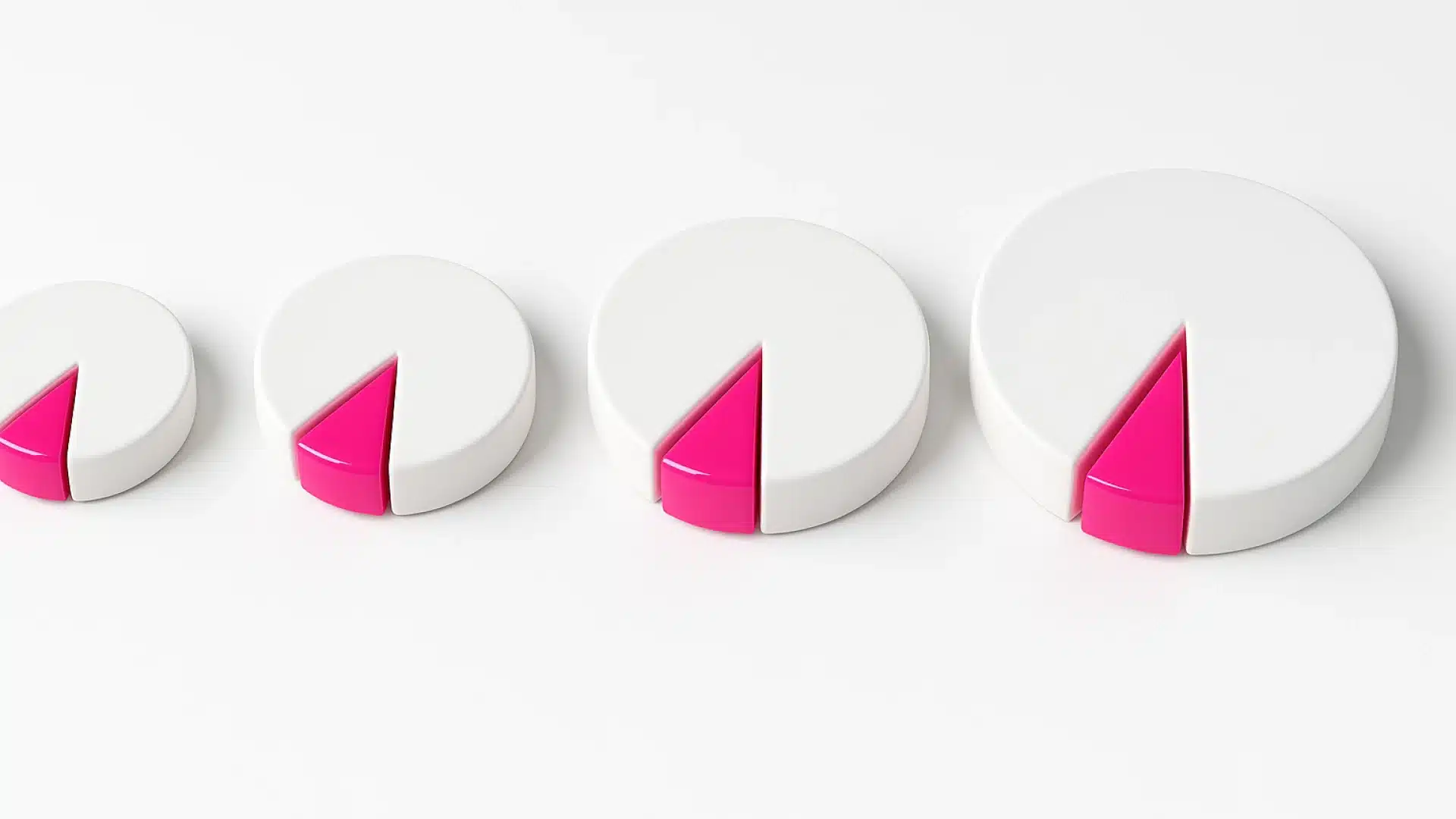

Equity dilution is the fall in an existing shareholder’s percentage of a company when it issues new shares. The founder still holds the same number of shares, but there are more shares in total, so each one is a smaller part of the company. A founder who owns 100% and issues new shares to an investor for 20% of the company ends up with 80%.
A smaller percentage can be worth far more than a bigger one, as long as the new money makes the company worth more. What reduces the value of a founder’s stake is selling shares on the wrong terms: too cheaply, more than the plan needs, an option pool that comes only out of the founders’ shares, or a round priced below the last one. It’s worth modelling every round the business might raise before agreeing the first.
I’ve raised £250m+ for my own companies and invested in 100+ businesses, so I’ve watched dilution play out as the founder and as the investor.
How Equity Dilution Works
How dilution works is the same in every country. A company’s ownership is split by the number of shares in issue. When it raises equity, it issues new shares to the investor, and every existing shareholder’s percentage falls in proportion. This is share dilution, also called dilution of shares, and it applies to everyone on the cap table, including earlier investors who don’t invest again.
The investor’s percentage follows from 2 numbers: the amount raised and the pre-money valuation, which is what the company is agreed to be worth before the money goes in. The founder sets that valuation and has to justify it, and the methods behind it are covered in startup valuation.
Post-money valuation = pre-money valuation + investment
New investor’s share = investment ÷ post-money valuation
Founder’s share after the round = founder’s share before × (1 − new investor’s share − new option pool shares as a share of the company after the round)
Value of the founder’s shares = founder’s share after the round × post-money valuation
Shares that could be issued later dilute too: staff options, the unallocated option pool, and any SAFE, advance subscription agreement or convertible loan note that converts at the next round. Investors count all of them, known as the fully diluted share count, and price the round on it.
Equity Dilution From Pre-Seed to Series B
Say a company’s founders start with 10,000,000 shares and raise 4 priced rounds. The seed investor asks for a 10% option pool to be created inside the pre-money valuation, and the Series A investor asks for it to be topped up to 12%.
| Round | Pre-money valuation | Amount raised | New investor’s share | Option pool after the round | Founders after the round | Value of the founders’ shares at the round price |
|---|---|---|---|---|---|---|
| Start | 100% | |||||
| Pre-seed | £2m | £500,000 | 20% | None | 80% | £2m |
| Seed | £8m | £2m | 20% | 10% | 56% | £5.6m |
| Series A | £30m | £10m | 25% | 12% | 39.2% | £15.7m |
| Series B | £100m | £25m | 20% | 9.6% | 31.4% | £39.2m |
The founders own 31.4% after Series B. At the Series B price their shares are worth £39.2m, against £2m after pre-seed, because each round sold new shares at a higher price than the round before.
The seed round shows where the option pool takes its share. The seed investor gets 20%, and the 10% pool created inside the £8m pre-money valuation comes entirely out of the existing holders. Without the pool, the founders would have kept 64% instead of 56%.
Earlier investors are diluted on the same terms. The pre-seed investor’s 20% becomes 14% after seed, 9.8% after Series A and 7.8% after Series B, unless they invest again in later rounds.
Carta, the cap table software company, published median founder ownership figures in 2025 drawn from more than 45,000 startups on its platform. The founding team’s median holding was 56.2% after a seed round, 36.1% after Series A and 23% after Series B. What each stage expects from a business is set out in pre-seed funding, seed funding and Series A funding.
None of this assumes a company raises at every stage. Plenty of businesses raise once or twice and then fund themselves from profit or borrowing.
How Option Pools Dilute Founders
An option pool is shares set aside for future staff, granted as share options so key hires share in the growth. UK companies often use the Enterprise Management Incentives scheme, which lets an employee hold options worth up to £250,000 in a 3-year period with tax advantages, US companies usually grant options under a stock option plan, and Australia, Singapore and the UAE each have their own employee share rules. The dilution works the same way under all of them.
Investors usually want the pool created inside the pre-money valuation, so it comes out of the existing shareholders and leaves the new investor’s percentage untouched. The arithmetic, often called the option pool shuffle, is worked through in pre-money vs post-money valuation.
Once options have been granted, the next lead investor can ask for the pool to be topped up, as at Series A in the example, and the top-up comes out of the existing holders again.
To keep the pool to what the business needs, the founder can:
- Size it to the people the business plans to hire before its next round, rather than to a round percentage. Options nobody is granted still came out of the founders’ holding.
- Count options already granted towards the pool the investor asks for.
- Settle the pool and the valuation together. A larger pool inside the pre-money valuation is a reason to put a higher pre-money valuation to the investor.
Anti-Dilution Clauses
Anti-dilution protection is a clause that protects an investor if the company later issues shares at a lower price than they paid. A round at a lower price than the last one is called a down round. The clause does nothing in an ordinary round at a higher price. It’s usually attached to preference shares, and it works by issuing the investor extra shares, or converting their preference shares into more ordinary shares, so their price per share is adjusted down.
Anti-dilution comes in 2 forms:
- Full ratchet. The investor’s price is reset to the new, lower price, as if they had invested at it.
- Weighted average. The investor’s price is reset to a point between the old and the new price, depending on how many shares the down round issues. A broad-based weighted average counts every share and option in the company, which makes the adjustment smaller than a narrow-based one that counts fewer shares.
Say an investor bought 1,000,000 preference shares at £2.00 each. The company has 10,000,000 shares on a fully diluted basis when it raises £1m at £1.00 a share, issuing 1,000,000 new shares.
Weighted average price = old price × (A + B) ÷ (A + C)
A = fully diluted shares before the round, B = shares the new money would have bought at the old price, C = new shares actually issued
£2.00 × (10,000,000 + 500,000) ÷ (10,000,000 + 1,000,000) = £1.91
| Full ratchet | Broad-based weighted average | |
|---|---|---|
| Investor’s adjusted price | £1.00 | £1.91 |
| Shares the investor ends up with | 2,000,000 | 1,047,619 |
| Extra shares issued to the investor | 1,000,000 | 47,619 |
The extra shares come out of the shareholders without the protection, usually the founders and the staff with options. Anti-dilution is agreed in the term sheet alongside the valuation, so the founder can settle weighted average rather than full ratchet, a broad base, and exclusions for share issues that shouldn’t trigger it, such as options granted from the pool.
Some shareholders also have a right to buy new shares before anyone else, so they can keep their percentage by investing again. Under section 561 of the Companies Act 2006, a UK company has to offer new ordinary shares to existing shareholders in proportion to their holdings unless the right has been disapplied, which it usually is for a funding round. In the US, a Delaware company’s stockholders have no such right unless its certificate of incorporation grants one, so investors there negotiate it as a pro rata right.
Ways to Reduce Dilution
These decisions set how much dilution a founder takes:
- Raise what the plan costs. The amount is built from what the business needs to pay for to reach its next milestone, plus runway and a margin for delays. Every pound raised above that is paid for in shares.
- Raise at a valuation the business can justify. Progress before a round, known as traction, supports a higher pre-money valuation, and the same amount raised then takes a smaller share. Interest from more than one investor helps a higher price hold.
- Keep the option pool to the hiring plan. Unused pool shares still dilute the existing holders.
- Model every SAFE, ASA and loan note. Each one converts into shares at the next priced round, usually at a valuation cap or a discount, and several together can take more of the company than any one of them suggests.
- Borrow for what lenders will fund. Debt doesn’t dilute. A business with revenue, stock, equipment, property or customers who pay on invoice can often borrow against them and keep equity for the things lenders won’t fund, such as building a product or entering a new market. For UK businesses, Funding Guru arranges this kind of borrowing. Many businesses use both kinds of money, layered by what each funder can take security over, which is how the Capital Stack System sets it out.
How Much Ownership Founders Need at Exit
No percentage is right for every founder. What they receive on a sale is their percentage of the sale price, after anything paid out ahead of the ordinary shares.
| Founders’ share | Sale price | Founders’ share of the sale before tax |
|---|---|---|
| 80% | £8m | £6.4m |
| 56% | £25m | £14m |
| 31.4% | £150m | £47.1m |
Venture investors usually hold preference shares with a liquidation preference, which pays them back their money, or a multiple of it, before the ordinary shareholders receive anything. On a sale well above the total raised, a preference of 1x the money invested makes little difference to the founders. On a sale close to the total raised, it can leave them with much less than their percentage suggests.
Control moves with the percentage too. Under UK company law an ordinary resolution needs a simple majority, and a special resolution, needed to change the articles of association, needs 75% of the votes, so a holder with more than 25% can block one. Company law in the US, Australia, Singapore and the UAE sets its own thresholds, and investor consent rights in the shareholders’ agreement limit what the founders can do whatever their percentage.
FAQs
What is equity dilution?
Equity dilution is the reduction in an existing shareholder’s percentage of a company when it issues new shares. The shareholder keeps the same number of shares, but they make up a smaller part of a larger total.
How do you calculate dilution?
Multiply the founder’s current percentage by the shares in issue before the round, divided by the shares in issue after it. A founder with 80% of 12,500,000 shares, in a round that takes the total to 17,857,143 shares including a new pool, ends up with 56%.
How much dilution is normal in each round?
There’s no fixed figure, because it depends on the amount raised and the pre-money valuation, plus any option pool created in the round. Carta’s 2025 data put the founding team’s median holding at 56.2% after seed, 36.1% after Series A and 23% after Series B.
Does dilution reduce the value of my shares?
No, as long as the new shares are issued at a higher price than the last round. The founder’s percentage falls, but their shares are worth more at the new price. A down round, or an option pool created inside the pre-money valuation, does reduce what the existing shares are worth.
Can a founder avoid dilution completely?
Only by not issuing new shares, which means funding the business from its own profit or by borrowing. A business that needs equity can still keep dilution down by raising what the plan costs, at a valuation it can justify.
Next read
If your business has revenue and the money is for something a lender can fund, Borrow From Me is how I lend to businesses directly, with no shares changing hands. If you’re raising equity and want it run properly, from making the business investable to getting in front of the right investors, that’s what Capital Raiser does.
This is general information on how equity dilution works and isn’t investment advice.