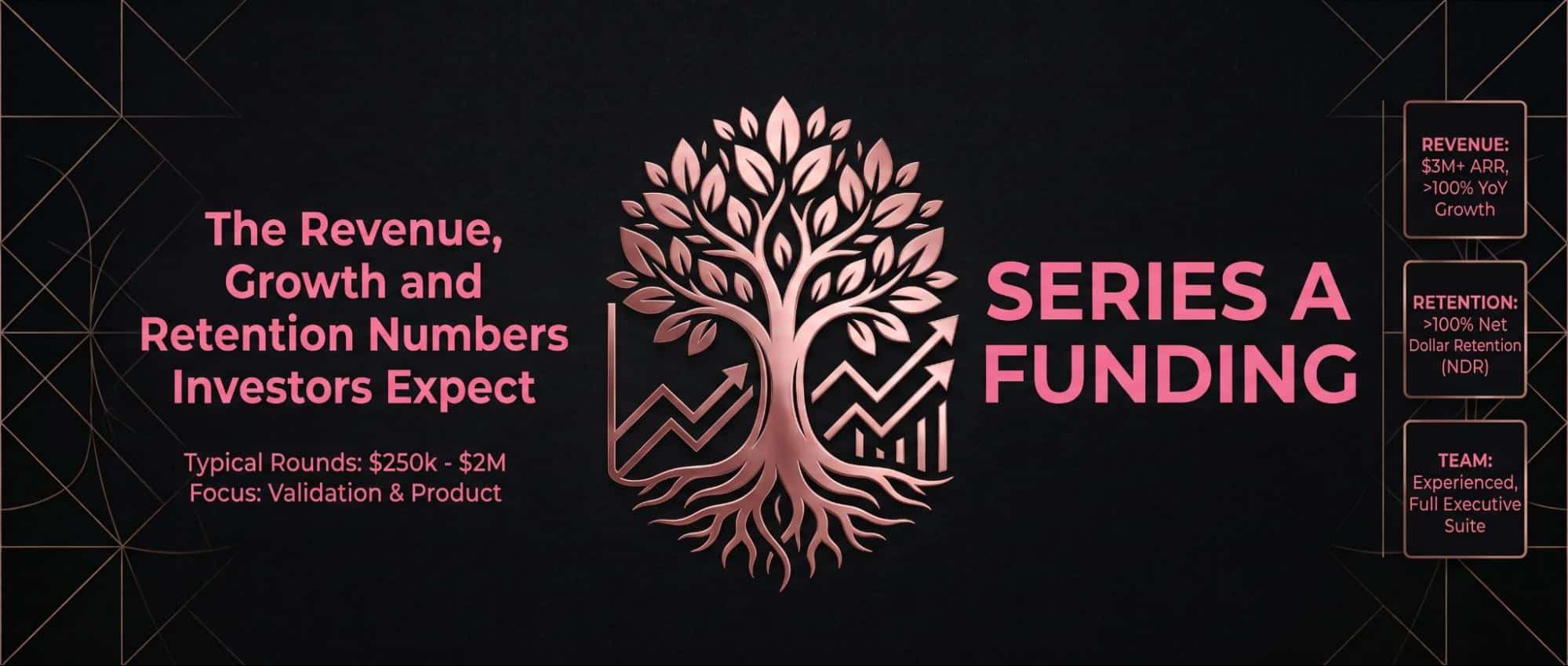

Series A funding is the first large round a company raises from venture capital investors, and for many companies it’s the first priced round, where investors buy shares at an agreed valuation. It’s raised once a business has shown that customers want what it sells and needs money to grow that quickly.
I’ve raised £250m+ for my own companies and funded more than 750 businesses with over £1bn, so I’ve seen these rounds as a founder, as an investor and as a lender.
What Series A Funding Is For
Seed money pays to prove that a product sells. Series A money pays to sell it at scale: hiring a sales team and senior managers, spending more on marketing, entering new markets and building out the product. Investors at this stage are backing a model that already works and asking whether more money will make it grow faster.
It’s also usually the round where earlier investment agreements turn into shares. Any SAFEs, advance subscription agreements or convertible notes from pre-seed and seed usually turn into shares at the Series A price, so the share register needs to be accurate before the round closes.
Round sizes vary widely by country and sector. In the US, Carta’s benchmarks put the median Series A at $14.7 million in the second quarter of 2026, at a median valuation of $76.3 million after the money went in, with investors taking a median of 18.7% of the company.
In the UK, the British Business Bank’s Small Business Equity Tracker found that companies at what it calls the venture stage raised £4.5 billion across 835 deals in 2025, with an average deal of £5.8 million and a median of £1.1 million. The gap between the average and the median shows how much of the money went into a small number of large rounds.
Revenue and Growth at Series A
There’s no published revenue figure that qualifies a business for Series A. What investors look at is how much revenue there is, how fast it’s growing and how dependable it is.
Recurring revenue. Revenue that arrives every month or year without being won again, such as subscriptions or contracts that renew. It’s usually reported as monthly recurring revenue (MRR) or annual recurring revenue (ARR), and investors value it more highly than one-off sales because it’s more predictable.
Growth rate. How fast revenue is rising, month on month and year on year. A Series A investor is paying for future growth, so the rate matters as much as the current total.
Quality of revenue. Where the revenue comes from. Revenue spread across many customers is less exposed than revenue from a handful, and revenue won through a sales channel the business can repeat is worth more than revenue won through the founder’s personal contacts.
The size of the opportunity. Investors pay more attention to how big the business could become than to small, tidy numbers today. A venture fund needs a few investments to return many times its money, so it backs businesses that could grow very large.
The founder’s projections show how the Series A money turns into that growth. Building a revenue forecast from the actual drivers of the business, such as how many customers each salesperson wins and how many of them stay, gives investors something they can test rather than a line drawn upwards.
Retention
Retention shows whether customers stay and keep paying once they’ve bought. A business that wins customers quickly but loses them just as fast has to keep replacing them before it can grow, and Series A money spent on winning customers leaks away.
Gross revenue retention. The share of last year’s revenue from existing customers that the business still has this year, counting losses and downgrades but not upgrades. It shows how much existing revenue the business keeps.
Net revenue retention. The same measure, but including upgrades and extra sales to existing customers. Above 100% means existing customers are spending more each year than is lost from customers who leave or spend less.
Churn. The share of customers, or of revenue, lost over a period. It’s the other side of retention.
Cohorts. Customers grouped by when they started, so an investor can see how each group behaves over time. Cohorts show whether customers won recently are staying as well as earlier ones, which a single overall figure can hide.
Unit Economics and Other Metrics
Unit economics are the numbers for a single customer: what it costs to win them and what they bring in. They show whether growing the business makes money or loses more of it. The full set of the KPIs investors ask for depends on the business, but at Series A they usually include:
Customer acquisition cost. The total sales and marketing spend over a period divided by the number of new customers won in it.
Payback period. How many months of gross profit from a customer it takes to recover the cost of winning them. The shorter it is, the sooner the money spent on growth comes back to be spent again.
Lifetime value. The gross profit a customer brings in over the whole time they stay. Investors compare it with the cost of winning that customer.
Gross margin. What’s left from each pound of sales after the direct cost of delivering the product or service.
Burn rate and runway. How much cash the business spends each month beyond what comes in, and how many months the cash in the bank lasts at that rate.
Who Leads a Series A Round
A Series A is usually led by a venture capital fund. The lead negotiates the terms, does most of the due diligence and usually takes a seat on the board, and other investors, often including the company’s seed investors, follow on the same terms.
Venture funds invest other people’s money and have to return several times what they raised within a fixed life. They expect many of their investments to fail, so they back businesses that could become very large, which is where they differ most from individual investors. The differences between angels vs venture capital decide which of them suits a business.
Other investors at this stage include corporate venture arms, which are larger companies investing in businesses useful to their own strategy, and family offices. In the UK, government-backed programmes are also active: the British Business Bank’s equity programmes supported 15% of UK equity deals between 2023 and 2025.
Terms That Change at Series A
A Series A is usually the first round with a full set of investor terms. Venture funds putting in large sums want protection for their money and a say in major decisions, and those terms are set out in the term sheet and then written into the shareholders’ agreement and new articles of association.
Preference shares. Investors often take a separate class of shares carrying a liquidation preference, which means they’re paid back first when the business is sold. On a modest sale it can leave the founders with less than their percentage suggested.
Board seats. The lead investor usually takes a seat on the board, and the balance of the board between founders, investors and independent directors is agreed in the round.
Consent rights. A list of decisions the company can’t take without the investors’ agreement, such as raising more money, taking on debt, selling the business or changing the share structure.
Option pool. Shares set aside for future employees. If the pool is created or topped up before the investment, it comes out of the existing shareholders’ holding.
Anti-dilution and pro-rata rights. Anti-dilution protection adjusts an investor’s shares if a later round is raised at a lower price. Pro-rata rights let investors put in more money in later rounds to keep their percentage.
The investor’s share follows from the amount raised and the pre-money valuation, what the business is worth before the money goes in. Say a company raises £8m at a pre-money valuation of £32m. It’s worth £40m afterwards, and the investors own 20%. The founder sets the valuation and has to justify it, and the investors bring their own number, so it’s a negotiation.
Raising Debt Instead of a Series A
A business with steady revenue and margins that can cover repayments can sometimes borrow what it needs instead. Debt suits money for a defined purpose that the business can repay from its own cash flow, such as stock, a large contract, equipment or an acquisition, and the founders keep all of their shares. For UK businesses, Funding Guru arranges this kind of borrowing.
Equity suits growth that the business can’t fund from its own cash flow, where the money is spent on reaching a much larger size before it comes back. For a business with nothing to lend against and no profits yet, equity is usually the only money available. The facts of the business usually decide which fits, and there’s more on when debt beats a Series A for businesses already generating revenue.
When a Business Isn’t Ready for Series A
The numbers above also show when a business isn’t ready yet.
Growth depends on the founder. If most sales still come through the founder’s own contacts, there isn’t yet a repeatable way to win customers for the Series A money to scale.
Customers aren’t staying. High churn or falling revenue from older customer cohorts means new money would mostly replace lost customers.
Winning a customer costs more than they bring in. If the payback period is longer than customers stay, spending more on growth increases the losses.
There’s no clear plan for the money. The founder needs to show what the round pays for, the milestone it reaches and why that milestone makes the business worth more.
The records aren’t in order. Untracked SAFEs or convertible notes, a share register that doesn’t match the filings, or missing contracts slow due diligence down.
A business in this position can keep growing on its existing funding, raise a smaller extension from its current investors, or borrow against revenue it already has, and come back to Series A when the numbers are there.
Series A Rules by Country
How a Series A works is much the same everywhere, but the tax relief for investors and the rules on who a company can offer shares to differ by country.
- From 6 April 2026, most companies can raise up to £10 million a year and £24 million in total under the Enterprise Investment Scheme and the other venture capital schemes combined, with higher limits for knowledge-intensive companies, within 7 years of the company’s first commercial sale. Investors get income tax relief on 30% of what they invest.
EIS shares can’t carry any preferential right to the company’s assets on a winding up, so EIS investors can’t hold shares with a liquidation preference, and a round that includes both EIS investors and venture funds can give them separate share classes.
- Private rounds are usually raised under Rule 506(b) of Regulation D, which allows an unlimited amount from accredited investors without general advertising of the offer.
Australia. Investors in an Early Stage Venture Capital Limited Partnership, a registered venture fund, get a non-refundable tax offset of up to 10% of what they put in.
Singapore. The government’s Startup SG Equity scheme co-invests alongside independent investors in eligible technology startups.
UAE. Venture capital funds can be set up and managed in the Dubai International Financial Centre under Dubai Financial Services Authority rules, which have a specific category for venture capital funds.
FAQs About Series A Funding
What is a Series A round?
A Series A round is a company’s first large round from venture capital investors, usually raised after seed and priced at an agreed valuation. It pays to scale a business that has shown customers want what it sells.
What are the Series A requirements?
There are no fixed Series A requirements. Investors look for growing, recurring revenue, customers who stay, unit economics that show growth makes money, a market big enough for the business to become very large, and a team and plan that can deliver it.
How much equity do Series A investors take?
It depends on the amount raised and the pre-money valuation. Carta’s US data put the median at 18.7% in the second quarter of 2026.
What comes after Series A?
If the business raises again, the next round is called Series B, usually to grow a model that’s already working on a larger scale. Some businesses reach profit after Series A and never raise again.
Next read
If you’re raising and want it run properly, from making the business investable to getting in front of the right investors, that’s what Capital Raiser does. If you’re earlier than that, join Capital Catalyst for free and learn how every type of funding works before you take any of it.