Executive Summary
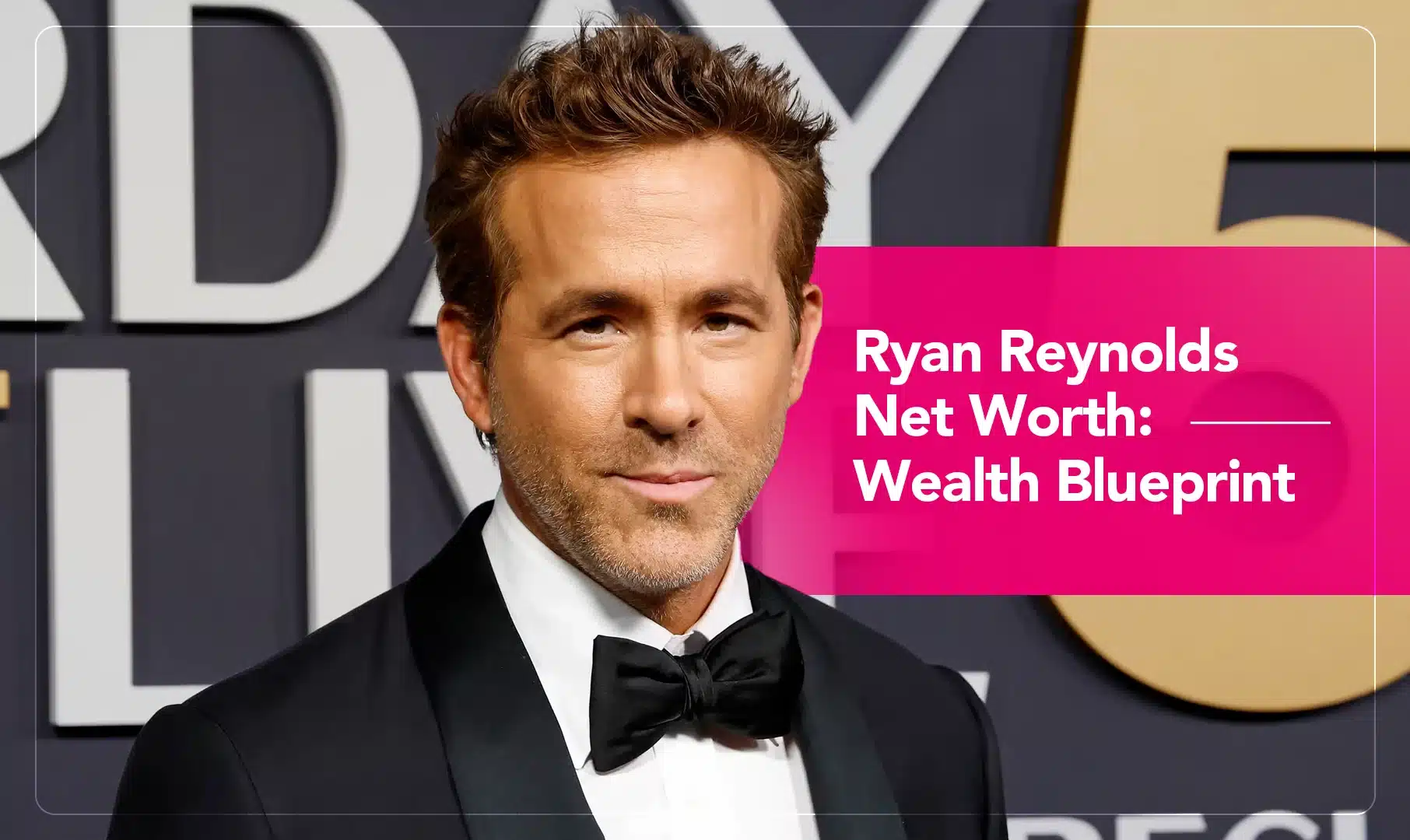
Ryan Reynolds’ estimated net worth, as of early 2026, is roughly $350 million (about £280 million), with credible estimates ranging from $300 million to $450 million depending on how his private stakes are valued. CelebrityNetWorth pegs him at $350 million, and the range reflects genuine uncertainty around his cut of two enormous private exits and several unlisted holdings still compounding.
The core wealth drivers are unusual for an actor: film salaries are the smallest of the three. The big money came from equity in consumer businesses he part-owned and relentlessly marketed himself, chiefly Aviation Gin, sold to Diageo in 2020 in a deal worth up to $610 million, and Mint Mobile, sold to T-Mobile in 2023 in a deal worth up to $1.35 billion, from which Reynolds’ roughly 25 per cent stake reportedly returned in the region of $300 million. The third driver is Hollywood pay itself, led by the Deadpool franchise, which he part-created, produced and took backend on.
Four achievements matter most financially. First, dragging Deadpool into existence in 2016 after years of studio resistance, converting a modest upfront fee into franchise backend that has paid him tens of millions per instalment. Second, the Aviation Gin play: buy a meaningful stake in 2018, become its marketing department, sell to a strategic giant within two years. Third, repeating the trick at far larger scale with Mint Mobile. Fourth, buying Wrexham AFC with Rob McElhenney in 2021 for around £2 million and turning it, via three straight promotions and a hit documentary, into an asset plausibly worth north of £100 million. Diageo had rehearsed this deal: Conor McGregor’s whiskey exit playbook closed two years before Aviation, at up to $600m.
What makes Reynolds’ money strategy unique among actors is that he industrialised the celebrity-equity model: he does not endorse brands, he buys into them, becomes their creative engine through his agency Maximum Effort, and sells to strategics who are partly buying his continued involvement.
The trajectory: journeyman actor money through the 2000s, A-list salaries from the mid-2010s, then two step changes that dwarf everything on screen, the 2020 Diageo exit and the 2023 T-Mobile exit, with Wrexham, MNTN stock and Alpine F1 now compounding behind them. The timeline shows the gear changes.
Key Financial Metrics
| Category | Metric / Description | Value (estimate) | Notes (source / caveats) |
|---|---|---|---|
| Total net worth | Estimated personal net worth, early 2026 | ~$350m (range $300–450m) | CelebrityNetWorth baseline; exit cuts never fully disclosed |
| Cash & Investments | Retained film fees and exit proceeds | ~$180–250m | Aviation and Mint proceeds net of tax dominate |
| Business equity | Wrexham, MNTN stock, Alpine F1 stake, Nuvei-era holdings, remaining venture positions | ~$80–130m | Wrexham alone plausibly worth £100m+ enterprise; his share ~half |
| Film earnings (career) | Salaries plus Deadpool backend | ~$150m+ gross lifetime (est.) | Netflix paid ~$20m+ per film; Deadpool backend far exceeds his upfront fees |
| Endorsements | Traditional ambassador deals | Minimal | Replaced by ownership; occasional paid spots exist |
| Real Estate | Pound Ridge NY estate, NYC and other homes | ~$20–30m | With Blake Lively; his share estimated |
| High-value assets | Cars, watches | ~$2–3m | Modest for the bracket |
A note before we start counting: if the buy-build-exit mechanics in this report look like the journey your own brand is on, this is what Matt does, work with Matt on funding and deals, or book consulting.
Ryan Reynolds’ Primary Income Streams
Reynolds earns three ways: acting fees, backend on franchises he helped create, and equity in businesses his fame markets. The third has out-earned the first two combined, but the first two built the fame that makes the third possible.
Core Career Earnings
| Year / Period | Project / Contract | Role / Position | Performance Metric | Est. Earnings | Notes (deal structure, source) |
|---|---|---|---|---|---|
| 1991–2008 | TV (Two Guys and a Girl) and studio comedies | Actor | Steady work, no franchises | Low millions cumulatively | Journeyman phase |
| 2009–2011 | Wolverine cameo; Green Lantern | Lead | Green Lantern flopped at ~$220m worldwide on a huge budget | ~$2m then reported ~$9m | The flop that made him fight for creative control |
| 2016 | Deadpool | Lead, producer, co-writer credit in effect | $783m worldwide on a ~$58m budget | ~$2m upfront plus backend est. $20m+ | The career inflection: modest fee, big ownership mentality |
| 2018 | Deadpool 2 | Lead, producer | $786m worldwide | ~$20–30m incl. backend (est.) | Now paid like a franchise owner |
| 2019–2022 | Netflix era: 6 Underground, Red Notice, The Adam Project; plus Free Guy (2021) | Lead, often producer | Red Notice among Netflix’s most-watched films; Free Guy $331m theatrical | ~$20–27m per Netflix film (reported); Free Guy fee plus backend | Peak salary years; Forbes-list regular |
| 2024 | Deadpool & Wolverine | Lead, producer | $1.34bn worldwide, the biggest R-rated film ever | Reported/est. $80m+ all-in with backend | Likely his largest single acting payday |
| Ongoing | Maximum Effort productions and hosting/producing (Welcome to Wrexham etc.) | Producer/owner | Emmy-winning documentary franchise | Producer fees plus IP value | Fees modest; strategic value large |
The scaling pattern has a clear hinge. Pre-2016, Reynolds was a well-paid actor with a famous flop. Deadpool changed the economics not because the salary was big (it was deliberately small, roughly $2 million, to get the film greenlit) but because he took producer status and backend on a property he had championed for a decade. When it returned $783 million on a $58 million budget, his percentage points were suddenly worth more than any fee he had ever earned, and every subsequent instalment, culminating in 2024’s $1.34 billion Deadpool & Wolverine, paid him like an owner. The Netflix years in between (roughly $20 million-plus per film, among the highest flat fees in the industry) were the salary peak, but the franchise backend is the deeper lesson: he bet his fee on his own conviction and the bet paid for twenty years.
Publishing / Catalogue / IP Ownership
Reynolds’ real ‘catalogue’ is a sequence of equity positions in consumer companies, built and exited with striking discipline.
| Year | Asset / Segment | Counterparty | Deal Type | Est. Value / Multiple | Notes |
|---|---|---|---|---|---|
| 2018 | Aviation American Gin | Davos Brands (stake purchase) | Significant minority owner and face | Undisclosed entry | He became the brand’s entire marketing strategy |
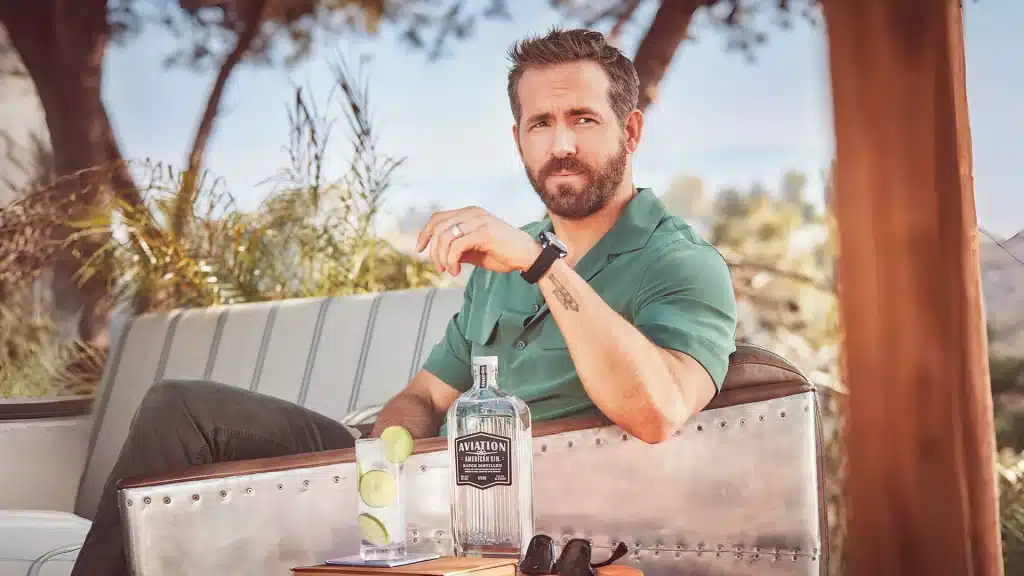
| Aug 2020 | Aviation Gin sale | Diageo | Trade sale, up to $610m ($335m upfront plus $275m earnout) | Reynolds’ cut est. $100–150m gross over the earnout period | The proof of concept, sold inside two years |
| 2019 | Mint Mobile | Stake purchase (~20–25% reported) | Owner and creative lead | Undisclosed entry, modest | Bought into a tiny MVNO and made it famous |
| Mar 2023 | Mint Mobile sale | T-Mobile | Trade sale, up to $1.35bn cash and stock | Reynolds’ cut reported ~$300m | The largest single wealth event of his life |
| 2021 | Maximum Effort (agency/production) | MNTN (ad-tech) | Sale for stock; Reynolds becomes Chief Creative Officer | Reported ~$100m+ in MNTN equity; MNTN listed in 2025 | Turned his marketing engine into ad-tech equity |
| Feb 2021 | Wrexham AFC | With Rob McElhenney | Club purchase ~£2m plus heavy investment | Club value est. £100m+ after three straight promotions to the Championship (2023–2025) | Sporting asset plus owned documentary IP |
| 2023 | Alpine F1 (24% of Alpine Racing) | Otro Capital consortium | Minority co-investor | ~€200m consortium deal; his slice undisclosed | F1 valuations have risen since |
| Various | Other venture stakes (fintech, consumer, tech incl. a publicised Nuvei position) | Various | Angel/strategic minority | Undisclosed | A widening portfolio behind the headline deals |
The pattern is the same trade run three times at increasing scale: buy meaningful equity in an unglamorous consumer business, apply fame and fast, self-aware marketing through Maximum Effort at near-zero cash cost, then sell to a strategic acquirer for whom the brand heat is worth a premium. Aviation proved it, Mint industrialised it, and the MNTN deal effectively sold the machine itself while keeping him equity in it. Wrexham is the long-hold variant: rather than exiting, he and McElhenney own the appreciation and the documentary IP around it.
Film / TV / Other Creative Projects
Covered above as core earnings; the additional note is production. Maximum Effort’s content arm produces Welcome to Wrexham (multiple Emmys) and advertising that doubles as entertainment, meaning even Reynolds’ marketing spend generates owned IP and fees. Nothing here rivals the exits, but it keeps the flywheel fed.
Recap: roughly 60 to 70 per cent of Reynolds’ estimated $350 million sits in cash and investments derived from the two exits plus two decades of film fees, with the fast-growing remainder in operating equity, Wrexham, MNTN stock and the F1 stake, which is where the next act of the net worth will be decided.
Ryan Reynolds’ Secondary Income Streams
Endorsements & Sponsorships
| Brand | Product Category | Years Active | Deal Type | Est. Annual Value / Range | Notes |
|---|---|---|---|---|---|
| Piaget, Hugo Boss and similar (historic) | Luxury | 2010s | Conventional ambassador | Seven figures/yr at the time (est.) | Pre-dates the ownership model |
| Aviation, Mint, 1Password-style partner spots | Various | 2018–present | Owner-operator marketing, occasionally paid partner work | Blended into equity value | He now fronts what he owns; pure endorsements are rare |
The evolution is the story: Reynolds ran a normal A-list endorsement book in the 2010s, then essentially closed it. Since 2018 his face goes almost exclusively on businesses where he holds equity, because a fee is a one-off and a stake in a company whose revenue he can visibly move is not. The comparison set is stark: peers collect $5 million ambassador cheques; Reynolds collected roughly $300 million from one telecoms exit.
Business Ventures
| Venture / Company | Sector | Role | Ownership / Stake | Outcome / Current Status | Notes |
|---|---|---|---|---|---|
| Aviation Gin | Spirits | Owner-marketer | Significant minority (sold) | Exited to Diageo 2020, up to $610m deal | Blueprint deal one |
| Mint Mobile | Telecoms (MVNO) | ~25% owner, creative lead | Sold | Exited to T-Mobile 2023, up to $1.35bn deal | Blueprint deal two; his cut ~$300m reported |
| Maximum Effort | Marketing/production | Founder | Sold for MNTN stock 2021; CCO role | MNTN listed 2025; stake value grew | The machine behind every deal |
| Wrexham AFC | Football | Co-owner (with Rob McElhenney) | ~50% | Three consecutive promotions 2023–2025; Championship; valuation est. £100m+ | Long-hold asset plus owned media |
| Alpine F1 | Motorsport | Consortium investor | Small minority | Holding; F1 asset values rising | Diversification into scarce sports assets |
| Group Effort Initiative and other ventures | Various | Founder/investor | Various | Ongoing | Includes training-diversity initiative and assorted stakes |
Analysed as an operator: Reynolds is the genuine article, not a name on a cap table. He writes and stars in the adverts, sets brand voice, and acquirers explicitly value his continued involvement (both Diageo and T-Mobile retained him post-sale). The risk profile is intelligently staged: two-year flips where his marketing edge is decisive, long holds where the asset itself compounds (Wrexham, F1), and equity-for-services where others carry operations (MNTN).
Licensing, Merchandising & Other Royalties
Deadpool merchandise royalties via his franchise participation, Welcome to Wrexham licence fees, and club commercial income at Wrexham (shirt deals, sponsorship uplift from global visibility) plausibly add seven figures annually in aggregate, marked as estimates. Individually minor, collectively the connective tissue of the flywheel.
Ryan Reynolds’ Asset Portfolio Analysis
Real Estate Holdings
| Property / Nickname | City / Country | Type | Purchase Year | Purchase Price | Est. Current Value | Notes |
|---|---|---|---|---|---|---|
| Pound Ridge estate | Westchester, New York, USA | Family home (with Blake Lively) | 2012 | ~$5.7m | ~$10–15m | Long-term family base |
| New York City apartment(s) | Tribeca, NYC | Residence | 2010s | Undisclosed | ~$7–10m | Standard A-list city footprint |
| Other (Vancouver-area ties, rentals) | Canada/US | Various | n/a | Undisclosed | Modest | No trophy-hunting pattern |
Geographically concentrated in the New York area and entirely personal-use. For a $350 million net worth, $20 to 30 million of property is a small allocation; the capital clearly prefers operating businesses. No flipping pattern, no brand-signalling palaces.
Vehicles, Jets, Collectibles & Luxury Assets
| Asset Type | Description | Est. Value | Notes |
|---|---|---|---|
| Cars | Modest enthusiast garage | ~$1–2m | Nothing headline-grabbing |
| Jets / yachts | None owned publicly | n/a | Charters for work |
| Watches / collectibles | Some fine watches | <$1m | Immaterial |
Lifestyle burn is remarkably low for the bracket, a recurring trait among the equity-builders in this series. The money works; it does not float.
Investments & Financial Instruments
Beyond the named stakes, Reynolds holds MNTN stock from the 2021 sale (listed in 2025, giving him a rare liquid equity line), the Alpine consortium position, and assorted venture investments in fintech and consumer businesses. The revealed risk appetite: concentrated bets where his marketing is the edge, diversifying gradually into scarce sports assets and listed paper. Post-2023 he is, unusually for this series, more liquid than concentrated, which is itself a position of strength.
Timeline of Major Financial Milestones
| Year | Event / Decision | Financial Impact | Why It Mattered |
|---|---|---|---|
| 2011 | Green Lantern flops | ~$9m fee banked; franchise hopes dead | Taught him studios wouldn’t build his franchise; he’d have to own one |
| 2016 | Deadpool released after a decade of lobbying (~$2m fee plus backend) | Backend est. $20m+; franchise created | The pivot from salary-taker to owner-mentality |
| 2018 | Buys into Aviation Gin | Modest outlay; becomes the brand | Blueprint deal begins |
| 2018 | Deadpool 2 ($786m worldwide) | ~$20–30m all-in | Franchise economics confirmed |
| 2019 | Buys ~25% of Mint Mobile | Small outlay into a tiny MVNO | The biggest trade of his life, entered quietly |
| Aug 2020 | Aviation sold to Diageo (up to $610m) | Est. $100–150m gross to Reynolds over earnout | First nine-figure equity event; model proven |
| Feb 2021 | Buys Wrexham AFC with McElhenney (~£2m) | Tiny outlay; huge optionality | The long-hold asset and documentary IP play |
| 2021 | Sells Maximum Effort to MNTN for stock (~$100m+ reported) | Paper wealth in ad-tech | Sold the machine, kept the upside |
| Mar 2023 | Mint Mobile sold to T-Mobile (up to $1.35bn) | Reported ~$300m to Reynolds | The defining wealth event; net worth roughly doubles |
| 2023 | Joins Otro Capital’s 24% Alpine F1 investment | Undisclosed slice of ~€200m deal | Diversification into appreciating sports scarcity |
| 2023–2025 | Wrexham promoted three consecutive seasons to the Championship | Club value est. £100m+; revenue multiplies | The £2m punt becomes a nine-figure asset |
| 2024 | Deadpool & Wolverine grosses $1.34bn | Est. $80m+ all-in | Largest acting payday, dwarfed only by his own exits |
| 2025 | MNTN lists publicly | His stock becomes liquid and marked daily | Rare liquidity among his equity lines |
| 2026 (early) | Net worth estimated ~$350m | Compounding phase | Equity portfolio now drives the trajectory |
Inflection points: 2016 (ownership mentality), 2020 (model proven), 2023 (the Mint exit), with Wrexham’s 2023–2025 rise as the compounding subplot.
Strategic Pillars Behind Their Wealth-Building
- Buy the Brand, Don’t Endorse It. From Aviation in 2018 onwards, Reynolds swapped ambassador fees for equity in the businesses his face promotes. The 2023 Mint exit alone returned more than a full career of conventional endorsements would have.
- Be Your Own Marketing Department. Maximum Effort let him produce fast, funny, near-free advertising that moved real revenue at Aviation and Mint. He then sold the agency itself to MNTN in 2021 for equity, monetising the capability twice.
- Fight for Backend on Conviction Projects. The 2016 Deadpool deal traded upfront fee for ownership economics on a property he believed in when nobody else did. Every instalment since, through 2024’s $1.34bn finale, has paid him like a rights-holder.
- Sell to Strategics Who Need the Heat. Diageo (2020) and T-Mobile (2023) were buying distribution-ready brand momentum, and paying up for his continued involvement. He exits into strength, with earnouts aligning everyone. The British master of the same trick is a farmer: how Jeremy Clarkson turned his farm into owned media is Wrexham’s spiritual twin.
- Pair Quick Flips with Long Holds. Two-year exits (Aviation) fund forever-assets (Wrexham 2021, Alpine 2023) where scarcity and story do the compounding. The portfolio has a clock for every asset.
- Make the Marketing an Asset Too. Welcome to Wrexham turns club promotion into Emmy-winning, revenue-generating IP, the same trick Clarkson runs at Diddly Squat: the advert is itself a product someone pays for.
- Stay Likeable, Stay Liquid. No scandals, low burn, and post-2023 a genuinely liquid balance sheet. The brand risk that haunts other one-person empires is, so far, conspicuously absent.
Actionable Insights: Lessons from Their Wealth Blueprint
- Convert Fees into Equity Wherever Your Effort Moves the Needle. Reynolds stopped renting his face out in the mid-2010s and started charging in ownership. If your involvement demonstrably grows a business, a stake beats any fee. Takeaway: Charge in shares when you are the growth engine.
- Trade Upfront for Upside on Your Highest-Conviction Bet. The ~$2m Deadpool fee bought backend worth ten times more. Concentrate the risk where your insight is genuinely differentiated. Takeaway: Bet your fee only where you know something the market doesn’t.
- Own the Capability, Not Just the Campaigns. Building Maximum Effort meant every venture got elite marketing at cost, and the agency itself became a ~$100m asset in 2021. Internalise the skill your businesses all need. Takeaway: The team that grows your assets is an asset; own it.
- Exit to the Buyer Who Needs You Most. Diageo and T-Mobile paid strategic premiums for momentum plus Reynolds. Sell where your asset fills the acquirer’s specific gap. Takeaway: The best price comes from the buyer whose problem you solve.
- Buy Scarce Assets Early with Story Attached. Wrexham at ~£2m in 2021 and Alpine in 2023 are bets that global attention plus fixed supply equals appreciation. Story-rich scarcity compounds. Takeaway: Scarcity plus narrative is a portfolio strategy.
- Let Documentation Pay for the Journey. Welcome to Wrexham means the club’s growth story funds itself. Ask what part of your build could be content someone buys. Takeaway: If the journey is interesting, sell tickets to it.
- Keep the Person Boring and the Brands Loud. Reynolds’ clean personal record protects every equity line his face secures. In fame-linked equity, conduct is collateral. Takeaway: When your name backs the assets, your behaviour is the covenant.
Maximum Effort, Maximum Equity: The Reynolds Verdict
Reynolds’ blueprint is the celebrity-equity model executed at industrial quality: build fame the conventional way, then refuse to rent it out, investing it instead into businesses where his marketing is the decisive input, and selling those businesses to strategics at premiums. Aviation proved the trade, Mint scaled it, and the surrounding architecture, Maximum Effort, Wrexham, MNTN, Alpine, turned a repeatable trick into a diversified portfolio.
The unique edge is that he closed the loop other celebrities leave open: most famous investors lend a name; Reynolds supplies the actual growth function, campaign by campaign, and buyers pay for it explicitly. Add the Deadpool lesson, that conviction plus backend beats fees, and the whole career reads as one long argument for ownership.
Fragilities are fewer here than elsewhere in this series but real: the model still keys off one man’s likeability and bandwidth; Wrexham’s valuation assumes the fairy tale keeps its audience; and earnout-and-stock consideration means some headline numbers are slower and softer than they look. None of these threaten the foundation, which is now substantially banked.
For entrepreneurs and investors, the copyable core is the equity-for-capability trade: identify the input you supply better than anyone, and price it in ownership, not invoices. What is harder to copy is the input itself; very few people are their own $100 million marketing department. Build the capability first, then charge for it in equity.
If there’s an Aviation-or-Mint-shaped exit somewhere in your company’s future and you want deal-making experience in your corner well before the buyers arrive, talk to Matt.
Sources
Figures draw on deal reporting from the financial press, studio and box-office data, and standard aggregators. Exit proceeds attributed to Reynolds personally were not fully disclosed and are shown as reported estimates; all figures are estimates unless described as reported.
Earnings & Net Worth
- CelebrityNetWorth, ‘Ryan Reynolds Net Worth’ (accessed early 2026).
- Forbes highest-paid actors lists and reporting on Netflix fees for 6 Underground, Red Notice and The Adam Project (2019–2022), and coverage of Deadpool & Wolverine earnings (2024).
- Box Office Mojo/The Numbers for Deadpool franchise, Free Guy and Green Lantern grosses.
Business Ventures & Exits
- Diageo announcement and press coverage of the Aviation Gin acquisition, up to $610m (August 2020).
- T-Mobile announcement and coverage of the Mint Mobile acquisition, up to $1.35bn, and reporting on Reynolds’ ~25% stake and ~$300m proceeds (March 2023).
- Trade coverage of Maximum Effort’s sale to MNTN (2021) and MNTN’s 2025 listing.
- Coverage of the Otro Capital consortium’s 24% Alpine F1 investment (2023).
Wrexham
- BBC, The Athletic and club reporting on the 2021 purchase (~£2m), successive promotions 2023–2025, revenue growth and valuation estimates; Emmy coverage of Welcome to Wrexham.
Real Estate & Biography
- US property press on the Pound Ridge purchase (2012) and NYC holdings; Wikipedia and IMDb for career chronology.