Executive Summary
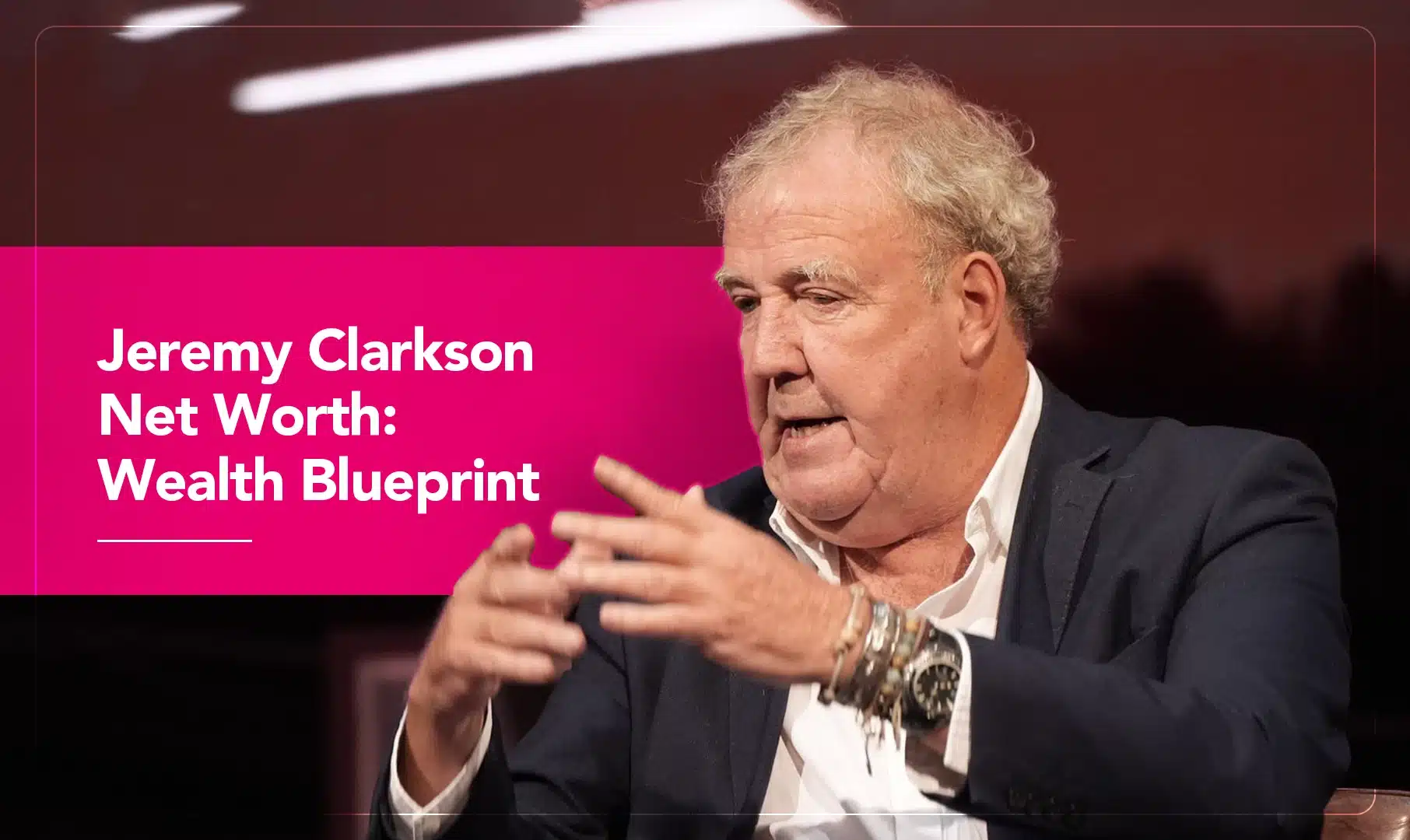
Jeremy Clarkson’s estimated net worth, as of early 2026, sits at roughly £60 million, with credible public estimates ranging from about £50 million to £70 million. The most-cited baseline, CelebrityNetWorth, pegs him at around $70 million (about £55 million), while UK press estimates that factor in his farm, his stake in the Hawkstone drinks brand and his Amazon era tend to land higher. None of these figures come from audited disclosure, so treat the £60 million as a well-informed midpoint rather than gospel.
The core wealth drivers are surprisingly simple for a man with such a chaotic public image: two decades of Top Gear salary and, crucially, a personal equity stake in Top Gear’s commercial exploitation; a lucrative post-BBC streaming deal with Amazon delivered through a production company he part-owns; and, since 2019, the conversion of a 1,000-acre Cotswolds farm into a media, retail and drinks business that trades on his name.
Four achievements matter financially above all others. First, co-creating the 2002 Top Gear relaunch, which became the most-watched factual TV programme on Earth. Second, negotiating a stake in Bedder 6, the joint venture that monetised the Top Gear brand and reportedly paid him tens of millions in dividends and a buyout. Third, landing The Grand Tour deal with Amazon in 2015 within months of being sacked by the BBC, on terms far richer than his old salary. Fourth, turning Diddly Squat Farm from a hobby with a famous £144 annual farming profit into the anchor of a hit show, a farm shop, a pub and a beer brand.
What makes Clarkson’s money strategy genuinely unusual among British TV presenters is this: at every stage he converted fame into ownership, taking equity in the commercial machinery around his shows rather than settling for presenter fees.
His wealth trajectory reads as journalist’s salary in the 1980s and 1990s, then BBC pay plus Bedder 6 dividends through the 2000s, then a step change from the 2015 Amazon deal and production company profits, and finally a second act since 2021 in which land, retail, hospitality and a drinks brand compound the media money into hard and operating assets. The big jumps came in 2006 to 2012, 2015 to 2019, and 2021 onwards, and the timeline below shows exactly why.
Want to apply the same principles to your own business? Work with Matt Haycox to build, fund and scale a company with greater commercial value.
Key Financial Metrics
| Category | Metric / Description | Value (estimate) | Notes (source / caveats) |
|---|---|---|---|
| Total net worth | Estimated personal net worth, early 2026 | ~£60m (range £50–70m) | CelebrityNetWorth ~$70m; UK press higher; no audited figure exists |
| Cash & Investments | Retained earnings from ~35 years of TV, journalism and books | ~£20–25m | Estimated; net of tax, lifestyle spend and 2014 divorce |
| Catalogue / IP | Bedder 6 dividends and 2012 buyout; W. Chump & Sons profits | ~£30m+ earned lifetime; residual value modest | Reported dividends ~£4–5m/yr at peak; ~£8.4m buyout reported in 2012 |
| Business Ventures | Hawkstone stake, Diddly Squat retail, The Farmer’s Dog pub | ~£10–18m | Hawkstone valued around £50–60m in its 2024 crowdfund; Clarkson’s stake size not public |
| Real Estate | Diddly Squat Farm (~1,000 acres) plus farmhouse | ~£12–16m | Farm bought for a reported £4.25m in 2008; Cotswolds land has appreciated strongly |
| Endorsements | Traditional brand ambassador deals | Negligible | Clarkson monetises his own brands instead of fronting others’ |
| High-value assets | Cars, Lamborghini tractor, machinery | ~£1–2m | Enthusiast-scale, not investment-grade collection; no jets or yachts |
Jeremy Clarkson’s Primary Income Streams
Clarkson’s money has always come from one engine with several gears: being paid to be Jeremy Clarkson on screen and in print, and then owning a slice of whatever commercial machine forms around that. The BBC years built the brand, the Amazon years priced it properly, and the farm years turned it into businesses he controls. His co-presenter’s finances tell the same tale from the junior seat: Richard Hammond’s fee-to-equity money story only caught up when the Amazon deal made the trio owners.
Core Career Earnings
Clarkson’s primary lane is television presenting, and his earnings history splits into three distinct deals: BBC salary plus equity, the Amazon Grand Tour contract, and the ongoing Clarkson’s Farm arrangement.
| Year / Period | Project / Contract | Role / Position | Performance Metric | Est. Earnings | Notes (deal structure, source) |
|---|---|---|---|---|---|
| 1988–2000 | Top Gear (original format), BBC | Presenter | Flagship motoring show, ~5m viewers | Modest six figures/yr | Standard presenter fees; also journalism and bestselling VHS tapes |
| 2002–2015 | Top Gear (relaunch), BBC | Presenter and co-creator | ~350m global viewers; Guinness record for most-watched factual show | ~£1m/yr salary at peak | Reported BBC pay; the real money was in Bedder 6 (below) |
| 2006–2012 | Bedder 6 (JV with BBC Worldwide) | Shareholder (~30% reported) | Top Gear DVDs, magazines, live shows, format sales | ~£20–30m total in dividends plus buyout | Dividends reported at ~£4–5m/yr at peak; ~£8.4m stake buyout reported in 2012; total Top Gear income that year reported ~£14m |
| 2016–2024 | The Grand Tour, Amazon Prime Video | Presenter and co-owner of producer | 3-season, 36-episode deal reported at ~£160m budget, then specials to 2024 | ~£10m+/yr in peak years | Delivered via W. Chump & Sons, in which Clarkson holds equity; figures are credible press estimates, not disclosed |
| 2021–present | Clarkson’s Farm, Amazon Prime Video | Star, and owner of the underlying farm business | Amazon’s most-watched UK original on debut; multiple recommissions through 2026 | Fee undisclosed; est. seven figures/yr plus enormous indirect value | The show functions as marketing for Diddly Squat, Hawkstone and the pub |
| 2018–present | Who Wants to Be a Millionaire?, ITV | Host | Primetime quiz revival | Est. £200–500k per series | Estimate based on typical ITV host fees; never confirmed |
Three things stand out in how these earnings scaled. First, the salary line barely moved for 20 years; a reported ~£1m a year from the BBC was healthy but not wealth-defining. The inflection came in 2006, when Clarkson and producer Andy Wilman took equity in Bedder 6, the vehicle that exploited Top Gear commercially. That decision converted a hit show into personal capital, and the reported ~£8.4m buyout in 2012 was the first genuinely large lump sum of his career.
Second, the 2015 sacking, which looked like a catastrophe, repriced him. Amazon, hungry for a global flagship as it launched Prime Video internationally, reportedly committed around £160m of budget to The Grand Tour. Because the show was made by W. Chump & Sons, a company owned by Clarkson, Richard Hammond, James May and Wilman, the trio captured production margin as well as fees. Peak-year estimates of £10m or more for Clarkson dwarf anything the BBC ever paid him.
Third, the Clarkson’s Farm deal is probably his cleverest, even if the headline fee is smaller. The show is effectively a multi-season, globally distributed advertisement for businesses he owns outright or in part. Every series drives farm shop queues, Hawkstone sales and pub bookings. No other British presenter has engineered that loop at this scale.
Touring / Live Revenue
Live shows were a meaningful, if secondary, earner during the Top Gear years. Top Gear Live took the trio’s stunts and banter into arenas worldwide from 2008, and the format continued (rebadged Clarkson, Hammond and May Live) after the BBC split.
| Tour / Residency | Years | # Shows | Gross Revenue | Est. Net to Clarkson | Notes |
|---|---|---|---|---|---|
| Top Gear Live (worldwide arena tour) | 2008–2015 | Hundreds of shows across ~20+ countries | Tens of millions cumulatively (est.) | Low millions per year at peak (est.) | Run through the Bedder 6 commercial structure; strong demand in UK, Australia, South Africa, Scandinavia |
| Clarkson, Hammond and May Live | 2015 | Short run incl. stadium dates | Several million gross (est.) | Seven figures shared (est.) | Bridged the gap between the BBC exit and The Grand Tour |
The live business mattered less for its direct profit than for what it proved: the audience was loyal to the presenters, not the broadcaster. When the trio sold out arenas under their own names in 2015, it validated the price Amazon was about to pay. Demand was consistently strong, with premium-priced stunt-heavy shows selling out major venues, though this was never a stadium music economics business.
Publishing / Catalogue / IP Ownership
Clarkson’s relationship with his own IP is the single most instructive thread in his career, and the ownership timeline shows a clear learning curve.
| Year | Asset / Catalogue Segment | Counterparty | Deal Type | Est. Value / Multiple | Notes |
|---|---|---|---|---|---|
| 1988–2005 | Top Gear brand and format | BBC | Employment; no equity | Salary only | BBC owned everything; Clarkson’s VHS/DVD titles earned royalties |
| 2006 | Top Gear commercial rights | BBC Worldwide via Bedder 6 | JV formation; Clarkson takes reported ~30% stake | Dividends of ~£4–5m/yr at peak | The pivotal ownership moment of his career |
| 2012 | Bedder 6 stake | BBC Worldwide | Buyout of Clarkson’s shares | Reported ~£8.4m | Ended his equity in Top Gear; total 2012 Top Gear income reported ~£14m |
| 2015 | The Grand Tour format and production | Amazon (commissioner) | New IP created inside W. Chump & Sons | Production margin plus fees | Clarkson part-owns the producer rather than the platform’s IP |
| 2021–present | Diddly Squat and Clarkson’s Farm-adjacent brands | Amazon (show); Clarkson (farm, shop, brands) | Show licensed; underlying businesses retained | Not publicly valued | Clarkson keeps the farm, shop, pub and drinks brand entirely outside the TV deal |
Alongside the TV catalogue sits a durable print business. Clarkson has written a weekly Sunday Times column since 1993 and a column for The Sun, together estimated to be worth around £1m a year at their peak. He has published more than 30 books, from the World According to Clarkson collections to the Diddly Squat farming diaries, which have repeatedly topped the UK bestseller lists. Lifetime book earnings plausibly sit in the mid single-digit millions. None of this is transformational on its own, but it is high-margin, decades-long recurring income that required almost no incremental effort beyond work he was already doing.
Film / TV / Other Creative Projects
Outside the core motoring franchises, Clarkson’s screen work has been steady rather than spectacular financially. His late-1990s BBC chat show (Clarkson) raised his profile more than his bank balance. A long run of standalone documentaries and bestselling video titles in the 1990s and 2000s (the Motorworld and Clarkson tape series among them) generated healthy royalties in the VHS/DVD golden age. Since 2018, hosting Who Wants to Be a Millionaire? has provided an estimated £200k to £500k per series for a few weeks’ work a year, valuable mostly as low-effort diversification and mainstream visibility beyond the car audience.
| Year | Title / Project | Role | Reach | Est. Earnings | Notes |
|---|---|---|---|---|---|
| 1990s–2000s | Clarkson video titles and documentaries | Presenter | Multi-million unit VHS/DVD sales | Several million cumulative (est.) | Royalty-bearing; a quiet but real contributor |
| 1998–2000 | Clarkson (chat show), BBC | Host | Primetime BBC Two | Standard fees | Profile builder |
| 2018–present | Who Wants to Be a Millionaire?, ITV | Host | Primetime ITV | £200–500k per series (est.) | Ongoing through 2026 |
None of these moved the needle the way Top Gear equity or the Amazon deal did, but they kept multiple income lines running in parallel, which is a recurring Clarkson trait.
Taken together, these primary streams explain most of the net worth picture: roughly a third to a half of his estimated £60 million sits in cash and financial assets accumulated from TV fees, Bedder 6 distributions, Grand Tour-era profits, columns and books, and it was this media cash that funded the farm purchase and the ventures that now make up the equity and property buckets.
Jeremy Clarkson’s Secondary Income Streams
Endorsements & Sponsorships
Here Clarkson is a genuine outlier: for a man with his reach, traditional endorsement income is close to zero, and deliberately so.
| Brand | Product Category | Years Active | Deal Type | Est. Annual Value / Range | Notes |
|---|---|---|---|---|---|
| No major ongoing ambassador deals | n/a | n/a | n/a | Negligible | Occasional adverts and one-off campaigns over the decades, but no sustained portfolio |
Part of this is positioning. Clarkson’s commercial value rests on the perception that he says what he thinks; fronting other people’s products would erode exactly the asset that makes his own products sell. Part of it is also structural: since 2021 he has channelled his endorsement power into brands he owns, principally Hawkstone and Diddly Squat. Every pint he plugs on Clarkson’s Farm enriches his own cap table rather than a sponsor’s. Compared with peers who take seven-figure ambassador cheques, Clarkson forgoes the fee and keeps the equity, which is more lucrative if the brand works and worthless if it does not. So far, it is working.
Business Ventures
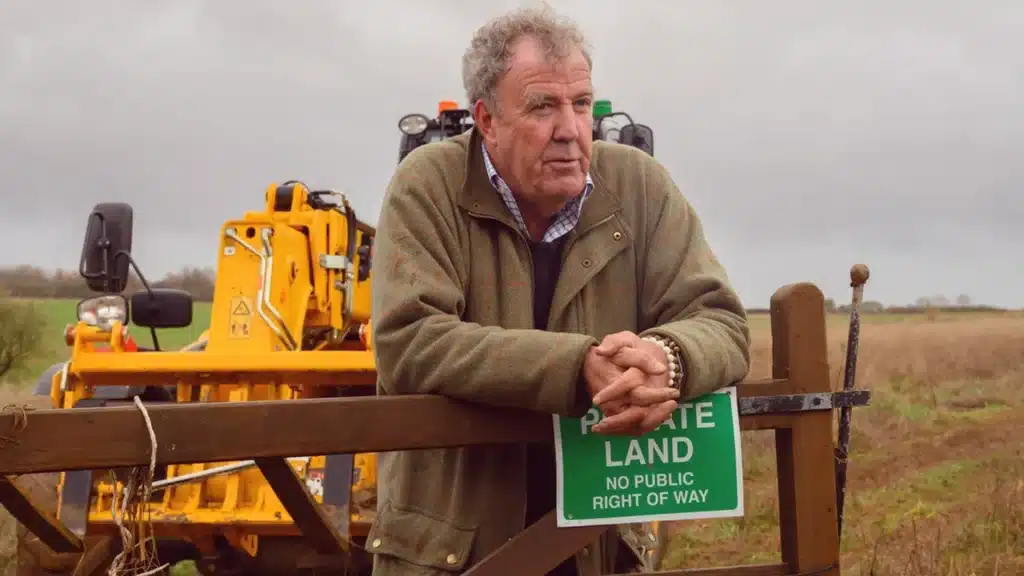
The post-2019 era has turned Clarkson from a well-paid presenter into a small conglomerate of Cotswolds businesses.
| Venture / Company | Sector | Role | Ownership / Stake | Outcome / Current Status | Notes |
|---|---|---|---|---|---|
| Motoring Press Agency | Journalism | Co-founder (1984) | Co-owner | Long since wound down | His first business; syndicated road tests to local papers |
| Bedder 6 | Media rights | Shareholder (~30% reported) | Sold 2012 | Exited via BBC Worldwide buyout | Reported ~£8.4m for his stake plus years of dividends |
| W. Chump & Sons | TV production | Co-owner with Hammond, May, Wilman | Significant minority | Produced The Grand Tour to 2024 | Captured production margin on the Amazon deal |
| Diddly Squat Farm & Farm Shop | Agriculture and retail | Owner | 100% | Trading; shop is a tourist destination | Farming profit famously £144 in an early year; the shop and brand are the real business |
| Hawkstone | Beer, cider, spirits | Co-founder/shareholder with Cotswold Brewing Co | Stake size not public | Growing fast; 2024 crowdfund raised over £5m at a reported valuation around £50–60m | Potentially his most valuable single asset after the farm; highly uncertain |
| The Farmer’s Dog | Hospitality (pub) | Owner | 100% | Opened August 2024; heavy footfall | Bought for a reported ~£1m plus a costly refurbishment; Clarkson has said it may struggle for profit |
The pattern across these ventures is that of a serious operator rather than a passive name on someone else’s cap table. He owns the farm and pub outright, co-founded Hawkstone rather than licensing his face to an existing brewer, and part-owned his production company. The risk profile is concentrated and personal: almost everything is tied to the Cotswolds, to his health and to his continued popularity. The offsetting strength is that the assets reinforce each other, with the show feeding the shop, the shop selling the beer, and the pub pouring it. For another famous name compounding through hospitality, see how Gordon Ramsay built his restaurant empire.
Licensing, Merchandising & Other Royalties
Hard numbers here are scarce, but the scale is clearly meaningful rather than trivial. During the Top Gear era, Bedder 6 captured DVD, magazine and format licensing income worldwide, some of which flowed to Clarkson as dividends already counted above. Today the recurring royalty engine is his book catalogue, which continues to sell with every new series of Clarkson’s Farm, plus Diddly Squat merchandise, where the joke products (the famous ‘Bee Juice’ honey, ‘This Smells Like My Bollocks’ candles and the rest) carry retail margins conventional farm produce could never achieve. Estimated combined value: high six to low seven figures annually, marked firmly as an estimate.
Jeremy Clarkson’s Asset Portfolio Analysis
Real Estate Holdings
| Property / Nickname | City / Country | Type | Purchase Year | Purchase Price | Est. Current Value | Notes |
|---|---|---|---|---|---|---|
| Diddly Squat Farm (Curdle Hill Farm) | Chadlington, Oxfordshire, UK | Working farm, ~1,000 acres, plus shop | 2008 | Reported £4.25m | £12–16m (est.) | Cotswolds farmland has appreciated strongly; commercial value boosted by the shop and brand |
| Chadlington farmhouse | Oxfordshire, UK | Main residence (rebuilt) | 2010s | Undisclosed | Included above | Clarkson demolished the old house and built anew on the land |
| Former Chipping Norton home | Oxfordshire, UK | Family home | 1990s | Undisclosed | Sold | Left following his 2014 divorce; part of the settlement era |
| Isle of Man lighthouse cottage | Langness, Isle of Man | Holiday home | 2000s | ~£1m region (reported) | Sold c. 2020, ~£4m region (est.) | Long planning and access disputes; a profitable exit nonetheless |
Geographically this is about as concentrated as a portfolio gets: essentially one large Oxfordshire holding. But the farm is doing three jobs at once. It is a home, it is the set and subject of his most successful show, and it is a hard asset in one of Britain’s most reliably appreciating rural markets. It also had a fourth job when purchased: farmland qualified for generous inheritance tax relief, a motive Clarkson has openly joked about. That calculus changed when the October 2024 Budget capped agricultural relief from April 2026, a policy Clarkson publicly protested alongside farmers in late 2024, and one that materially affects the estate-planning value of his biggest asset.
Vehicles, Jets, Collectibles & Luxury Assets
| Asset Type | Description | Est. Value | Notes |
|---|---|---|---|
| Cars | A rotating enthusiast garage over the years (Ferraris, Range Rovers, a Ford GT he famously bought and returned, various dailies) | ~£1m+ (est.) | Not a curated investment collection like some peers |
| Farm machinery | Lamborghini R8 tractor and equipment fleet | Low hundreds of thousands | The tractor cost a reported ~£40k and became a TV star in its own right |
| Jets / yachts | None owned | n/a | Notably absent for a man of his profile |
For all the petrolhead branding, this bucket is lifestyle burn rather than a store of value, and modest burn at that. Clarkson buys cars to use and complain about, not to appreciate. The absence of jets and yachts is one reason the media money survived long enough to buy land and businesses.
Investments & Financial Instruments
Public information on Clarkson’s paper portfolio is thin, which is itself informative. There is no record of a family office making venture bets, no crypto evangelism and no disclosed stock positions of note. His visible risk appetite runs instead to concentrated bets he personally understands and can influence: land, a beer brand he promotes weekly, a pub he owns, a production company making his own shows. He has been openly sceptical about conventional financial products over the years, and his revealed preference is for operating assets over instruments. The one clear financial-engineering thread was the farmland inheritance tax angle noted above, now weakened by the 2026 rule change.
Timeline of Major Financial Milestones
| Year | Event / Decision | Financial Impact | Why It Mattered |
|---|---|---|---|
| 1984 | Co-founds the Motoring Press Agency | Modest income; first taste of ownership | Established the habit of owning the vehicle, not just drawing a wage |
| 1988 | Joins original Top Gear | Six-figure trajectory begins | The platform that created the brand everything else monetises |
| 1993 | Begins Sunday Times column | Recurring six figures/yr for 30+ years | Decades of high-margin income and constant audience contact |
| 2002 | Co-creates the Top Gear relaunch with Andy Wilman | Salary rises towards ~£1m/yr; creates a global format | Creator status gave him leverage the BBC later had to pay for |
| 2006 | Takes a reported ~30% stake in Bedder 6 | Dividends build to ~£4–5m/yr at peak | The pivotal shift from salary to equity; first seven-figure passive-ish income |
| 2008 | Buys Diddly Squat Farm for a reported £4.25m | Converts media cash into ~1,000 acres of appreciating land | The quiet purchase that enabled the entire second act |
| 2012 | BBC Worldwide buys out his Bedder 6 stake | Reported ~£8.4m lump sum; ~£14m total Top Gear income that year | Largest single payday of the BBC era; proved the equity thesis |
| 2014 | Divorce from Frances Cain finalised | Undisclosed but material settlement | A reminder that personal events can move net worth as much as deals; she had also managed his business affairs |
| 2015 | Sacked by the BBC; signs Amazon’s Grand Tour deal months later | Reported ~£160m production budget; personal earnings step up to ~£10m+/yr | The great repricing: leaving salary-land for the streaming wars, with equity in the producer |
| 2019 | Begins farming Diddly Squat himself | Farming profit famously £144; content value enormous | Turned a passive asset into the raw material for his biggest hit |
| 2021 | Clarkson’s Farm debuts; Hawkstone launches | Show tops Amazon UK charts; farm shop demand explodes | The flywheel starts: owned show subject, owned retail, owned drinks brand |
| 2022 | Council closes the Diddly Squat restaurant | Direct loss modest; publicity value arguably positive | Showed the planning-system friction on his concentrated Oxfordshire bet |
| 2024 | Grand Tour finale; buys The Farmer’s Dog (~£1m reported); Hawkstone crowdfund raises £5m+ at a reported ~£50–60m valuation; heart surgery; IHT relief capped in the Budget | Media income falls; venture equity value jumps; new risks surface | The handover year: the wealth engine formally shifts from television to owned businesses, while health and tax risks sharpen |
| 2025–2026 | Clarkson’s Farm series 4 and beyond; pub and Hawkstone expand | Steady media fees plus growing venture value | Consolidation of the second-act model that now defines his net worth |
The clear inflection points are 2006 (equity in Bedder 6), 2015 (the Amazon repricing) and 2021 (the farm flywheel). Each one changed the slope of the curve rather than just adding a good year. The closest parallel to the Diddly Squat flywheel isn’t on British television at all: Ryan Reynolds’ owned-brand playbook runs the same loop at Wrexham.
Strategic Pillars Behind Their Wealth-Building
- Own the Machine, Not Just the Microphone. Clarkson’s defining move was refusing to remain a salaried face. The 2006 Bedder 6 stake and the 2015 creation of W. Chump & Sons meant that when Top Gear DVDs sold in Australia or Amazon wrote production cheques, he was on the receiving end as a shareholder. This pillar alone accounts for the majority of his lifetime earnings above basic presenter pay.
- Convert Crisis into Leverage. The 2015 sacking should have been a financial disaster. Instead, because the audience followed him rather than the format, it became an auction. Amazon’s reported ~£160m commitment within months proved that his real asset, audience loyalty, was portable. The 2022 restaurant closure got the same treatment, folded straight into the show as content.
- Turn the Cameras on Your Own Assets. From 2019 onwards, Clarkson stopped making shows about other people’s products and started making them about his own farm. Clarkson’s Farm is simultaneously an income stream and a marketing channel for Diddly Squat, Hawkstone and The Farmer’s Dog. No advertising budget on Earth buys eight episodes a year of global promotion for your farm shop.
- Land as the Ballast. The 2008 farm purchase put a reported £4.25m of volatile media income into an appreciating, tax-advantaged hard asset. Even before the show existed, this was sensible wealth preservation; after 2021 it became the most productive land in British television.
- Decades of Compounding Small Streams. The Sunday Times column since 1993, The Sun column, 30-plus books, DVD royalties, Millionaire hosting since 2018: individually modest, collectively worth tens of millions over the decades, and all riding on work he was doing anyway.
- Brand Consistency as Pricing Power. Clarkson has played the same character for nearly 40 years, which is why a farm shop in Chadlington draws hour-long queues and a lager brand could reach a reported ~£50–60m valuation by 2024 within three years of launch. The refusal of conventional endorsements (there is no portfolio of ambassador deals to list) protects exactly this asset.
- Concentrated Bets He Can Personally Move. Rather than diversifying into index funds and other people’s start-ups, Clarkson concentrates in ventures where his own effort and audience change the outcome: the farm, the pub bought in 2024, Hawkstone. Higher risk, but he is the risk factor he trusts most.
Actionable Insights: Lessons from Clarkson’s Wealth Blueprint
- Negotiate for Equity in What Your Work Creates. Clarkson’s salary barely made him rich; his reported ~30% of Bedder 6 from 2006 and his stake in W. Chump & Sons from 2015 did. If your work builds an asset, ask for a piece of the asset. Takeaway: A share of the upside beats a raise, every time the thing actually works.
- Make Your Audience Portable. The 2015 to 2016 jump from BBC salary to a reported £10m+ a year happened because viewers followed Clarkson, not the Top Gear name. Build direct loyalty that survives a change of platform or employer. Takeaway: If your audience follows you out the door, you set the price on the way in somewhere else.
- Buy Boring Assets with Exciting Income. The 2008 farm purchase converted volatile TV money into land that quietly tripled in value and later became the foundation of his biggest show. Volatile earners need ballast. Takeaway: Spend windfalls on assets that compound, not assets that depreciate in a marina.
- Turn Marketing Cost into Revenue. Clarkson’s Farm means Amazon effectively pays Clarkson to advertise his own shop, beer and pub. Look for structures where your promotion is itself a product someone buys. Takeaway: The best marketing budget is the one someone else pays you to spend.
- Own the Brand, Skip the Endorsement. By founding Hawkstone in 2021 instead of taking a brewer’s ambassador fee, Clarkson traded a guaranteed cheque for a stake in a business reportedly valued around £50–60m three years later. Takeaway: Renting your credibility pays once; owning it can pay forever.
- Let Crises Become Content. The sacking in 2015, the £144 farming profit, the 2022 restaurant shutdown: each setback was metabolised into leverage or storyline rather than hidden. Transparency about failure built trust that sells. Takeaway: Handled honestly, a public failure is an asset with a delayed payout.
- Keep Multiple Small Engines Running. Columns since 1993, books, quiz hosting since 2018: none headline-worthy, together tens of millions across a career. Diversified income does not have to mean diversified attention. Takeaway: Stack low-effort recurring income on top of the work you already do.
- Understand the Tax Terrain, and Watch It Move. Farmland’s inheritance tax treatment was part of the 2008 purchase logic; the 2024 Budget’s cap on that relief from April 2026 shows why no tax strategy is permanent. Takeaway: Build the plan around rules as they are, and stress-test it for rules as they might become.
Final Thoughts
Strip away the noise and Clarkson’s wealth-building strategy is a clean three-act structure. Act one: build a globally valuable personal brand on someone else’s platform while banking salary and column money. Act two: force your way onto the cap table, first through Bedder 6 in 2006, then through W. Chump & Sons and the Amazon deal in 2015, so the brand’s commercial value flows to you rather than past you. Act three: convert media wealth into owned, physical, compounding businesses that your media presence promotes for free.
The unique edge is the flywheel he built after 2019. Plenty of celebrities own farms, restaurants or drinks brands. Almost none of them own a hit global TV series whose entire subject matter is those businesses. The integration is the innovation, and it is why a farm that once made £144 a year in profit now anchors an estimated eight-figure slice of his net worth.
The fragilities are real, though. The whole structure is concentrated in one man’s health (he had heart surgery in late 2024), one man’s reputation (which has wobbled before and been rescued by audience loyalty rather than corporate patience), one county’s planning committees, and one platform’s commissioning decisions. The 2026 inheritance tax changes also blunt the estate-planning logic of his largest asset. This is a fortune with a single point of failure: Jeremy Clarkson.
For entrepreneurs and investors, the part worth copying is not the bravado, and it is certainly not the concentration risk. It is the relentless conversion of attention into ownership: equity where you create value, hard assets bought with volatile income, and businesses positioned so that the thing you would do anyway markets the things you own. Copy the structure, skip the tractor.
To turn these lessons into a practical growth strategy for your own business, work with Matt Haycox for direct, no-nonsense support on funding, scaling and building long-term value.
View more of our Wealth Network reports from Gordon Ramsey, Taylor Swift, Tom Cruise, Donald Trump, Mark Zuckerberg, Elon Musk, Ryan Giggs, Jeff Bezos and more wealth reports on our No Bollocks Business HQ.