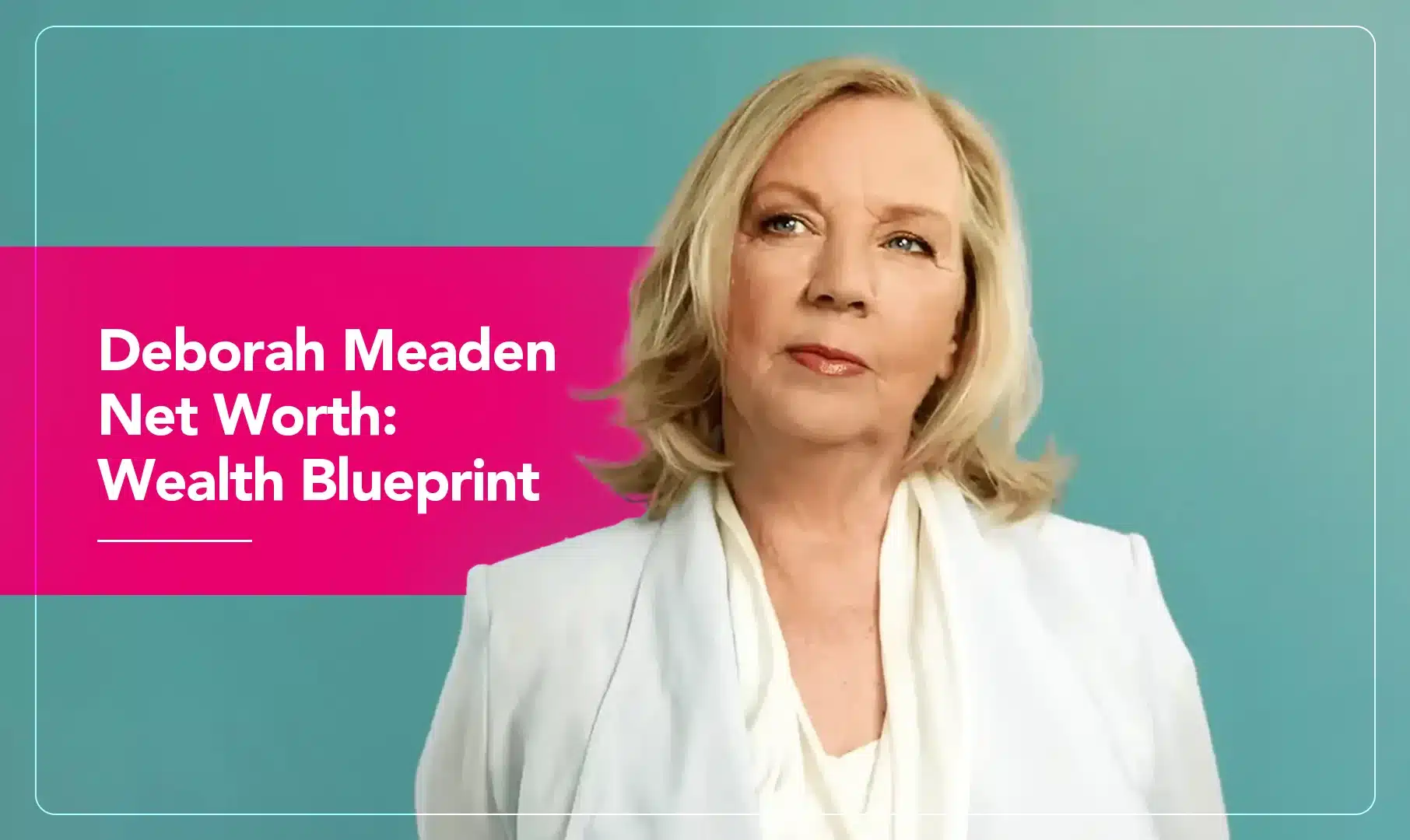
Who is Deborah Meaden?
Deborah Meaden is a British entrepreneur and investor, best known to most people as one of the longest-serving Dragons on the BBC’s Dragons’ Den. She was born in Somerset in 1959, started her first business at nineteen, and spent the next twenty-five years running companies most people never heard of before the television cameras arrived.
The business that made her was Weststar Holidays, a family holiday-park operator in the West Country. She didn’t found it. She ran it, bought control of it, grew it, and sold it. One company made almost all of her money. The textile mill, the online shop and the Dragons’ Den stakes all came afterwards, and none of them shifted the total much.
She’s useful to study because she isn’t a tech founder or a pop star. She took over an ordinary cash business, made it worth buying, and sold it at the right time. Most people reading this could do a version of that.
The number
Deborah Meaden is worth around £40 million as of mid-2026. Almost all of it traces to one company, Weststar Holidays, which she bought control of in 1999 and sold in two stages in 2005 and 2007 for roughly £50 million gross between the two deals.
The Deborah Meaden net worth story is unusually clean. There’s no empire. There’s one well-run holiday-park business, a loan-funded buyout that put the shares in her hands, and a patient two-part sale that turned them into a fortune. The Dragons’ Den deals, the television fees and the businesses she’s bought since are real income, but next to the Weststar money they barely register.
Her fortune is basically one good deal done in two halves: she bought the business she already ran, then sold it twice. That’s why it’s worth copying more than a flashier story would be. Few people have a hit back catalogue to re-record or a tech company to float. Plenty could buy the business they work in, build it, and sell it well. She shows you how the money gets made when you do. This report is part of our celebrity net worth analysis series.
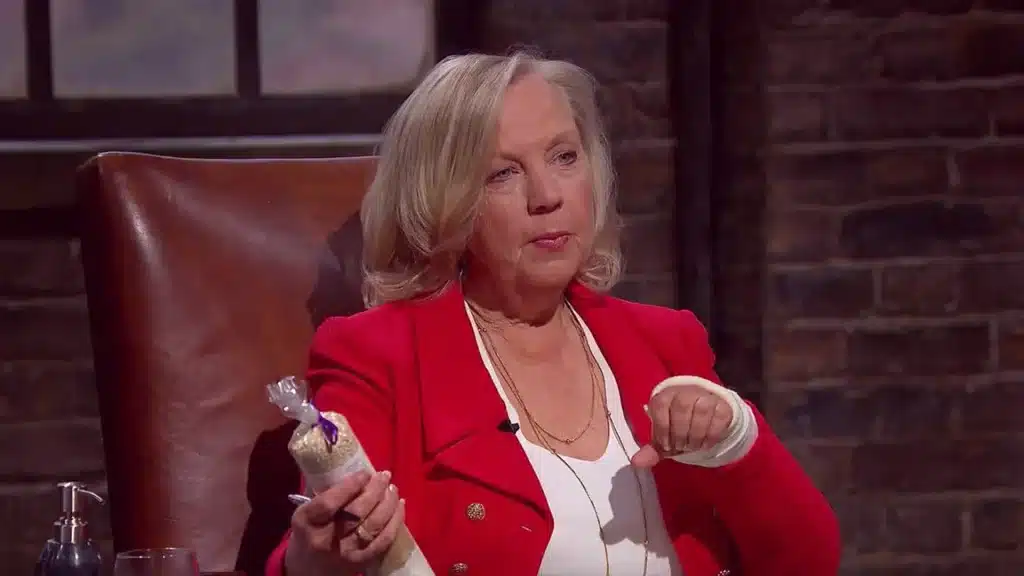
Deborah Meaden’s net worth: the numbers
| Bucket | Value (est.) | Notes |
|---|---|---|
| Total net worth | ~£40m | Our valuation, mid-2026 |
| Invested proceeds & financial assets | ~£30m | Retained Weststar money, compounded since 2005 to 2007 |
| Property | ~£6m | Somerset estate plus a London flat |
| Fox Brothers & The Merchant Fox | ~£2m | Her share of the textile business |
| Dragons’ Den portfolio | ~£2m | Minority stakes built over roughly twenty years |
How the number is built
We checked the figure from two directions.
Model A, the asset stack. Add up what she owns today. The bulk is the money she took out of Weststar and has held and invested since, which after repaying the buyout loan and paying tax we put at around £30 million. Then a Somerset estate and a London flat at roughly £6 million between them.
Her share of Fox Brothers, the textile mill she bought in 2009, plus its online arm The Merchant Fox, comes to a couple of million, because it is a small heritage manufacturer rather than a big-margin business. Add a Dragons’ Den portfolio of minority stakes built over nearly twenty years, worth a couple of million on a conservative mark, and it stacks to around £40 million.
Model B, earnings and retention. Work it from the other end. Weststar paid her roughly £31 to 33 million when she sold the majority to a private-equity buyer in 2005, and roughly another £19 million when her retained stake was cashed out in 2007. Call it £50 to 52 million gross across the two sales.
Take off the loan she used to buy the company in the first place, and capital-gains tax on both disposals, and she banked somewhere around £35 to 42 million net by 2007. Add close to twenty years of investment growth on that, a little from Dragons’ Den and television, take off the cost of running a country estate, and you land in the same £35 to 45 million band.
Both come out at about £40 million. The single biggest judgement call is what the retained proceeds have done since 2007, because that money is private and we cannot see the statements. Held sensibly in a mixed portfolio over that period, £35 million net comfortably supports a £40 million valuation today with room to spare, which is why we are comfortable putting our name on the number rather than hedging it.

People assume the Dragons must be worth hundreds of millions because they're on the telly handing out cheques. Meaden isn't, and that's the useful bit. Her fortune is the size a very good private-company exit actually produces: tens of millions, not hundreds. That's the real target for most business owners, and it's completely achievable. One clean sale of one well-run business is a life-changing amount of money. You don't need an empire. You need one thing worth buying. If that's the exit you're building towards, work with Matt or book one-to-one consulting.
Her fortune is basically one good deal done in two halves: she bought the business she already ran, then sold it twice.
How Deborah Meaden made her money
Her income has come from three places over her career: a run of small early businesses that mostly taught her lessons rather than made her money, the holiday-park company that made her fortune, and the smaller ventures and television work that came after the money was already made. Only the middle one really matters to the total.
The early businesses
Meaden started young and failed early, which is worth saying plainly because the polished Dragon on the television skips over it. At nineteen she set up a company importing glass and ceramics from Italy to sell to UK retailers, including Harvey Nichols. It lasted around eighteen months and folded.
She then bought one of the first UK franchises of the Italian clothing brand Stefanel with a partner, and sold her share to that partner a couple of years later for about £10,000. She ran Prize Bingo at a Butlins resort. None of it made her rich. All of it taught her how small businesses actually run, where the cash leaks out, and what a paying customer looks like up close.
In 1988 she joined her family’s amusement-arcade business and worked her way up from the floor to running it. That leisure business is what led her to holiday parks, and to Weststar.
How Deborah Meaden built Weststar Holidays
By 1992 her family’s leisure interests had become bound up with Weststar Holidays, a holiday-park operator based near Exeter in Devon. She was running it. She wasn’t, at that point, the owner, and that distinction is the hinge of her entire fortune.
In 1999 she fixed it. She led a management buyout of Weststar, using borrowed money to buy out the company, including her own family, and took the majority shareholding for herself. It’s the single most important move she ever made.
She didn’t start a business from a blank page and hope. She took a business she already ran, knew inside out, and could see the numbers of, and she used debt to convert herself from the person running it into the person who owned it. The risk was low because the unknowns were low. She was betting on a company she understood better than anyone.
Then she built it. Under her ownership Weststar grew into four freehold holiday parks across the south of England, running around 150,000 holidaymakers a year and producing reported profit, before interest, tax, depreciation and amortisation, of more than £11 million.
Each of those details mattered to the sale that came later. The parks were freehold, so a buyer got the land and not just a lease. The 150,000 holidaymakers came back year after year, so the demand could be forecast. And the profit was clean enough to survive due diligence. That’s the profile a financial buyer pays up for.
In February 2005 the buyer arrived. She sold the majority of Weststar to the private-equity firm Phoenix Equity Partners in a deal reported at around £31.5 to 33 million. Crucially, she didn’t sell all of it. She kept a 23 per cent stake and stayed involved as a non-executive director. That decision, to take most of the money off the table but keep a slice in the game, is the second half of the fortune.
The buyout in 1999 is the move I'd tattoo on every ambitious employee's arm. She was already running the business. The owners had the upside; she had the salary. So she borrowed the money, bought the thing she was already making successful, and flipped herself onto the right side of the deal.
This is the single most under-used wealth play in Britain. Managers spend thirty years making other people rich running companies they could have owned. If you run it, and you can see the numbers work, find a way to buy it. The bank lends against the business, not against you.
The second bite: keeping the 23 per cent
Phoenix bought Weststar to grow it and sell it on, which is exactly what a private-equity firm does. In mid-2007 they did precisely that, selling Weststar to Parkdean Holidays, backed by Alchemy Partners, for £83 million. Meaden’s retained 23 per cent stake was cashed out in that deal for roughly £19 million.
She’d already banked the majority of the value in 2005. By keeping less than a quarter of the company for two more years, and letting the new owner’s growth plan do the work, she made another £19 million on top. Her stub stake roughly doubled in value in twenty-four months, and she didn’t have to run the company to earn it. She simply had to not sell all of it in the first place.
Across the two deals, 2005 and 2007, Weststar paid her something like £50 to 52 million gross. That is the foundation the entire fortune sits on.
This is the bit amateurs get wrong every time. They get one offer, they see a number bigger than they've ever seen, and they sell the lot and walk away. Meaden sold most of it and kept a stub, because she understood who was buying and why.
A private-equity firm doesn’t buy a business to sit on it. It buys to grow it and flip it, usually inside three to five years. If you sell to one, the smart move is often to roll a slice of your equity into the deal and ride the next owner’s plan. She rode it for two years and it paid her another nineteen million. When the buyer has a re-rating plan, don’t sell them all of the upside.
What came after the money
Everything after 2007 is a smaller story. In 2009 she bought Fox Brothers, one of the last working woollen-cloth mills in England, based in Somerset, with the textiles expert Douglas Cordeaux as her co-owner. In 2011 she launched The Merchant Fox, an online shop selling British-made luxury goods, as the retail arm of that mill. These are genuine businesses and clearly things she cares about, but they are heritage-scale operations, not fortune-makers. They are what she does with the money, not how she got it.
She joined Dragons’ Den in 2006, after the Weststar majority sale, and we will deal with the Den next, because the amount of attention it gets is wildly out of proportion to the money it represents.
Deborah Meaden’s secondary income streams
The Weststar exit built the fortune. Everything in this section sits on top of it and, added together, doesn’t come close to moving the headline number.
Deborah Meaden on Dragons’ Den
Meaden has been a Dragon since 2006, which makes her one of the show’s longest-serving investors and, for most of the public, the whole of her business identity. The money says otherwise. Across nearly twenty years on the programme, the capital she’s actually put to work runs to low single-digit millions, somewhere between roughly £2 million and £6 million depending on whether you count pledged deals, completed deals or current holdings.
Her best-known win is Magic Whiteboard, which she backed in 2008 alongside fellow Dragon Theo Paphitis for £100,000 in return for 40 per cent of the company, split between the two of them. When the founders bought the shares back in 2014, the two Dragons received around £800,000 between them, so roughly £400,000 each on the original stake. A good return in percentage terms, and a genuinely nice result. Against a £50 million exit, it is a rounding error.
For Meaden the Den is a portfolio of small minority stakes, some of which did well, several of which never completed or were later dissolved, sitting on top of a fortune that was already made. The television is where the country met her. It isn’t where she got rich.
The Den is distribution, not the business. It came along after Meaden already had fifty million in the bank, and it monetises the reputation that money bought her, through fees, profile and deal flow. That's the right way round, and it's the opposite of how most people chase it. They want the fame first, thinking it'll make them rich. Fame amplifies wealth you've already built. It very rarely creates it from nothing. Build the thing worth being known for, then let the profile compound it.
Television, books and speaking
On top of the Den, Meaden earns from broadcasting fees, books, speaking and brand work built on her public profile. These are real, recurring, and useful income, and over twenty years they add up to a meaningful sum. They are also, in the context of a £40 million net worth, a supporting act. They pay handsomely for her time. They didn’t build the fortune.
The television is where the country met her. It isn't where she got rich.
Deborah Meaden’s assets: the portfolio
Most of her wealth is the retained Weststar money, held and invested since the exits. The rest is property and a couple of businesses she owns because she wants to, not because they move the number.
The invested proceeds
The largest single part of her net worth is the cash she took out of Weststar in 2005 and 2007, net of the buyout loan and tax, held and invested in the years since. This isn’t glamorous, and there is no public detail on how it is held, which is exactly what you would expect from a private individual who sold a company for tens of millions and has kept her head down since.
On a sensible mixed portfolio, the roughly £35 million she netted by 2007 comfortably underpins the valuation today. This block, invested capital rather than any operating business, is the engine of her wealth now.
Property
She bought a ten-bedroom Grade II-listed period estate in Somerset in 2006, the year after the first Weststar sale, and runs it as a working estate with stables and animals. She also keeps a flat in Primrose Hill in London.
Neither purchase price is public, and we have valued the two together at around £6 million on regional comparables, so treat that as an estimate rather than a figure off a document. The pattern is the same one you see with most sensible exits: turn some of the cash into hard, owned property you will actually use and hold.
Fox Brothers and The Merchant Fox
She owns Fox Brothers, the Somerset cloth mill, with a co-owner, and its online retail arm The Merchant Fox. These are small, private, heritage-scale businesses. They are almost certainly not large mark-to-market assets, and they look far more like a considered passion investment in British manufacturing than a wealth play. We carry them at a conservative couple of million for her share, and note that the real value to her is probably not financial.
The Dragons’ Den portfolio
Her Den stakes are minority positions in small companies, built up over nearly twenty years, some successful, some written off. Illiquid and hard to value from outside, they are worth a conservative couple of million as a block. Against a £40 million fortune that is a minor line, though a couple of million is real money in anyone’s book.
Deborah Meaden net worth breakdown
Where the £40 million sits:
| Asset class | Value (est.) | Share | What drives it |
|---|---|---|---|
| Invested proceeds & financial assets | ~£30m | ~75% | Retained Weststar money, compounded |
| Property | ~£6m | ~15% | Somerset estate and a London flat |
| Fox Brothers & The Merchant Fox | ~£2m | ~5% | Her share of the textile business |
| Dragons’ Den portfolio | ~£2m | ~5% | Minority stakes over twenty years |
Three-quarters of it is one thing: the Weststar money, taken out cleanly and held. The Deborah Meaden net worth breakdown is simple: one successful exit that got invested, plus a house and a couple of businesses she runs for the love of it. For a business owner, that’s the encouraging part. It’s a fortune you can understand, and a route you could actually follow.
Timeline of major financial milestones
| Year | Event | Financial impact | Why it mattered |
|---|---|---|---|
| c.1978 | Glass and ceramics import venture | Fails after ~18 months | The first, cheap lesson |
| early 1980s | Sells Stefanel franchise stake | ~£10,000 | First small exit |
| 1988 | Joins the family amusement-arcade business | Salary, not equity | Learned the leisure trade |
| 1992 | Running Weststar Holidays | Operator, not owner | Set up the move that mattered |
| 1999 | Leads a loan-funded MBO of Weststar | Takes the majority stake | Became the owner, not the manager |
| 2005 | Sells majority to Phoenix Equity Partners | ~£31.5 to 33m, keeps 23% | The first and biggest bite |
| 2006 | Buys Somerset estate; joins Dragons’ Den | Recycles cash into property | Turned money into owned assets |
| 2007 | Retained 23% cashed as Weststar sells for £83m | ~£19m | The second bite doubled the stub |
| 2009 | Buys Fox Brothers cloth mill | Passion investment | What she does with the money |
| 2011 | Launches The Merchant Fox | Small retail arm | Heritage, not fortune |
Two lines in that table built the wealth: the 1999 buyout that made her an owner, and the 2005 and 2007 sales that turned ownership into cash. Everything else is context. Most fortunes come down to two or three decisions, and the rest is the story around them.
The pattern behind the wealth
Meaden took a business she already ran, borrowed to buy control, spent six years turning it into the kind of asset a financial buyer pays up for, then sold it in two stages so she caught her own growth and the next owner’s. The money was made in private, years before most of the country knew her name, and long before the television.
None of it needed genius or luck. It needed knowing a business well enough to buy it safely, building the dull things buyers pay for, and being patient and sharp about the sale. Any owner can copy that.
Actionable insights: what to copy from the Meaden blueprint
Each lesson has the move she made, the principle underneath it, why it worked, your version at different sizes, the thing to do now, and the trap.
Buy the business you already run
The move. In 1999 Meaden led a loan-funded management buyout of Weststar Holidays, the company she was already running, taking the majority stake for herself.
The mechanism. Use debt to convert yourself from the person who runs a business into the person who owns it, starting from a business whose numbers you already know cold.
Why it worked. A buyout of a company you already run is one of the lowest-risk ways in existence to acquire real equity, because the thing that kills most acquisitions, not knowing what you are buying, is off the table. She knew the customers, the staff, the seasonality and the cash flow better than any outside buyer ever could. That knowledge is what let a bank lend against the business to fund the purchase.
She wasn't betting her own savings on a hunch, she was using the company's own cash-generating power to buy the company. Six years later that stake was worth tens of millions. The salary she would have earned running it for someone else across the same period wouldn't have come close.
Employed and ambitious: if you effectively run your employer's business or a division of it, open the conversation about buying it, or buy a small established business in a trade you know.
Own a small business already: acquire the competitor or supplier whose numbers you understand, funded by debt against their cash flow, not your savings.
Established and cash-generative: build a deliberate buy-and-build programme, acquiring businesses you understand and rolling them up.
Do this now. Write down the one business you understand well enough to run tomorrow that you don't currently own. That is your buyout target. Then find out who owns it and whether they would ever sell.
The trap. A buyout only works if the business genuinely produces enough cash to service the debt you use to buy it. Borrow to buy a shaky business you happen to know, and the debt sinks you. Know the numbers, and be honest about whether they work.
Takeaway: If you already run it, stop making someone else rich and find a way to own it.
Build the boring things a buyer pays a premium for
The move. She grew Weststar into four freehold holiday parks with around 150,000 repeat holidaymakers a year and more than £11 million of clean annual profit.
The mechanism. A financial buyer pays a multiple for predictable cash flow on owned, hard assets, so build exactly that, not a business that depends on you.
Why it worked. Every feature of Weststar was engineered, whether she framed it this way or not, to lower a future buyer's risk. Freehold parks meant the buyer owned the land, not a lease that could end. Around 150,000 holidaymakers a year, many returning, meant demand a buyer could forecast rather than hope for. More than £11 million of countable profit meant the numbers survived due diligence.
Low risk to the buyer is the whole game, because risk is what sets the multiple. A business making £11 million that a buyer trusts sells for far more than a business making £11 million that a buyer has to squint at. She sold the majority for tens of millions because she had built an asset, not a job.
Owner-dependent: start making the business run without you, document the processes, so that what you are eventually selling is a machine and not your own diary.
Growing: shift revenue towards the recurring and predictable, contracts, repeat customers, subscriptions, because that is what re-rates the multiple a buyer will pay.
Scaled: own the hard assets under the business, the freehold, the plant, the IP, rather than renting them, so the buyer is buying something solid.
Do this now. Ask one question of your business: if you disappeared for six months, would it still make money? Every step you take towards yes is a step up in what it will one day sell for.
The trap. Do not confuse revenue with value. A big business that only works because you are in it every day is a job with staff, and buyers pay little for jobs. Predictability and independence from you are worth more than raw size.
Takeaway: Buyers pay for certainty. Build the boring, predictable, owner-independent version and the multiple takes care of itself.
Sell in stages and keep a stub
The move. In 2005 she sold the majority of Weststar but kept 23 per cent, and that retained stake paid her roughly £19 million two years later when the new owner sold the company on.
The mechanism. When you sell to a buyer whose whole plan is to grow the business and sell it again, keep a minority slice so you ride their growth as well as your own.
Why it worked. A private-equity firm doesn't buy a company to keep it. It buys to grow it and flip it, usually within three to five years, at a higher price. Meaden understood that, so instead of selling all of Weststar in 2005, she banked most of the value and left 23 per cent on the table.
Phoenix then did exactly what such firms do, grew the business and sold it in 2007 for £83 million. Her stub roughly doubled, handing her another £19 million for staying invested. She caught two growth cycles from one business: the one she drove, and the one her buyer drove. Selling the whole thing in 2005 would have felt safer and cost her the thick end of nineteen million pounds.
Selling a small business: consider an earn-out or a small retained share tied to future performance rather than only a clean lump today, if you believe in the buyer's plan.
Selling to a bigger operator or fund: negotiate to roll a slice of your equity into the new structure so you own a piece of the enlarged business.
Serial: make partial exits a deliberate strategy, taking chips off the table while keeping meaningful upside in each deal.
Do this now. If you are ever offered a full buyout, ask one question before you say yes: what is the buyer's plan to make this worth more, and can I keep a slice of that? A smaller cheque now plus a retained stake often beats the bigger clean cheque.
The trap. A retained stake is only worth keeping if the buyer can genuinely grow the business and you trust them to. Hold a minority in the hands of a weak owner and you have kept the risk and handed away the control. Keep a stub in a good buyer, not just any buyer.
Takeaway: Don't sell all the upside to someone who is buying precisely because they can see more of it.
Turn one exit into owned assets, fast
The move. After the 2005 sale she bought a Somerset estate in 2006, and in 2009 she bought the Fox Brothers cloth mill outright.
The mechanism. Convert a one-off liquidity event into durable, owned assets you control, before the cash leaks into lifestyle.
Why it worked. A big exit is a once-in-a-lifetime event for most people, and the danger is that a huge cash balance drains away into spending. Meaden moved fast, putting money into owned property and an owned business rather than letting it sit.
The estate is a hard asset she uses and holds. Fox Brothers is a business she controls. Whatever you think of the returns on a heritage cloth mill, the discipline is the point: she treated the Weststar money as capital to redeploy into things she owns, not as a current account to run down. That is why the fortune is still roughly intact almost twenty years later rather than half spent.
After any windfall: before you upgrade your life, move a fixed share of the money into an owned, appreciating asset, so the windfall leaves something behind.
After a real exit: build a simple plan for the proceeds, owned property, income-producing investments, another business, rather than leaving it as idle cash that erodes.
Serial or scaled: treat every exit as fuel for the next owned asset, running exit proceeds into a deliberate portfolio rather than a lifestyle.
Do this now. If money ever lands, decide the split before it arrives: what share becomes owned assets and what share becomes lifestyle. Deciding in advance is how you keep the windfall from spending itself.
The trap. Do not rush the cash into assets you don't understand just to feel productive. Meaden bought property and a business in a trade she cared about and could grasp. Owned but ill-understood is how exit money gets lost.
Takeaway: An exit is capital, not income. Turn it into things you own before it turns into things you spent.
Let fame amplify the wealth, not create it
The move. She joined Dragons' Den in 2006, after the Weststar money was already made, and used the profile to build a brand and a small investment portfolio on top of an existing fortune.
The mechanism. Build the wealth in private first, then let public profile compound the reputation that wealth earned you, rather than chasing fame in the hope it makes you rich.
Why it worked. The order is everything. Meaden had already sold a company for tens of millions when the cameras arrived, so the fame landed on top of real substance and amplified it, through fees, deal flow and a credible brand.
Compare that with the far more common path, chasing an audience first and hoping to monetise it later, which usually produces profile without the underlying wealth to make it pay. Her Dragons' Den capital, a few million over twenty years, sits on a fifty-million-pound foundation. The television made her famous. The business made her rich. In that order it works.
Early: put your energy into building something that actually makes money before you spend it building a personal brand. Substance first.
Established: now let a public profile amplify the credible business you have, using it for deal flow, hiring and pricing power, not as a substitute for the business.
Wealthy: use the platform your success bought to source opportunities and back others, the way an established investor does.
Do this now. Be honest about which you are building: a business, or an audience. If you have no profitable business yet, the audience is a distraction. Build the thing first.
The trap. Fame without an underlying business is a treadmill that has to be fed constantly and pays little. Meaden could step back from the noise any time because the money doesn't depend on the profile. Build it in that order.
Takeaway: Get rich in private first. Let the fame turn up later and make it louder.

Final thoughts
Deborah Meaden is worth around £40 million, and what makes her blueprint more useful than a flashier one is that the number is reachable and the method repeats. She didn’t invent a technology or ride a cultural wave. She took an ordinary cash business she already ran, borrowed to own it, built the dull things that make a business valuable, and sold it in two clever stages.
The edge was never talent for the spotlight. It was understanding, and patience. She understood Weststar well enough to buy it safely, understood what a financial buyer actually pays for, and understood that selling most but not all of it would let her catch a second wave of growth. Three good pieces of commercial judgement, applied to one business over eight years, produced a fortune.
One fair caveat: the single-exit framing undersells nearly twenty years of holding the money well and growing it steadily. True enough, but one operate-then-sell cycle still made almost all of it.
For a business owner the lesson travels further than almost any other. Few owners will ever build a billion-pound catalogue or a global software firm. But plenty can buy the business they work in, build it into something a buyer wants, and sell it well.
Meaden shows you the whole route, from the buyout that makes you an owner to the staged sale that gets you paid twice. You don’t need £40 million to start. You need one business you understand well enough to own, and the patience to build the boring things that make it worth buying.
Work with me if you’re ready to borrow against a business you already run and buy it outright.
You don't need £40 million to start. You need one business you understand well enough to own, and the patience to build the boring things that make it worth buying.
Deborah Meaden’s net worth: frequently asked questions
How much is Deborah Meaden worth?
Around £40 million as of mid-2026. Almost all of it comes from her holiday-park business, Weststar Holidays, which she bought control of in 1999 and sold in two stages in 2005 and 2007 for roughly £50 million gross. Most of her wealth today is that money, invested and held since.
How did Deborah Meaden make her money?
She led a loan-funded management buyout of Weststar Holidays, the company she already ran, in 1999. She grew it into four freehold parks with strong, predictable profits, then sold the majority to a private-equity firm in 2005 and her remaining stake in 2007. That single business is the source of nearly all her fortune.
What was Weststar Holidays?
Weststar Holidays was a West Country holiday-park operator, based near Exeter, that Deborah Meaden ran and then bought via a management buyout in 1999. Under her ownership it grew to four freehold parks and around 150,000 holidaymakers a year, before she sold it in 2005 and 2007.
How much has Deborah Meaden made from Dragons’ Den?
Far less than most people assume. Across nearly twenty years she has invested only low single-digit millions through the show, with her best-known win, Magic Whiteboard, returning around £400,000 to her. Against her roughly £50 million Weststar exit, Dragons’ Den is a minor part of her wealth.
Is Deborah Meaden the richest Dragon?
No. Her roughly £40 million puts her comfortably among the wealthy Dragons, but well behind the richest, such as Peter Jones, whose telecoms fortune runs into the hundreds of millions. Meaden’s wealth is the size a very good private-company exit produces, not a billion-pound empire.
How does Deborah Meaden make money now?
Mostly returns on the Weststar money she invested, plus television and speaking fees, her Dragons’ Den portfolio, and the two businesses she owns, Fox Brothers and The Merchant Fox. So how Deborah Meaden makes money now is really returns on capital she banked years ago, not one operating business.
Sources
The figures here draw on contemporaneous trade and press coverage for the Weststar deals, which are well documented, and on our own estimates for everything privately held today, which is most of it. Deborah Meaden is a private individual, so her property, her share of Fox Brothers and her Dragons’ Den holdings are estimated rather than taken from filings, and are flagged as such.
The Weststar Holidays deals:
- Mergr: Phoenix Equity Partners’ acquisition of a majority of Weststar Holidays (February 2005), reported at around £31.5 million, with Meaden retaining a minority stake.
- Mergr: Parkdean Holidays’ acquisition of Weststar Holidays (2007), backed by Alchemy Partners, at £83 million, the deal in which her retained 23 per cent was cashed out for roughly £19 million.
- Fleximize and contemporaneous coverage: the 1999 management buyout, the growth of the parks, the reported profit and holidaymaker numbers, and the framing of the 2005 sale.
The businesses and assets:
- Fox Brothers and Make It British: her 2009 purchase of the Fox Brothers cloth mill with Douglas Cordeaux, and the 2011 launch of The Merchant Fox.
- Contemporaneous property coverage: the Somerset estate bought in 2006 and the London flat.
Dragons’ Den:
- BusinessCloud and Magic Whiteboard’s own account: her Dragons’ Den investment record since 2006, the range of capital deployed, and the Magic Whiteboard investment and 2014 buyback.
The net-worth figure is our own valuation, built from the two-model method above. Full source URLs are held in the internal research file for fact-checking.