Who is Peter Jones?
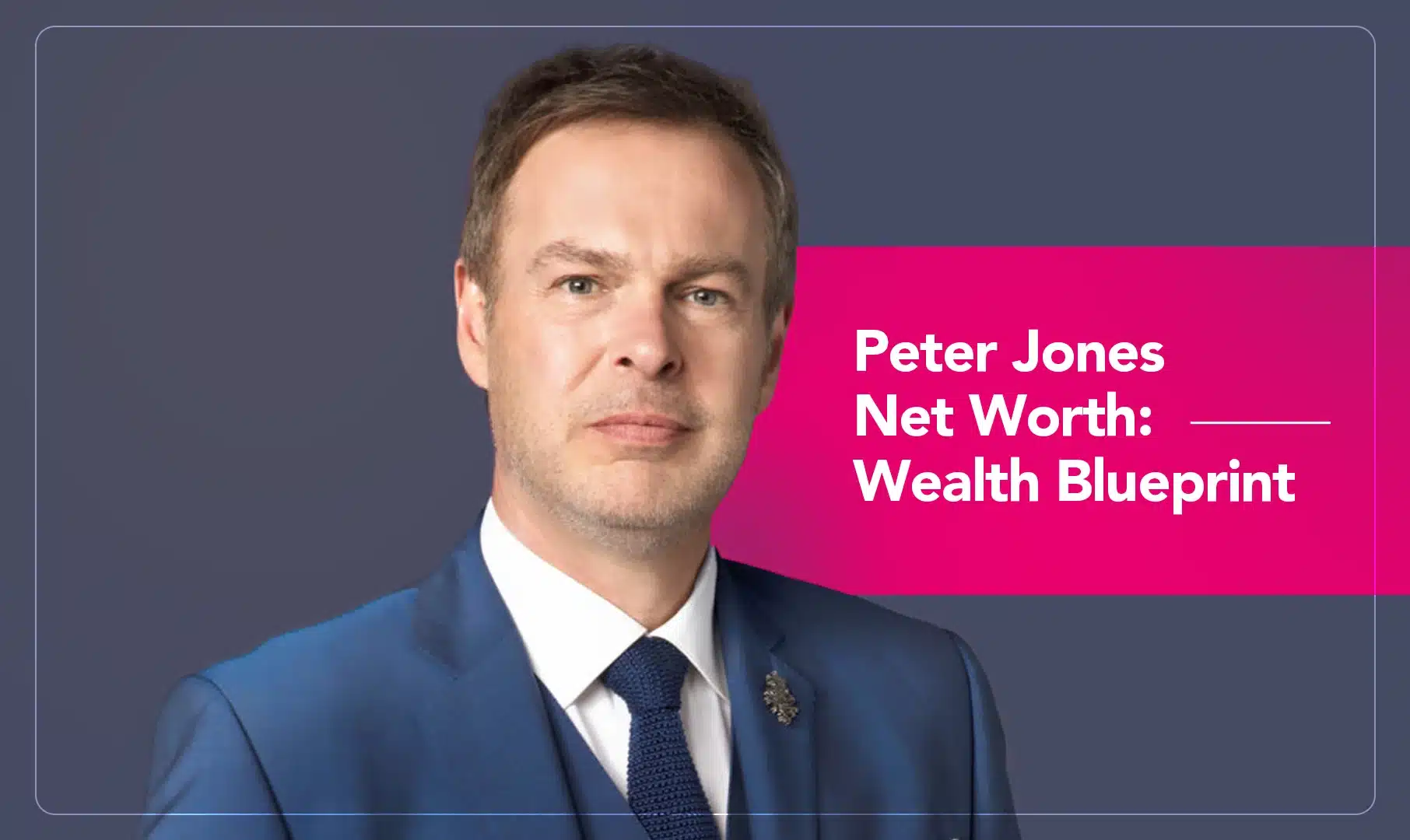
Peter Jones is a British entrepreneur and investor, and the face most people in the country attach to the word “business” because he has sat in the same chair on Dragons’ Den since it launched in 2005. He is the only Dragon to appear in every series, which has made him a national brand.
The television isn’t where the money came from. Jones built his fortune in mobile telecoms, moving phones and SIM connectivity in bulk through a company called Phones International Group, which he founded in 1998 and grew to tens of millions in revenue inside two years. He has since bought and turned around high-street names, taken famous small bets like Levi Roots, and built an investment group spanning dozens of businesses.
His story is the least glamorous and most repeatable kind of wealth there is. He went broke young, rebuilt fast, and got rich in an ordinary, low-margin industry by being the pipe rather than the product. A normal business owner could do a version of it.
The number
Peter Jones is worth around £500 million as of mid-2026. The bulk of it sits in the telecoms distribution business he built and kept, plus the cash and investments he took out of a run of telecoms sales in 2011, compounded since.
The important thing to understand about the Peter Jones net worth story is where it was made, and when. It was made in private, in an unglamorous industry, between 1998 and 2011, before Dragons’ Den had turned him into a household name. He is a telecoms distributor who became famous, not a television personality who got rich. The Den multiplied his profile. It didn’t build his fortune.
You don’t need to invent anything, or be on television, or work in a sexy industry to build serious wealth. Jones sold other people’s phones, in volume, better than the next operator. He went bust doing something similar in his twenties and came back faster than anyone expected. The lessons in how he did it travel directly to any owner in any ordinary trade.
This report is part of our celebrity net worth analysis series.

Peter Jones’s net worth: the numbers
| Bucket | Value (est.) | Notes |
|---|---|---|
| Total net worth | ~£500m | Our valuation, mid-2026 |
| Telecoms business (Data Select + legacy) | ~£250m | The retained core of Phones International |
| Cash & investments from 2011 exits | ~£170m | Realised telecoms sales, compounded |
| Property & listed holdings | ~£60m | Stated but undisclosed; estimated |
| Retail & Dragons’ Den portfolio | ~£20m | Jessops, Red Letter Days, Levi Roots, others |
How the number is built
We built the number from two directions.
Model A, the asset stack. Add up what he owns. The largest single piece is the telecoms distribution business he built and retained, the heart of the old Phones International, which we value at around £250 million on its distribution margins and volume. Then the cash and investments he took out of a run of telecoms sales in 2011 and has compounded for roughly fourteen years since, which we put at around £170 million.
Add property and listed holdings his investment group refers to but doesn’t quantify, at a conservative £60 million, and a retail and Dragons’ Den portfolio of dozens of smaller businesses, Jessops and Red Letter Days and the Levi Roots stake among them, at around £20 million. That stacks to about £500 million.
Model B, earnings and retention. Work it the other way. Phones International went from nothing to £14 million of revenue in its first year and £44 million by the end of its second, and grew from there into a business reported well above £150 million in turnover. Those profits were mostly reinvested rather than taken out, which is how a distribution business compounds.
Then came the harvest. In 2011 he sold Wireless Logic for £38 million, one of three telecoms disposals that year reported to have raised close to £100 million between them. Compound that realised cash over the years since, add the value of the business he kept, take off tax and a moderate lifestyle, and you land in the same £450 to £550 million band. Both come out at about £500 million.
The softest part of the number is that his companies are private and he discloses almost nothing, so the split between the retained business and the invested cash is our estimate rather than a set of filed accounts. What is solid is the order of magnitude. A man who built a £150-million-plus-turnover distributor and cashed out around £100 million in a single year is worth hundreds of millions. Our build puts him at £500 million.

Notice the industry. Mobile phone distribution is about as unsexy as business gets, thin margins, brutal competition, no glamour. That's exactly why it works. Everybody chases the exciting business; almost nobody wants to be the boring pipe that everything flows through. Jones ran at the boring, high-volume middle of a huge market and took a small cut of an enormous flow. The least fashionable industries are where the quiet fortunes get made, because the competition is all off chasing something shinier.
One thing before we enter the Den: if the compounding-and-sizing discipline in this report is what you’re trying to instil in your own business, Matt works with founders and investors on exactly that, work with Matt or book one-to-one consulting.

How Peter Jones made his money
His money came in three acts: a wipeout in his twenties, the telecoms business that made the fortune, and the harvest of exits and investments that turned it into capital. The middle act is the one that matters, so we will give it the most room.
The collapse and the rebuild
Jones started young. He was building and selling his own-brand personal computers as a teenager, and grew a computer business through his early twenties. Then it collapsed. He has said on the record that he lost his four-bedroom house in Bray and his cars, and moved back in with his parents. He was, in his mid-twenties, wiped out.
He didn’t stay down. He tried a cocktail bar in Windsor, ran a computer-support operation, and kept moving until he found the thing that worked. What matters isn’t the failure, which is common, but the speed of the recovery. Within a few years of losing everything he founded the company that would make him a fortune.
Everyone who builds anything real goes bust or nearly bust at some point. I did. Jones did. The difference between the people who come back and the people who don't is nothing to do with the size of the hole, it's the speed you climb out of it.
He lost the house and the cars and was back at his parents’ place, and instead of nursing it for a decade he was building the next thing almost straight away. The setback isn’t the story. The turnaround time is the story.
Phones International Group: the engine
In April 1998 Jones founded Phones International Group. It distributed mobile phones and telecoms services, business to business, at volume. This is the company that made him rich, and almost nobody who knows him from the television could tell you its name.
The growth was ferocious. It did £14 million of revenue in its first year and £44 million by the end of its second, and grew from there into a group reported well above £150 million in turnover, one of the faster-growing businesses in Europe at the time. He wasn’t inventing a product. He was moving other manufacturers’ products in enormous quantities and taking a margin on the flow.
That distinction is the whole point of the business. A distributor lives or dies on volume, relationships and operational grip, not on a clever invention. It is unglamorous, it is hard, and at scale it throws off serious money. Jones reinvested most of it rather than pulling it out, which is how the business compounded into something worth hundreds of millions.
The surviving heart of that empire is Data Select, the business-to-business mobile distribution operation he kept when he restructured the group. It is the single largest asset in his net worth, and it is still, fundamentally, the same idea he started with in 1998: be the pipe.
Read the year-two number again. Forty-four million in revenue in twenty-four months, from a standing start, in distribution. He did that by being better at logistics, relationships and cash-flow management than the next distributor, not by dreaming up a gadget. People massively overrate the idea and massively underrate the operation. The money in most industries is in doing the boring middle bit brilliantly and at volume. He is the proof.
The 2011 harvest
By 2011 Jones had a portfolio of telecoms assets worth cashing in, and he cashed several at once. The cleanest and best-documented was Wireless Logic, a specialist in machine-to-machine SIM connectivity that Phones International had bought in 2003. He sold it in August 2011 for £38 million to the private-equity firm ECI Partners, at which point it was doing £8.2 million of sales and growing at around 78 per cent a year.
Wireless Logic was one of three telecoms sales he made in roughly a single year, reported to have raised close to £100 million between them. That window of exits is the clearest evidence of realised cash in the whole story, and it is a big part of why the net worth runs into the hundreds of millions rather than the tens.
There is a sting in the tail. Wireless Logic kept growing after he sold it. Under successive private-equity owners it was valued at £3.5 billion in 2021, when General Atlantic took a minority stake. Jones sold at £38 million and didn’t capture a penny of the growth that followed. He took the money off the table early, and the asset went on to become almost a hundred times more valuable in someone else’s hands.
This is the best lesson Jones accidentally teaches, and it cuts both ways. Taking money off the table in 2011 wasn't wrong. He turned paper into real, spendable capital, and plenty of businesses that don't sell end up worth nothing.
But he sold a rocket at £38 million that became a £3.5 billion company a decade later. When you sell, be clear-eyed that you’re choosing certainty now over a shot at something far bigger later. Sometimes that is exactly right. Sometimes you’re handing the best years of your best asset to the buyer. Know which one you’re doing.

Peter Jones’s secondary income streams
The telecoms business built the fortune. The rest is what he has done with the money and the fame since, and while some of it is substantial, none of it moved the headline number the way Phones International did.
Buying distressed brands
Jones has run the same play twice on famous names the market had given up on. In 2005 he and fellow Dragon Theo Paphitis bought the experience-gift company Red Letter Days out of administration, from another Dragon, Rachel Elnaugh. Under the pair it grew past £30 million in turnover with around £2 million of pre-tax profit before they later sold it.
In 2013 he did it again with Jessops. The camera retailer collapsed in January that year, losing around 1,370 jobs across 187 stores. Jones’s investment group bought the brand and assets at the end of that month and reopened stores from March, and it was back in profit inside its first year.
The pattern is the same both times. Wait until the market has written a brand off and the price reflects despair, buy the name and the goodwill cheaply, and run it properly at a sensible size. You are buying brand equity other people spent decades building, at a discount created by a moment of crisis.
Buying out of administration is one of my favourite plays, and Jones runs it well. When a business goes under, the brand and the customer goodwill don't vanish, they just get detached from the debts that sank the company.
You can often buy the good bits cheaply and leave the liabilities behind in the administration. The trick is discipline: buy it small, buy it cheap, and don’t fall in love. He bought Jessops at the right price and ran it at a size that actually works, nine shops, not a hundred and eighty-seven.
Dragons’ Den and the Levi Roots bet
Jones has been a Dragon since 2005, and his most famous investment is the one every viewer remembers. In February 2007, Levi Roots pitched Reggae Reggae Sauce, and Jones and Richard Farleigh put in £50,000 for 40 per cent between them. The sauce landed in around 600 Sainsbury’s stores and sold at a pace that made a mockery of the original projections.
The exact value of his slice isn’t public, because the operating company files minimal accounts, but the brand has been put in the region of £30 million over the years, and his share of that turned a personal stake of around £25,000 into a return reported in the millions. It is the textbook asymmetric bet: tiny money in, life-changing money out, with a downside he would never have felt.
The Den itself is best understood as a machine for deal flow and brand, not as a big line of profit. Twenty years as the only ever-present Dragon has given him two decades of pitches to choose from and a national platform, at no media cost. It monetises the reputation the telecoms money bought him. Steven Bartlett’s Dragons’ Den-era blueprint shows how the newest Dragon converted the same seat into a very different kind of fortune.
Television, honours and the brand
On top of the Den, Jones earns from broader television, licensing, speaking and his enterprise-education work, and he was made a CBE in 2009 for services to business. These are real income and real profile. They are also, against a £500 million fortune built on telecoms, the supporting cast.
Peter Jones’s assets: the portfolio
Most of his wealth is the telecoms business he kept and the cash he took out of the ones he sold. The rest is property, listed holdings and a long tail of smaller companies.
The telecoms business
Data Select, the business-to-business mobile distribution operation at the core of the old Phones International, is the single largest asset in his net worth. It is private, so there is no share price and no public valuation, but a distribution business at this scale, throwing off margin on high volume, is worth serious money. We carry it at around £250 million, and it is the quiet engine of everything else.
Cash and investments
The money he took out of the 2011 telecoms sales, close to £100 million reported across the three, has had roughly fourteen years to compound. Held in a mix of investments and reinvested into his own group, that realised cash is the second-largest block of his wealth. We put it at around £170 million.
Property and listed holdings
His investment group refers to property and listed-equity holdings without ever quantifying them. There is no public figure, so we hold them at a conservative £60 million and flag it clearly as an estimate rather than a number off a document. He is Berkshire-based and there is no sign of extravagant public spending, so the burn against a fortune this size is modest.
The retail and Dragons’ Den portfolio
The investment group cites more than thirty businesses, from Jessops and the Red Letter Days legacy to the Levi Roots stake and a scattering of smaller holdings in electronics, toys and media. Individually most are small, and together they are a long tail rather than a core. We value the whole portfolio at around £20 million, marked conservatively because private minority stakes are hard to value and some will come to nothing.

Peter Jones net worth breakdown
Where the £500 million sits:
| Asset class | Value (est.) | Share | What drives it |
|---|---|---|---|
| Telecoms business (Data Select + legacy) | ~£250m | ~50% | Distribution margin on high volume |
| Cash & investments from 2011 exits | ~£170m | ~34% | Realised telecoms sales, compounded |
| Property & listed holdings | ~£60m | ~12% | Stated but undisclosed; estimated |
| Retail & Dragons’ Den portfolio | ~£20m | ~4% | Jessops, Red Letter Days, Levi Roots, others |
The Peter Jones net worth breakdown makes the point on its own. Half of it is one boring, brilliant telecoms business, and another third is the cash he pulled out of similar businesses and reinvested. More than 80% of his wealth traces back to distribution. The retail turnarounds and the famous Dragons’ Den bets, the parts the public actually knows, are the small slice at the bottom.
Timeline of major financial milestones
| Year | Event | Financial impact | Why it mattered |
|---|---|---|---|
| ~1982 | Builds and sells own-brand PCs as a teenager | First revenue | The early start |
| late 1980s | Computer business collapses, loses house and cars | Wiped out | The setback he rebuilt from |
| 1998 | Founds Phones International Group | £0 to £14m in year one | The engine starts |
| ~2000 | Phones International hits year-two scale | £44m revenue | Distribution compounding |
| 2004 | Invests £175,000 in Wonderland on Dragons’ Den | His biggest Den cheque | Brand and profile |
| 2005 | Buys Red Letter Days with Theo Paphitis | Grows it past £30m turnover | First distressed-brand turnaround |
| 2007 | £50,000 for 40% of Reggae Reggae Sauce | ~£25k in, millions out | The asymmetric bet |
| 2011 | Sells Wireless Logic for £38m, plus other telecoms exits | ~£100m realised in a year | The harvest |
| 2013 | Buys Jessops out of administration | Profitable in year one | Second distressed-brand turnaround |
| 2021 | Wireless Logic valued at £3.5bn under new owners | Upside he didn’t capture | The cost of selling early |
The two lines that built the wealth are 1998 and 2011: founding the distribution business, and harvesting a run of telecoms assets thirteen years later. Everything else is either the setback that came before or what he has done with the money since. Fortunes usually turn on that few real decisions.
The pattern behind the wealth
Jones went broke in an ordinary industry in his twenties, rebuilt fast, and then got rich in another ordinary industry by operating at volume better than his competitors. He built a distribution business from nothing to serious scale, reinvested the profits, and cashed a chunk of it in a single well-timed window. The television came long after the money.
None of it depended on genius, invention or fame. It came down to resilience, operational grip in a boring high-volume trade, and good timing on the way out. The fame arrived last, after the fortune was already made, and it amplified the reputation rather than the wealth. For another UK name who scaled by owning the whole operation, see Gordon Ramsay’s operator empire.

Actionable insights: what to copy from the Jones blueprint
Each lesson has the move he made, the principle underneath it, why it worked, your version at different sizes, the thing to do now, and the trap.
Rebuild faster than the setback deserves
The move. Jones lost his house and his cars when his computer business collapsed in his twenties, moved back in with his parents, and founded the company that made his fortune within a few years.
The mechanism. Treat a wipeout as a fast reset, not a life sentence, and get the next venture moving before the wound has healed.
Why it worked. The failure taught him what didn't work and cost him his assets, but it didn't cost him the skills, the contacts or the appetite. He carried all of those straight into Phones International. The people who never recover from going bust are usually the ones who spend years mourning it. Jones spent months. By moving quickly he compressed the gap between the loss and the comeback, and the comeback dwarfed the loss.
Just starting or recovering: if a venture fails, extract the lesson and the contacts, and start the next thing in weeks, not years. The clock matters more than the wound.
Established but hit a loss: ring-fence the failure, protect the core, and redeploy your energy fast rather than letting one bad bet freeze everything.
Scaled: build the balance sheet so a single failure is survivable, so you can take the swings that produce the wins.
Do this now. If something has failed on you recently, write down the three things it taught you and the one thing you will start this month because of it. Turn the loss into fuel while it is still fresh.
The trap. Fast isn't the same as reckless. Jones rebuilt quickly but he rebuilt in a trade he understood. Rushing into something you know nothing about to escape the feeling of failure is how you lose the house twice.
Takeaway: The size of the hole doesn't decide your future. The speed you climb out does.
Be the pipe, not the product
The move. He didn't invent phones. He distributed them, business to business, in enormous volume, and took a margin on the flow.
The mechanism. Own a slice of a huge existing flow of goods or money rather than betting everything on inventing something new.
Why it worked. Inventing a product is a lottery. Distributing products people already want is a grind, but a far more reliable one, and at scale the numbers are enormous. Phones International hit £44 million of revenue in two years because it plugged into a market that already existed and moved volume better than the competition. There was no product risk, no waiting for the world to want something new. The demand was already there. He just had to be the most efficient path to it.
Just you: look for an existing flow of demand you can sit in the middle of, reselling, distributing or serving, rather than trying to create demand from scratch.
Growing: deepen your grip on the flow, better logistics, better terms, better relationships, because in distribution the operator with the tightest operation wins.
Scaled: own more of the pipe, integrate up or down the chain so more of the margin on the flow is yours.
Do this now. Find the biggest flow of money or goods in your industry and ask where you could insert yourself as the most efficient link. The boring middle of a big market beats the exciting edge of a small one.
The trap. Distribution only works if you're genuinely more efficient than the alternatives, because your margins are thin and your customers can switch. Be the pipe only if you can be the best pipe.
Takeaway: You don't need to invent the product. You need to own the flow.
Buy the brand the market has given up on
The move. He bought Red Letter Days out of administration in 2005 and Jessops out of administration in 2013, taking famous names cheaply after the market had written them off.
The mechanism. Buy brand equity and customer goodwill at a discount created by a moment of crisis, and run the business properly at a sensible size.
Why it worked. A brand that took decades to build doesn't disappear when the company behind it fails, it just detaches from the debts that sank it. Jones bought the good part, the name and customers, and left the liabilities behind. Jessops was profitable inside a year because he reopened it at nine shops, not the 187 that had bankrupted it. He wasn't paying for a healthy business, he was paying crisis prices for a recognisable name, then running it at a size the numbers could support.
Small: watch for a respected local competitor or supplier in trouble, and buy the customer list, the name or the assets rather than starting cold.
Established: learn how buying assets out of administration works, so when a rival in your trade fails you can move on the good parts fast and cheap.
Scaled: make distressed acquisition a deliberate channel, buying brand equity at crisis prices and running it lean.
Do this now. Make a list of the strong brands in your industry that look wobbly. When one fails, the goodwill goes cheap, and you want to already know what you would pay for it.
The trap. Buy the brand, not the problem. The reason to buy out of administration is to leave the debts and the bloated cost base behind. Buy a failed business whole, at its old size, and you have simply bought someone else's mistake.
Takeaway: A dead company's name and customers are still worth something. Buy those, cheap, and leave the debts in the wreckage.
Harvest the portfolio, but know what you're selling
The move. In 2011 he sold several telecoms assets in a single window for close to £100 million, including Wireless Logic for £38 million, which went on to be valued at £3.5 billion under later owners.
The mechanism. Turn paper wealth into real, spendable capital by selling in a strong window, while going in with clear eyes about the upside you're handing to the buyer.
Why it worked, and where it stung. Selling in 2011 was a genuine win in one sense: he converted illiquid business value into around £100 million of real capital he could reinvest and never lose. Plenty of founders who refuse to sell watch their paper fortune evaporate instead.
But Wireless Logic is the cautionary half. He sold a business growing at 78 per cent a year for £38 million, and a decade later it was worth billions in someone else's hands. Taking the money was sensible, and he still gave away the best years of a rocket. The lesson isn't that you should never sell. It is to know exactly what you're trading away when you do. Compare that with founders who take the opposite bet entirely: Ben Francis on never selling the engine is the polar-opposite strategy, betting everything on retained compounding instead of harvested exits.
Selling a small business: be honest about whether you're selling a tired asset or a young rocket, because the right price and decision differ completely for each.
Mid-size: if you sell into a strong market, consider keeping a minority slice so you catch some of the upside you'd otherwise hand the buyer.
Scaled: harvest deliberately in strong windows, but model what the asset could become, not just what it's worth today.
Do this now. For your best asset, write down two numbers: what it is worth if you sell now, and what it could be worth in ten years if you don't. Only then is a sale an informed choice rather than a flinch.
The trap. Certainty has a price, and sometimes it is enormous. Selling for a life-changing sum is rarely wrong, but never pretend the upside you're giving up is zero. Jones didn't, and he still left a fortune on the table.
Takeaway: Cash in hand beats paper that vanishes, but know whether you're selling a sunset or a sunrise.
Make asymmetric bets
The move. In 2007 he put around £25,000 of his own money into Levi Roots's Reggae Reggae Sauce, half of a £50,000 stake for 40 per cent, and it reportedly turned into millions.
The mechanism. Back opportunities where the most you can lose is trivial to you and the most you can gain is enormous, and take a lot of them.
Why it worked. For a man worth hundreds of millions, £25,000 is a sum he would never miss if it vanished. But the upside, a share of a brand that briefly outsold the category leaders and has been valued in the tens of millions, was life-changing in percentage terms. That is the shape of bet worth making repeatedly: capped, painless downside, uncapped upside. You don't need every one to land. You need the winners to pay for all the losers many times over, and with asymmetric bets they do.
Just you: set aside a small, losable pot for asymmetric bets, a side project, a tiny equity stake, a cheap option on something big, and treat losing it as the cost of playing.
Established: take small equity positions in ventures around your core where a modest cheque could return many times over.
Scaled: run a deliberate programme of small, uncorrelated bets, knowing one winner can dwarf the lot.
Do this now. Work out the largest sum you could lose completely without it hurting. That is your asymmetric-bet budget. Put it to work on things with a small downside and a huge possible upside, not on safe things with capped returns.
The trap. Asymmetric only works if the downside really is losable and you never bet the farm. The magic is that you can be wrong most of the time and still win big. Break the small-downside rule and you're just gambling.
Takeaway: Risk what you can afford to lose entirely on things that could pay a hundred times over.
Build the wealth first, then let fame compound it
The move. He built his telecoms fortune between 1998 and 2011, and used two decades on Dragons' Den, which began in 2005, to turn that success into a national brand and a stream of deal flow.
The mechanism. Earn the substance in private first, then let a public platform amplify the reputation it created, rather than chasing fame in the hope it pays.
Why it worked. By the time the cameras arrived, Jones already had a real business and real money, so the fame landed on a foundation and multiplied it, through deal flow, positioning and brand. Compare that with chasing an audience first and hoping to monetise it, which usually produces noise without the wealth underneath. His twenty years as the only ever-present Dragon are worth a fortune in profile, and they cost him nothing because the profile sits on top of a business that was already built.
Early: put your energy into building something that makes money before you spend it building a personal brand. Substance first, always.
Established: now let a public profile amplify a business that already works, using it for deal flow, hiring and pricing power.
Scaled: use the platform your success bought to source opportunities and back others, the way a serious investor does.
Do this now. Be honest about whether you're building a business or an audience. If the business isn't yet real and profitable, the audience is a distraction. Build the thing worth being known for first.
The trap. Fame with nothing underneath is a treadmill that pays little and has to be fed constantly. Jones can step off the television any time because his money doesn't depend on it. Build it in that order.
Takeaway: Get rich in private first. Let the fame turn up later and make it louder.

Final thoughts
Peter Jones is worth around £500 million, and where that money sits matters more than the headline. Half of it is one unglamorous telecoms distribution business he built and kept. Another third is the cash he pulled out of similar businesses and reinvested. The famous parts, the retail turnarounds and the Dragons’ Den bets, are the small slice at the bottom.
His edge was never the television. It was resilience and operational grip in ordinary industries. He went bust in his twenties and rebuilt fast. He got rich being the efficient pipe in a huge, boring market. He bought famous brands cheaply when the market panicked, and he took small bets where the downside couldn’t hurt him. None of that required fame, and all of it happened, in the main, before the fame arrived.
The one real risk is concentration. A big chunk of the fortune rides on a single telecoms distribution business in a competitive, fast-changing market, so if that stumbles the number comes down with it.
For a business owner the lessons could hardly be more transferable. You don’t need to invent anything, be on television, or work in a glamorous field. You need to survive your failures faster than they deserve, find a big flow of demand and become the most efficient link in it, buy value when others panic, take painless bets with enormous upside, and build the substance before you chase the spotlight. Jones did those things in mobile phones. They work in almost any trade you can name. And if you’re an investor or founder wanting a sounding board with real skin-in-the-game experience on sizing, sourcing and holding, talk to Matt about working together.
Peter Jones net worth: frequently asked questions
How much is Peter Jones worth?
Around £500 million as of mid-2026 on our valuation. Most of it is the telecoms distribution business he built and kept, plus the cash he took out of a run of telecoms sales in 2011 and has reinvested since. The rest is property, listed holdings and a portfolio of smaller businesses.
How did Peter Jones make his money?
Mainly through Phones International Group, the mobile telecoms distribution business he founded in 1998 and grew to more than £150 million in turnover. He later sold several telecoms assets, including Wireless Logic for £38 million in 2011, and reinvested the proceeds. The Dragons’ Den fame came after the fortune was made.
Is Peter Jones a billionaire?
No. On our valuation he is worth around £500 million, built on private telecoms and retail assets. He is genuinely wealthy, one of the richest people to appear on Dragons’ Den, but a billion overstates what his businesses are worth.
What is Peter Jones’s most successful Dragons’ Den investment?
Levi Roots’s Reggae Reggae Sauce. In 2007 he and Richard Farleigh invested £50,000 for 40 per cent between them, and his roughly £25,000 share is reported to have turned into millions as the brand grew. It is the classic small bet with an enormous upside.
Did Peter Jones really lose everything early in his career?
Yes. His computer business collapsed in his twenties and he has said he lost his house and his cars and moved back in with his parents. He founded Phones International, the company that made his fortune, within a few years of that wipeout. The speed of the rebuild is the whole point.
What businesses does Peter Jones own?
The core is Data Select, the business-to-business mobile distribution operation at the heart of the old Phones International. Around it sits an investment group of more than thirty businesses, including the camera retailer Jessops, which he bought out of administration in 2013, the Levi Roots stake, and a range of smaller holdings, plus property and listed investments.
Sources
The business facts here are well documented in trade and national press; the net-worth figure is our own valuation, built from the two-model method above, because Jones’s companies are private and disclose little. Where a figure is an estimate rather than a filed number, we have said so.
The telecoms business and exits:
- Spear’s: the Phones International revenue ramp, £14 million in year one and £44 million by year two, and its estimate of his standalone wealth.
- Real Business: the sale of Wireless Logic for £38 million to ECI Partners in August 2011, its £8.2 million of sales at the time, and that it was one of three telecoms sales in the year raising close to £100 million.
- Business Matters: the later £3.5 billion valuation of Wireless Logic in 2021 under new owners, the upside realised after Jones had sold.
The acquisitions and investments:
- Retail Week and contemporaneous coverage: the Red Letter Days purchase with Theo Paphitis in 2005 and its growth past £30 million in turnover.
- TechRadar and trade coverage: the Jessops purchase out of administration in January 2013 and its reopening and return to profit.
- Coverage of Reggae Reggae Sauce: the February 2007 investment of £50,000 for 40 per cent with Richard Farleigh, and the brand’s subsequent scale.
The career and profile:
- His own on-record account of the early business collapse, the lost house and cars, and the rebuild.
- Public record of his Dragons’ Den tenure since 2005 and his CBE in 2009.
The net-worth figure and the split between his assets are our estimates. Full source URLs, and the verification notes behind the valuation, are held in the internal research file for fact-checking.