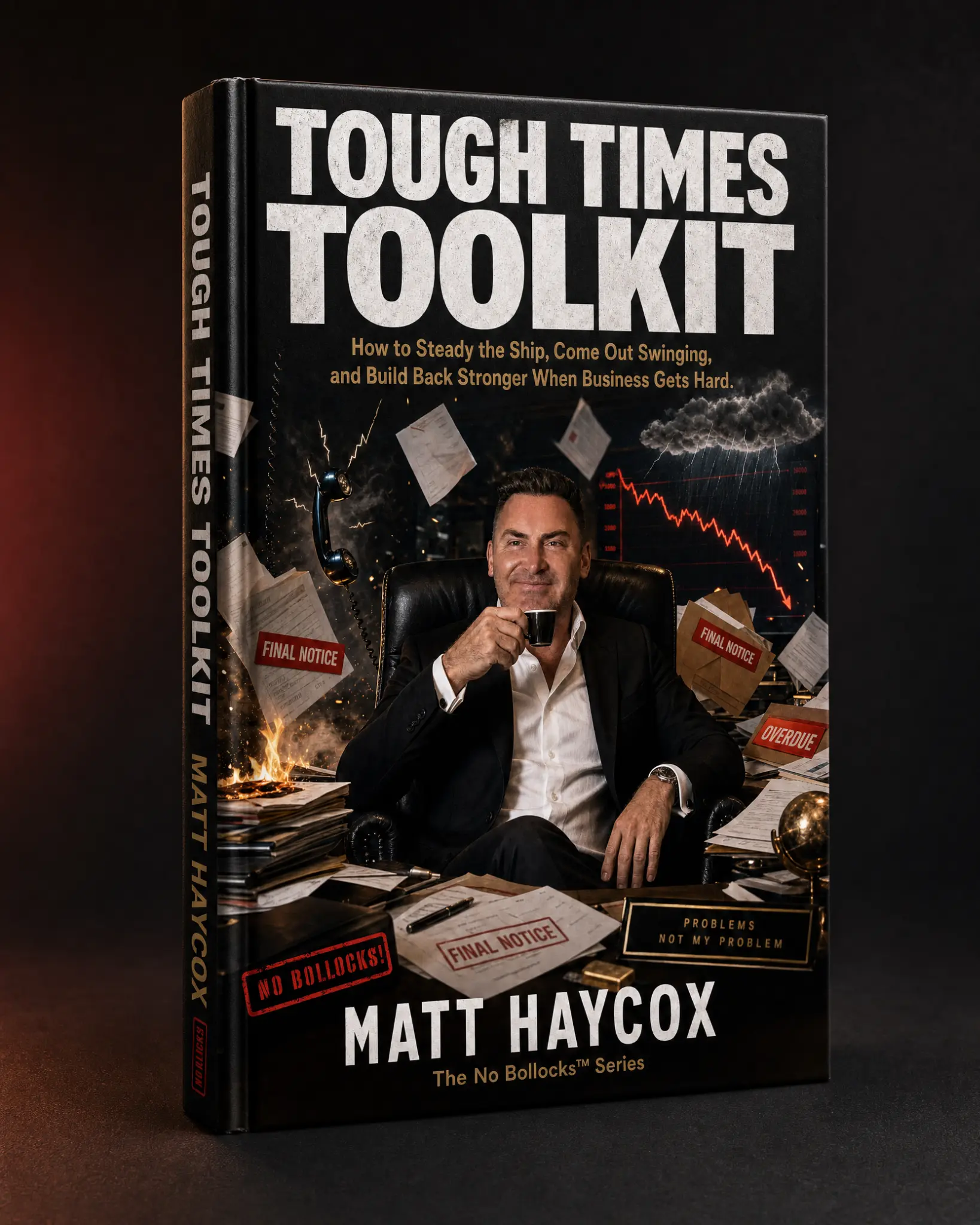

A business mentor is an experienced owner or operator who advises you on decisions they’ve already faced in their own businesses, usually through regular conversations over months or years. They don’t run anything in your company and they don’t sit on your board. What they bring is judgement from having built something similar, and often the contacts that came with it.
The value of a mentor comes from having made the same decisions in a business like yours, so the first thing to check is the mentor’s own track record.
I’ve started and run over 30 businesses, raised over £250m for my own, and had an 8-figure exit.
What a Business Mentor Does
A mentor helps the owner think through decisions using what they learned running their own businesses. It’s usually an ongoing conversation, monthly or when something comes up, rather than a project with a fixed end and a report at the end of it.
Subjects a mentor helps with include things like:
- pricing and margins
- hiring the first senior managers, so the business stops depending on the founder for every decision
- getting the business ready to raise money from investors
- expanding into a new market or opening a second site
- preparing the business for a sale
- difficult conversations with a co-founder, a major customer or a supplier
A mentor also makes introductions. An experienced operator often knows investors, lawyers, accountants and other owners, and an introduction from someone they trust gets a quicker hearing than an approach out of the blue.
The mentor’s experience counts for most when the owner faces a decision the mentor has already made in their own business, such as a first senior hire, a first raise or the sale of the company.
What a mentor doesn’t do is make decisions or take responsibility for them. The owner decides. That’s the main difference from a non-executive director, who sits on the board, votes on board decisions and carries the legal duties of a director.
Business Mentor vs Business Coach
A business coach helps the owner work out their own answers, usually through structured sessions and questions, and doesn’t need to have run a business like theirs. A mentor gives advice drawn from their own experience, so the mentor’s background is what the owner is paying attention to. Plenty of people offer a mix of both under either name. How a coaching relationship runs, session by session, is covered in business coaching.
| Role | What they do | Position in the company | How they’re usually paid |
|---|---|---|---|
| Business mentor | Advises from their own experience of running businesses | None | Nothing, a fee, or occasionally shares |
| Business coach | Helps the owner reach their own answers through structured sessions | None | A fee, per session or monthly |
| Advisory board member | Advises in a defined area, such as sales or a regulated market | No vote, terms set in an advisor agreement | Options or shares, sometimes a fee |
| Non-executive director | Sits on the board, votes and challenges the executive team | Director with statutory duties | A fee, sometimes shares |
A mentor who wants shares and a formal role is closer to an adviser, and that arrangement is set out in advisory board terms rather than a handshake.
Where to Find a Business Mentor
A mentor for entrepreneurs can come from a free scheme, a paid programme or the owner’s own network. Where an owner looks changes who they’ll meet, how they’re matched and how much say they have in the choice.
Government-backed and not-for-profit schemes. In the UK, the government’s guidance on working with a mentor points owners to a directory of free and paid-for mentors, and Business Wales runs its own mentoring service.
In the US, SCORE, a non-profit partner of the Small Business Administration, is the country’s largest network of volunteer mentors, and its mentors give advice at no cost by email, phone and video.
In Australia, the government’s adviser finder lists business advice and mentoring services, some of them low-cost.
Industry bodies and trade associations. Some run mentoring for members, which tends to mean mentors who know the sector.
Accelerators and incubators. Mentoring comes as part of the programme, and many accelerators take a stake in the company in return for the place.
Investors already in the business. Angel investors often mentor the founders they back, particularly in a sector they know. Their interest is aligned with the owner’s, because they own part of the business.
Paid mentoring, peer groups and online communities. These range from one-to-one arrangements with a single mentor to groups of owners at a similar stage who learn from each other and from the people who run the group.
The owner’s own network. Owners who are a few years further down the same road, former employers, suppliers and customers who have built businesses of their own.
Volunteer schemes match the owner with whoever is available in their area and sector, so the checks below matter as much for a free mentor as for a paid one.
How to Vet a Business Mentor’s Track Record
The checks that matter are the ones that can be verified: what the mentor has built, what the public record shows, and what the owners they’ve mentored say.
- Ask exactly what they’ve built. The names of the businesses, what each one did, the mentor’s role in it, its turnover at its peak and how they left it, whether it was sold, closed or handed on. A phrase like “advised hundreds of businesses” says nothing about what they’ve done themselves.
- Check the public record. In the UK, the Companies House register is free to search. A search on the person’s name lists every company where they’ve been a director, with appointment and resignation dates, and each company’s page shows its filed accounts, its filing history and whether it’s active, dissolved or in liquidation. Other countries keep their own company registers, and what they show and charge varies.
- Match their experience to the business. Someone who grew a software company from £1m to £10m of revenue has faced different problems from someone who ran a 5-site restaurant group. The question is whether they’ve done what the owner is about to do, at a similar size.
- Speak to owners they’ve mentored. Ask the mentor for owners they’ve worked with recently and speak to them without the mentor there. Ask how often they met, what the mentor helped them decide and whether the mentor did what they said they would.
- Check for conflicts of interest. A mentor may also sell something: funding, software, recruitment, a course or a place in an investment. That can be useful, provided the owner knows about the interest before acting on a recommendation. It’s also worth asking whether they mentor a competitor.
A company that failed isn’t on its own a reason to rule a mentor out. What matters is whether they’re open about it when asked and what they built afterwards.
Paid vs Free Business Mentoring
Free and paid mentoring can both work. The difference is mostly in how the mentor is chosen, how much of their time the owner gets and what the mentor gets out of it.
| Free mentoring | Paid mentoring | |
|---|---|---|
| Who provides it | Volunteer schemes, government-backed services, industry bodies, existing investors and the owner’s network | Individual mentors, mentoring programmes, peer groups and communities |
| How the match is made | The scheme matches the owner, or the owner approaches someone they know | The owner chooses, based on the mentor’s record |
| Time available | Set by the scheme or by how much time the mentor can give | Set by the agreement |
| What the mentor gets | Goodwill, contacts and sometimes an early look at an investment | A fee, and sometimes shares |
| What to check | That the mentor’s experience matches the business | That the fee buys time with someone whose record justifies it |
There’s no standard rate for a paid mentor. Fees depend on the mentor’s record, how much time is agreed and whether the arrangement is one-to-one or in a group.
Some mentors ask for shares instead of a fee. Shares given for advice should vest over time, so a mentor who stops helping doesn’t keep a stake they haven’t earned, which is how a vesting schedule works for founders and advisers alike.
Getting Value From Business Mentoring
Business mentoring tends to work when both sides know what it’s for and the mentor sees the real numbers.
The basics are worth agreeing at the start, in writing:
- how often the owner and mentor meet, and how to get in touch between meetings
- confidentiality, including what the mentor can share with anyone else
- the fee or shares, if any, and when they’re paid or vest
- how either side ends the arrangement
The mentor works best from the same information the owner has: the management accounts, the cash position and the decision on the table.
Meetings that open on a specific decision get more done than ones that start with a general update. A short note afterwards of what was agreed, and what the owner did about it, gives the next meeting somewhere to start.
The relationship is worth reviewing at set points, such as every 6 months. If the mentor’s advice hasn’t changed any decisions in that time, either side can end it.
FAQs
What does a business mentor do?
A business mentor advises a business owner on decisions using experience from their own businesses. They help with things like pricing, hiring, raising money, expanding and selling, and often make introductions, but the owner makes the decisions.
How do I find a business mentor for free?
Free mentoring is available through government-backed and not-for-profit schemes, such as SCORE in the US, the mentor directory listed in the UK government’s guidance and the services on business.gov.au in Australia. Industry bodies, investors already in the business and owners in your own network are other free routes.
How much does a business mentor cost?
There’s no standard rate for a business mentor. Free schemes cost nothing, paid mentors set fees based on their record and the time involved, and some ask for shares instead of a fee.
Is a business mentor the same as a business coach?
No, a business mentor advises from their own experience of running businesses, while a business coach helps the owner find their own answers. A coach doesn’t need to have run a business like the owner’s, but that experience is what a mentor is valued for.
How long does a mentoring relationship last?
A mentoring relationship lasts as long as both sides agree it’s useful, and there’s no set length. Reviewing it at set points, such as every 6 months, lets either side end it cleanly.
Next read
If you want to learn how a business gets funded from people who’ve done it, Capital Catalyst is my free online community and training for business owners. If you’re raising and want it run properly, from making the business investable to getting in front of the right investors, that’s what Capital Raiser does.